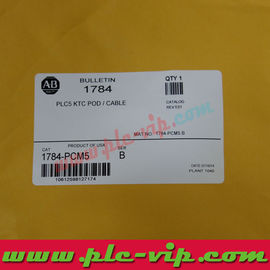
Detailed Product Description
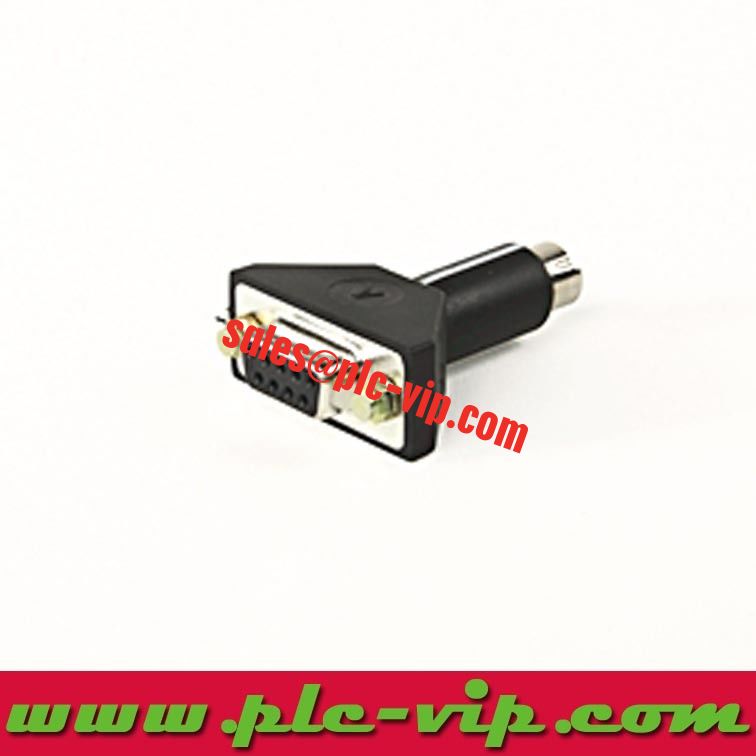
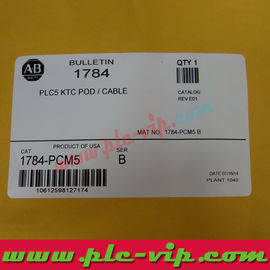
 1784-CP8 Rockwell 62 Pin D-Shell to 3 Pin Phoenix Adapter
Category:
PLCs, Power Supplies & I/Os
Manufacturer:
Rockwell
Group:
Bulletin 1784 · PC interface cards and cables
1784-CP8 is a short adapter rather than a cable: 62-pin D-shell on the card side, 3-pin Phoenix on the network side.
Both connector types are published: 62-pin D-shell and 3-pin Phoenix. There is no cable length to quote because the part adapts connectors at the card.
Product Specifications 1784-CP8 (PDF)
Catalog number |
1784-CP8 |
Product type |
Cable adapter |
Connector 1 |
62-pin D-shell |
Connector 2 |
3-pin Phoenix |
Used with |
1784-KT, 1784-KL, 1784-KT2 communication interface cards |
Function |
Adapts the card's 62-pin connector to a DH+ 3-pin plug |
Country of origin |
United States of America |
Warranty |
1 year |
Publication |
Rockwell literature library |
Attribute values above are reproduced from the manufacturer's product data. For the authoritative technical record see Rockwell publications Rockwell literature library (module specifications) and Rockwell literature library (installation instructions). Certification details, with certificate and file numbers, are listed in the FAQ below.
What it connects
1784-CP8 is a short adapter rather than a cable: 62-pin D-shell on the card side, 3-pin Phoenix on the network side.
It exists because the 1784-KT, -KL and -KT2 interface cards present a 62-pin connector while a DH+ link terminates on a 3-pin plug; without the adapter there is no way to join the two.
Interface and cabling
It is used with the KT, KL and KT2 cards specifically. It is not the adapter for the PCMK PCMCIA card — that route uses the PCM cables and the 1784-CP7.
Lifecycle and replacement
The Rockwell product page for this catalog number is no longer online, and no discontinued date is published there. It is treated here as a discontinued item: no current listing, no current lead time.
Because it is an adapter and not a cable, a failed unit is usually a broken latch or a bent pin rather than a conductor failure.
Where these are still in use
Keeping a 1784-KT, -KL or -KT2 card usable: the card is worthless for DH+ work without this adapter.
Service kits where the interface card was bought years ago and the adapter has gone missing.
Buying a used unit
Inspect the 62-pin D-shell for bent pins and the Phoenix plug for a cracked housing; both are mechanical failures that are obvious on inspection.
Confirm the card model it will serve — KT, KL or KT2 — since the adapter is specific to those cards' 62-pin connector.
FAQ — 1784-CP8
What does 1784-CP8 connect?
1784-CP8 is a short adapter rather than a cable: 62-pin D-shell on the card side, 3-pin Phoenix on the network side.
Is 1784-CP8 still available from Rockwell?
No current Rockwell listing; treated as discontinued.
What replaces 1784-CP8?
No successor is named; the interface cards it serves are also out of production.
Where does 1784-CP8 sit in the system?
Keeping a 1784-KT, -KL or -KT2 card usable: the card is worthless for DH+ work without this adapter.
What should I check before buying 1784-CP8?
The 62-pin pins and the Phoenix housing.
Data sources. Connector types, compatible interface cards and function come from Rockwell DH+ programming cable tables (1785-RM005 and 1785-TD026); no product page is currently published for this catalog number. Any attribute a publication does not print is marked Not published rather than taken from a distributor page. Catalog number, packaging and stock status are the stock record of this listing.
1784-CP8
This page documents catalog number 1784-CP8, a 1784 DH-485 / Data Highway Plus programming accessory, as published by Rockwell Automation in the installation data sheets and processor manuals cited in the table. Every value below comes from those documents; nothing is inferred.
Published facts for this catalog number
| Specification | Value |
|---|
| Function | Adapter listed as the alternative to the 1784-CP7 adapter for a 1784-KT or 1784-KT2 card |
| Used with | 1784-CP cable on a 1784-KT or -KT2 card |
| Publication that lists the pairing | 1785-TD026, PLC-5/VME product data |
| Processors reached | PLC-5/VME and PLC-5 family DH+ programming terminal connections |
| Network | Data Highway Plus |
| Cable length | Not applicable: adapter |
What the cable has to match
Three things have to line up before this part does any work: the connector at the computer or card end, the connector at the processor end, and the processor family the cable was published for. The table above states all three wherever the source documents state them. Where a document is silent, the row says so rather than carrying a plausible substitute, because a plausible substitute in a cable table is how a wrong part gets ordered.
Consequences on site
The processor list is the specification that matters most on this page, because a programming cable is bought against a processor rather than against a network. A cable that reaches a PLC-5/25 does not reach a PLC-5/40 without the adapter that the manual names, and the two part numbers are easy to confuse at a distributor's counter.
The processor list is the specification that matters most on this page, because a programming cable is bought against a processor rather than against a network. A cable that reaches a PLC-5/25 does not reach a PLC-5/40 without the adapter that the manual names, and the two part numbers are easy to confuse at a distributor's counter.
Every cable on this page terminates at a processor port that is still used for program uploads and for fault diagnosis. That makes the mechanical state of the connector part of the maintenance schedule: a shell that has been tightened with pliers, or a latch that no longer clicks, is a link that will fail during the one upload that matters.
Scope of the published data
Only values that appear in the cited Rockwell Automation publications are printed here. Cable length is listed only where the document states it; a length that is not published is marked as not published rather than taken from a distributor listing. Where two Rockwell publications describe the same catalog number differently, both statements are shown with their source, and no attempt is made to decide between them. Pin-level wiring is not reproduced on this page: it belongs to the publication for the specific cable, and a supplier page is not the right place to reconstruct it.
Serial programming on these processors is a null modem connection in the physical sense: transmit crosses to receive and the handshake lines are strapped. A cable wired straight through will not communicate, and no amount of port configuration will fix it. When a site has lost the original cable and a substitute is being made, the pin mapping has to come from the publication for the specific cable rather than from a generic serial diagram, because the processor side uses a different pin count and a different strapping pattern.
Where a plant still programs a PLC-5 or an SLC from a laptop, the practical replacement path is a modern interface rather than a rebuilt cable. That path needs the same information this page carries: which port on the processor, which protocol, and what the original cable did. Keeping the original catalog number in the maintenance record is what allows that decision to be made later without pulling a panel apart to look at a connector.
Where the same catalog number turns up with a different connector count in two Rockwell publications, the honest answer is that both statements exist. One document describes the packing data for the cable, the other describes its use with a terminal family, and the difference is usually a revision rather than an error. Declaring both, with the publication each came from, is better than choosing one and being wrong for half the installed base.
The difference between a 9-pin and a 25-pin serial connector on the computer end is not cosmetic. It decides which vintage of PC the cable was made for, and a cable built for a 25-pin port will not fit a 9-pin port without an adapter whose pin mapping has to be checked. Because both cables carry the same PLC-side connector, a spare ordered by catalog number is the only reliable way to get the right combination of ends.
Cable length limits on these networks are published as a distance at a given data rate, not as a maximum cable length for the cable itself. The 10,000 ft figure at 57.6 kbaud for a DH+ link through an ISA card is a network figure that includes every node and every drop, so a longer cable does not buy a longer network. Reading the figure as a cable specification is a common mistake that shows up as intermittent faults at one end of a long trunk.
A DH-485 link built with a programming cable is a temporary connection, and treating it as permanent is how cabinets end up with a programming port hanging inside a live enclosure. The cable is not rated for continuous flexing, its connector is not a field-installable network connector, and the card it serves expects to be inside a computer that is switched off before the cable is removed.
A programming cable is the part of a control system that survives longest and gets documented least. The card it plugs into is obsolete, the software that used it is obsolete, and the cable itself is still in a drawer because it was never thrown away. That is exactly why the connector types and the compatible processor list belong on a product page: the person looking for one of these is usually matching a cable to a processor that is already running, not designing a new network.
Termination on a DH+ or DH-485 link is a property of the physical ends of the trunk, and the cable at the programming end sometimes carries a switchable resistor for exactly that reason. A programming cable with the resistor switched in, left connected to a network that is already terminated at both ends, adds a third termination and degrades the signal. The switch is there to be set for the situation, not left in the position it arrived in.
Documentation for these parts predates the web. Several of the installation data sheets were published in the early 1990s and are still the only authoritative source for connector types and processor compatibility. That is why the publication numbers are quoted on this page: an engineer verifying a claim can go to the document rather than to a distributor's description, and the two do not always agree.
The processors these cables serve are still in production in plenty of plants, and the cable is the weakest link in the chain that keeps them programmable. Publishing the connector types, the processor list and the publication number turns a cable into a documented part; leaving those out leaves a buyer comparing photographs on distributor sites and hoping the pin count matches.
Adapters exist because one card family has to reach several processor generations. The adapter carries the pin remapping and sometimes the termination, so pairing the wrong adapter with a cable produces a physical connection that appears correct and does not communicate on the network. The published pairing tables in the processor manuals are the authority here, and they name the cable and the adapter as a pair rather than as interchangeable parts.
Programming cables are handled far more often than any other part in a control panel, because they are plugged and unplugged every time somebody needs to look at a program. The failure mode is therefore mechanical: a bent shell, a cracked Phoenix connector, a broken latch. A spare kept in the panel, labelled with the catalog number, is cheaper than a production stop while somebody traces a five-dollar connector through a distributor's inventory.
Connector shells and thumb screws are part of the electrical specification on these cables, not accessories. A D-shell that is not fully seated produces a connection that passes a continuity test and fails under the load of a program upload. Any inspection procedure for a legacy programming link should include the mechanical condition of both ends, because that is where these cables fail.
The 62-pin D-shell end on the DH+ cables is the interface to an ISA card that sits inside the programming computer. That connector carries the parallel bus interface rather than a serial line, which is why these cables are short and why they cannot be extended with a serial patch cord. A cable that has been lengthened in the field, or one whose 62-pin shell has been tightened unevenly, produces intermittent communication that looks like a software fault.
The processors named on this page are the ones the cable was published for, and the list is narrow on purpose. A cable built for a PLC-5 serial port does not serve a PLC-2 program panel connector, and the DH+ cables do not serve a DH-485 port even though both are eight-pin round connectors on some processors. Compatibility is a published statement, and a page that repeats it saves a purchase order that would otherwise be returned.
Cables, cards and adapters for the same 1784 range are listed in the 1784 DH-485 category. This item itself can be checked against the shop listing at 1784-CP8.