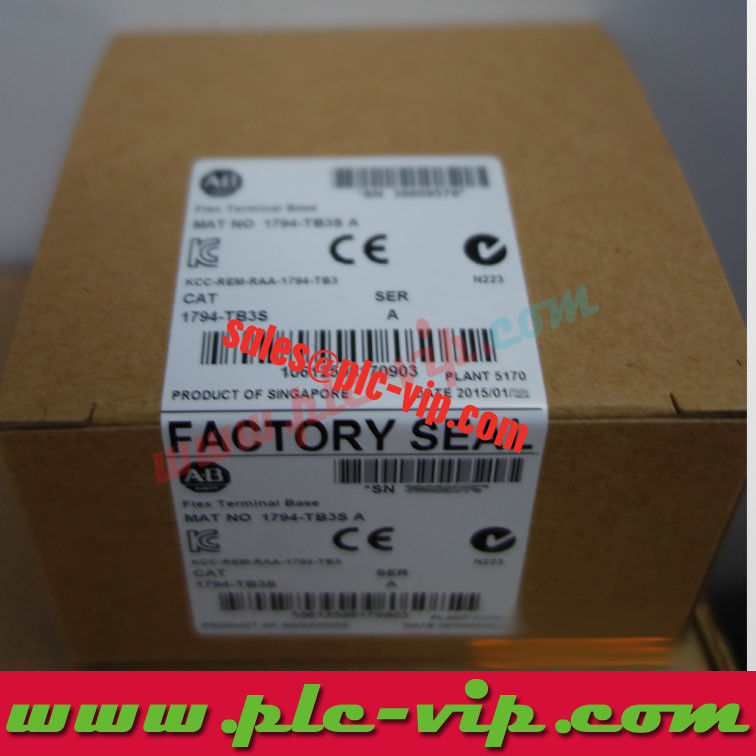
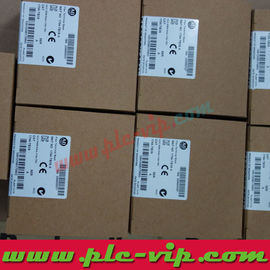
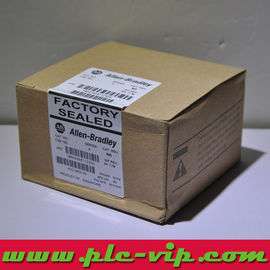
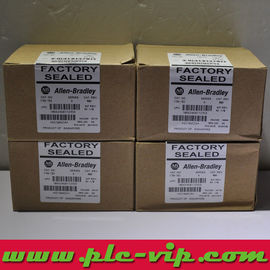
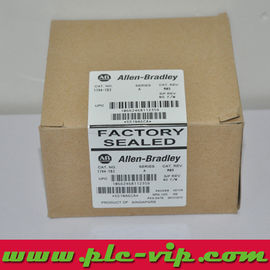
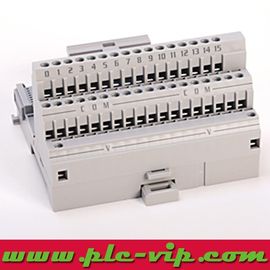
FLEX I/O 1794-TB3S / 1794TB3S Terminal Base Unit, Spring Clamp
Category:
PLCs, Power Supplies & I/Os
Manufacturer:
Rockwell
Group:
PLC I/O
The 1794-TB3S is the spring-clamp version of the general-purpose base: the same 16 I/O, 18 common and 18 +V terminals at 10 A, terminated by spring rather than screw.
Spring clamps remove the screwdriver from the termination step, which is faster on a 16-point card and more consistent where the same wire gauge is used throughout.
| 1794-TB2 |
16-terminal cage clamp base, 2-wire, up to 132V AC |
IN STOCK |
| 1794-TB3 |
16-terminal cage clamp base, 3-wire devices |
IN STOCK |
| 1794-TB3S |
16-terminal spring clamp base, 3-wire devices |
IN STOCK |
| 1794-TB32 |
32-terminal cage clamp base for 32-point modules |
IN STOCK |
| 1794-TB32S |
32-terminal spring clamp base for 32-point modules |
IN STOCK |
| 1794-TB3T |
temperature base with two cold junction compensation sets |
IN STOCK |
| 1794-TB3TS |
spring clamp temperature base with CJC sets |
IN STOCK |
| 1794-TB3G |
grounded screw clamp base, 36 I/O, 10 chassis ground |
IN STOCK |
| 1794-TB3GS |
grounded spring clamp base, 36 I/O, 10 chassis ground |
IN STOCK |
| 1794-TBKD |
cage clamp base with 16 knife disconnects |
IN STOCK |
| 1794-TBN |
NEMA-style screw clamp base, up to 264V AC/DC |
IN STOCK |
| 1794-TBNF |
fused NEMA-style base, eight 5 x 20 mm fuses |
IN STOCK |
| 1794-TB37DS |
37-pin D-shell termination for digital and analog modules |
IN STOCK |
| 1794-TB62DS |
62-pin D-shell termination for digital and analog modules |
IN STOCK |
Product Specifications 1794-TB3S (PDF)
Application |
FLEX I/O terminal base, 1794 backplane |
Cat Num |
1794-TB3S |
Brand Name |
Rockwell |
Termination |
Spring clamp, 16 I/O, 18 common, 18 +V |
Wire size |
0.34...3.3 mm2 (22...12 AWG), 75 deg C or greater, 1.2 mm insulation max |
Current capacity |
10 A maximum |
Voltage |
Up to 132V AC / 156V DC |
Dimensions |
94 x 94 x 69 mm |
Operating temperature |
-20...70 deg C |
Attribute values above are reproduced from the manufacturer's product data. For the authoritative technical record see Rockwell publications 1794-DU001 (module specifications) and 1794-SG002 (installation instructions). Certification details, with certificate and file numbers, are listed in the FAQ below.
Termination
Spring clamp terminals hold the wire by spring force, with no screw to torque and no chance of a loose termination after a vibration cycle.
16 I/O, 18 common and 18 +V matches the 1794-TB3 terminal count exactly.
24...12 AWG with 1.2 mm maximum insulation diameter, and a 10 A base rating.
The selection guide describes it as providing faster, simpler wire installation than the cage clamp version — the trade is that a spring clamp is harder to re-terminate in a tight panel.
Electrical
Up to 132V AC / 156V DC on the terminals, so an AC input card and a DC output card can both sit on this base type.
10 A maximum , the same as every base in the family.
-20...70 deg C operating range , wider than the 1794-TB2 and matched to the XT modules.
Current capacity, wire gauge and dimensions are shared with the screw-clamp base, so a substitution is a wiring-method change only.
Application and limits
Standard base for 16-point modules, inputs and outputs alike.
Not for temperature inputs — thermocouple and RTD modules need the CJC sets on the 1794-TB3T or 1794-TB3TS.
Not for 32-point modules — those need the 1794-TB32S in spring clamp.
Not for 250V circuits — the NEMA-style 1794-TBN is rated to 264V AC/DC.
Mounting
35 x 7.5 mm DIN rail, snapping on by hand and removed with a flat-blade screwdriver.
25 mm minimum air space around the system, and a zinc-plated, yellow-chromated steel rail for grounding.
1794-NM1 kit for panel mounting without a rail; 1492-EA35 rail locks for high-vibration locations.
One end cap per controller system closes the assembly.
Where it fits
Panels built with one wire gauge where spring termination is faster and repeatable.
High-vibration machinery where a screw that can loosen is the concern.
Not for thermocouples or 32-point cards; TB3T and TB32S cover those.
Not for knife-disconnect troubleshooting; the 1794-TBKD provides 16 disconnects.
FAQ — 1794-TB3S
What termination does the 1794-TB3S use?
Spring clamp terminals, 16 I/O, 18 common and 18 +V.
What wire size does it accept?
0.34...3.3 mm2 (22...12 AWG) with 1.2 mm maximum insulation.
What current can it carry?
10 A maximum.
What is the operating temperature?
-20...70 deg C.
Is it the same as the 1794-TB3?
Electrically yes; the difference is spring clamp instead of cage clamp termination.
What is it not suitable for?
Thermocouple modules, which need the CJC sets of the 1794-TB3T.
Data sources. Technical values on this page come from Rockwell publication 1794-SG002 (FLEX I/O Selection Guide, terminal base comparison) and 1794-IN092. Any attribute the publication does not print is marked Not published rather than taken from a distributor page. Catalog number, packaging and stock status are the stock record of this listing.