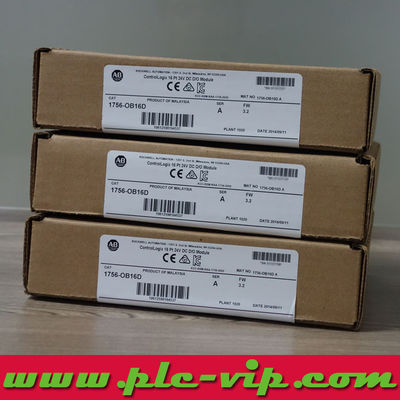
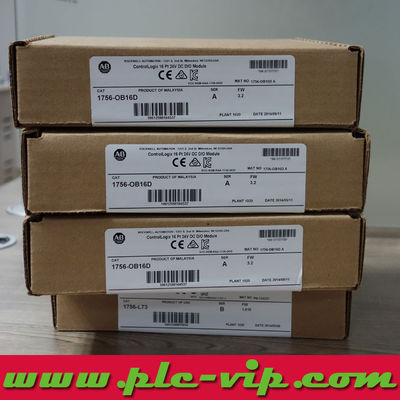
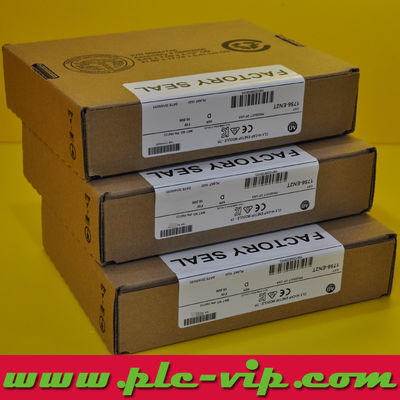
Category:
PLCs, Power Supplies & I/Os
Manufacturer:
Rockwell
Group:
PLC Automation
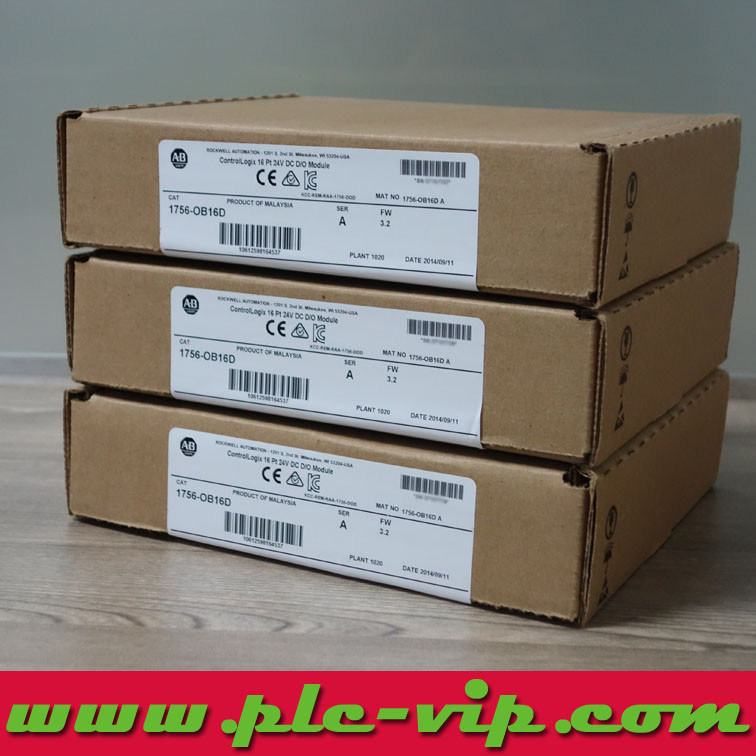
The 1756-OC8 (also written 1756OC8) is the 48 V DC output module: 8 points in two groups of four, 2 A per point at 60 °C and 8 A per module.
It is the 48 V member of the DC output family — the same layout as the 24 V 1756-OB8, but with a 30…60 V DC operating range, and it carries no on-module protection.
Application |
DC digital output module |
Brand Name |
Rockwell (Rockwell) |
Cat Num |
1756-OC8 |
Outputs |
8 (4 points/group) |
Voltage Category |
48 V DC source |
Operating Voltage Range |
30…60 V DC |
Pilot Duty |
2 A |
Current per Point, max |
2 A @ 60 °C (140 °F) |
Current per Module, max |
8 A @ 60 °C (140 °F) |
Surge Current per Point |
4 A for 10 ms, repeatable every 1 s @ 60 °C |
Load Current, min |
2 mA per point |
Off-State Leakage, max |
1 mA per point |
On-State Voltage Drop, max |
2 V DC @ 2 A |
Output Delay |
Off to On 1 ms max / On to Off 2 ms max |
Current Draw @ 5.1 V |
165 mA |
Current Draw @ 24 V |
2 mA |
Total Backplane Power |
0.89 W |
Power Dissipation, max |
4.9 W @ 60 °C (140 °F) |
Thermal Dissipation |
16.71 BTU/hr |
Isolation Voltage |
250 V continuous, basic, outputs to backplane and group to group; no isolation between outputs in a group |
Fusing |
Not protected; a fused IFM is recommended |
Removable Terminal Block |
1756-TBNH / 1756-TBSH |
Publication |
1756-TD002, August 2023 edition |
Attribute values above are reproduced from the manufacturer's product data. For the authoritative technical record see Rockwell publications 1756-TD003 (module specifications) and 1756-IN050 (installation instructions). Certification details, with certificate and file numbers, are listed in the FAQ below.
Where the module sits on a 48 V DC circuit
The 48 V DC range is what separates this part from the rest of the output family, and it is the first thing to check on a retrofit. A 24 V system cannot use it, and a 48 V system cannot substitute the OB8 in its place: the operating range is 30…60 V DC, so a 24 V rail sits below the minimum and a 60 V rail sits at the ceiling.
Grouping drives the wiring decision. Eight points are split four to a common, there is no isolation between points inside a group, and isolation to the backplane and between groups is 250 V basic. A fault on one point in a group therefore takes the other three with it, which is why the field wiring is usually arranged so that unrelated loads never share a group.
There is no protection on the module. Rockwell's own note is that outputs are not protected and a fused interface module is recommended. That places the fuse outside the card, where it can be replaced without pulling a module out of a running rack.
The electrical figures are modest: 165 mA at 5.1 V plus 2 mA at 24 V, 0.89 W of backplane power, and 4.9 W dissipation at 60 °C (16.71 BTU/hr). What does need attention is leakage and minimum load. Off-state leakage is up to 1 mA per point and the minimum load is 2 mA, so a small relay coil or an LED indicator can sit partly energised when the output is commanded off — a fault that reads as a software problem until the load is measured.
Surge capability is 4 A for 10 ms per point, repeatable every second. That suits solenoids and small contactors but not high-inrush loads, where an interposing relay is the safer arrangement.
The removable terminal block is 1756-TBNH or 1756-TBSH: screw or spring, single or two conductors per terminal depending on the block, with the torque and wire range published for each block rather than for the module.
Commissioning in three checks
- Confirm the field supply is 30…60 V DC before wiring; this module is not a 24 V device.
- Group fusing is external. There is no on-module protection, so a fused IFM belongs in front of each group.
- Check the minimum load. Below 2 mA per point the output may not switch cleanly and leakage becomes visible.
Output faults and what they mean
Points share a common four at a time and there are no point-level diagnostics, so a group fault and a failed card look alike until the field side is measured.
| Indicator |
State |
Meaning and first action |
| Output stays on with the command off |
— |
Off-state leakage is up to 1 mA per point; a load below 2 mA can sit partly energised and never switch cleanly. |
| One group fails together |
— |
Points are grouped four to a common with no isolation inside the group, so a group fault takes all four points. |
Facts on this page come only from the Rockwell publications named above; anything they do not state is marked as not published and 1756-IN050.
Replacing this item
Replace with the same 48 V part; the 24 V OB8 is not a substitute on a 48 V rail.
Add a fused IFM when replacing, since the module brings no protection with it.
Check group assignment after replacement; an unchanged wiring plan can put unrelated loads back on one group.
Which part to specify instead
- 1756-OC8 — 48 V DC outputs, 4 points per group, 2 A per point.
- 1756-OG16 — 16 points where the count matters more than the grouping.
- 1756-OB8EI — 8 individually isolated points with electronic fusing, for 12/24 V DC.
- 1756-OB8 — the 12/24 V DC counterpart of this module, same grouping.
FAQ — 1756-OC8 / 1756OC8 48 V DC 8-Point Output Module
What is the 1756-OC8?
An 8-point 48 V DC output module for ControlLogix, arranged as two groups of four.
What voltage range does it accept?
30…60 V DC from a 48 V DC source.
How much current can each point carry?
2 A at 60 °C, with 8 A per module.
Does it protect its outputs?
No, there is no on-module protection and a fused IFM is recommended.
Is there isolation between points?
No, points within a group share a common; isolation is 250 V basic to the backplane and between groups.
What is the minimum load?
2 mA per point; below that the output may not switch cleanly.
What is the off-state leakage?
Up to 1 mA per point.
Which terminal block fits?
1756-TBNH or 1756-TBSH.
Data sources. Technical values on this page come from Rockwell publications 1756-TD002 (ControlLogix I/O modules specifications, August 2023 edition) - OC8 output, isolation, protection, leakage, delay and dissipation figures and the manufacturer's product page for 1756-OC8. Values re-checked 16 November 2026.