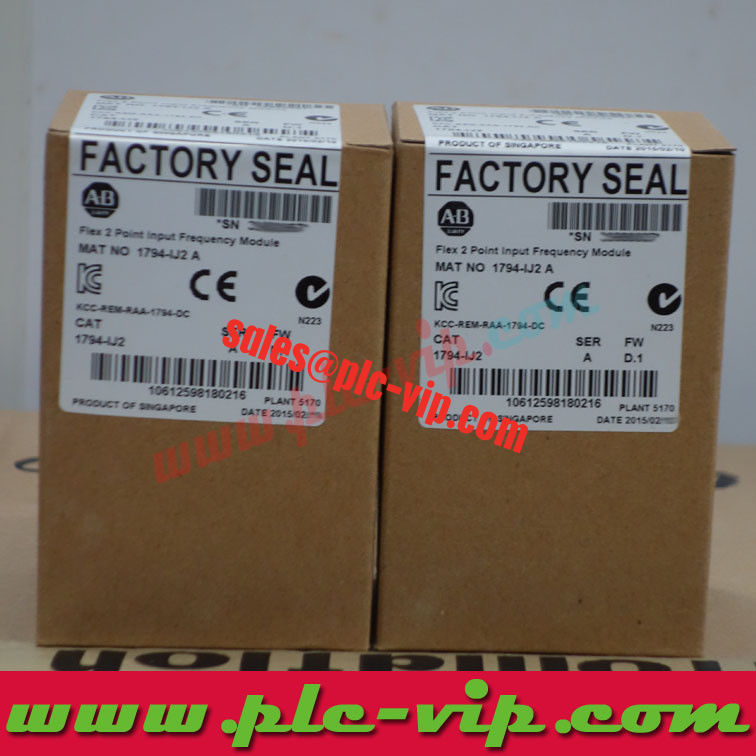
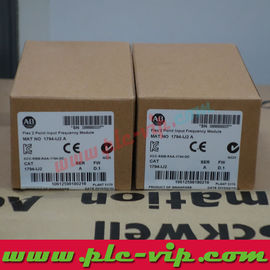
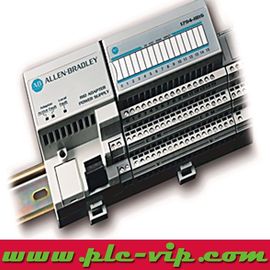
FLEX I/O 1794-IJ2XT / 1794IJ2XT Frequency Input, Extended Temp
Category:
PLCs, Power Supplies & I/Os
Manufacturer:
Rockwell
Group:
PLC I/O
The 1794-IJ2XT is the extended-temperature frequency input: two channels from 1 to 32 kHz, 4 ms processing, and the same two isolated 24V outputs, rated to 70 deg C.
The measurement circuit is identical to the standard card. The coating and the operating window are the reason to specify it, and that matters on a meter run in an unheated enclosure.
Product Specifications 1794-IJ2XT (PDF)
Application |
FLEX I/O frequency input, 1794 terminal base |
Cat Num |
1794-IJ2XT |
Brand Name |
Rockwell |
Inputs |
2 frequency inputs with gate and counter |
Frequency range |
1...32 kHz, sine wave or square wave |
Processing time |
4 ms or less |
Minimum pulse width |
20 us |
On-state |
10, 24 or 31.2V at 2.0, 9.0 and 10.0 mA |
Wire-off detection |
0.4 mA through a 50 kOhm shunt |
Outputs |
2 isolated 24V DC outputs, 1.0 A per channel |
External supply current |
220 mA at 19.2V, 180 mA at 24V, 140 mA at 31.2V |
Power dissipation |
4.5 W at 31.2V DC (15.3 BTU/hr) |
Operating temperature |
-20...70 deg C |
Attribute values above are reproduced from the manufacturer's product data. For the authoritative technical record see Rockwell publications 1794-DU001 (module specifications) and 1794-SG002 (installation instructions). Certification details, with certificate and file numbers, are listed in the FAQ below.
Extended temperature
-20...70 deg C operating range against -20...55 deg C on the standard 1794-IJ2.
Two frequency inputs, 1...32 kHz, with a 20 us minimum pulse width unchanged.
4 ms or less processing and two isolated 24V outputs at 1.0 A per channel carry over.
Conformal coating is what makes the wider window usable where condensation forms on a cold start.
Input thresholds
On-state 10, 24 or 31.2V at 2.0, 9.0 and 10.0 mA; off-state 5V at 1.5 mA, the same published levels.
A 50 kOhm shunt with 0.4 mA wire-off current reports a broken pickup instead of reading zero speed.
Input impedance above 5 kOhm for a 50 or 500 mV magnetic pickup and above 10 kOhm for a 3V or 6V vortex sensor.
The slowest tooth rate still has to exceed the 10V on-state — the check is done at minimum speed, not at nameplate speed.
Supply and heat
220 mA at 19.2V, 180 mA at 24V, 140 mA at 31.2V is the current, unchanged from the standard card.
4.5 W at 31.2V DC (15.3 BTU/hr) has to be shed by an enclosure that may have no fan.
Storage -40...85 deg C and 5...95% RH non-condensing complete the environmental statement.
The two 24V outputs are isolated in two groups of 30 mA, so the wider temperature range does not change the field wiring.
Each group draws its current from the external 24V supply, so 30 mA per group is a budget line in the panel load calculation rather than a free output.
Wiring practice
Shielded twisted pair from the pickup with the shield at the panel only.
A dry contact is limited by the 20 us minimum pulse width: a bouncing relay produces counts that look like flow.
Verify each channel at low temperature before the first production run, because the coating and the wider window are exactly what a cold commissioning exposes.
Field power removed before insertion, following the FlexBus steps in the publication.
Where it fits
Outdoor meter runs and unheated flow skids down to -20 deg C.
Rate and batch control that needs the two local outputs, not just a count into the PLC.
Not for encoder position; the 1794-VHSC is the two-axis quadrature module.
Not for sensorless speed below 1 kHz; use a digital input with a timer.
FAQ — 1794-IJ2XT
How does the 1794-IJ2XT differ from the 1794-IJ2?
It is rated -20...70 deg C and conformally coated; the frequency and output specifications are the same.
What frequency range does it accept?
1...32 kHz with a 20 us minimum pulse width.
How many outputs has it?
Two isolated 24V DC outputs rated 1.0 A per channel.
What current does the module draw?
220 mA at 19.2V, 180 mA at 24V, 140 mA at 31.2V.
Does it detect an open pickup?
Yes, by 0.4 mA through a 50 kOhm shunt.
What is the processing time?
4 ms or less.
Data sources. Technical values on this page come from Rockwell publication 1794-SG002 (FLEX I/O Selection Guide, Table 37) and 1794-IN093. Any attribute the publication does not print is marked Not published rather than taken from a distributor page. Catalog number, packaging and stock status are the stock record of this listing.