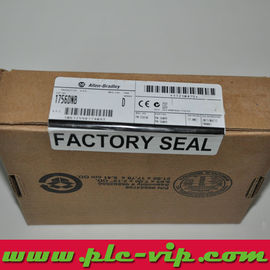
Category:
PLCs, Power Supplies & I/Os
Manufacturer:
Rockwell
Group:
PLC Automation
The 1756-DMD30K (also written 1756DMD30K) is the extended-protection version of the SD3000 drive module. Rockwell's selection guide states the rule plainly: catalog numbers carrying a K, or an XT, have extended protection in harsh, corrosive environments. Everything else about the module is the drive-module design used by the 1756-DMD30.
That makes the ordering decision narrower than it looks. The electrical specification is the family figure — 1.35 A at 5.1 V DC and 3.0 mA at 24 V DC, 6.96 W maximum dissipation, 0…60 °C operating — and the two fibre links are unchanged: drive comm at 62.5/125 µm glass, 820 nm and 10 Mbps; SynchLink at 200/230 µm hard-clad silica, 650 nm and 5 Mbps. What the K buys is a coated assembly, and what it does not buy is permission to run the panel hotter or wetter than the published limits.
1756-DMD30K |
Drive module, SD3000, extended protection (K) |
In stock |
1756-DMF30K |
Drive module, SF3000, extended protection (K) |
In stock |
1756-DMD30 |
Drive module, SD3000, standard protection |
In stock |
1756-DMF30 |
Drive module, SF3000, standard protection |
In stock |
1756-DMCF003 |
Drive comm fibre cable, 3 m |
In stock |
Application |
Drive control, extended protection (SD3000) |
Brand Name |
Rockwell (Rockwell) |
Cat Num |
1756-DMD30K |
Type |
Drive module |
Sub Brand |
ControlLogix |
Mounting |
1756 ControlLogix chassis |
Interface |
Fibre, drive comm and SynchLink |
Backplane Current |
1.35 A at 5.1 V DC, 3.0 mA at 24 V DC |
Power Dissipation |
6.96 W maximum, 23.7 BTU/hr thermal |
Operating Temperature |
0…60 °C (32…140 °F) |
Storage Temperature |
-40…85 °C (-40…185 °F) |
Relative Humidity |
5…95% non-condensing |
Shock |
30 g operating, 50 g non-operating (11 ms) |
Vibration |
2 g at 10…500 Hz, IEC 68-2-6 |
Certification |
UL Listed, SF Certified, Class I Div 2, FM, CE, N223 |
SynchLink Link |
200/230 µm HCS, 650 nm, 5 Mbps, 300 m max |
Drive Comm Link |
62.5/125 µm glass, 820 nm, 10 Mbps, 300 m max |
UNSPSC |
32151705 |
Attribute values above are reproduced from the manufacturer's product data. For the authoritative technical record see Rockwell publications 1756-TD003 (module specifications) and 1756-IN050 (installation instructions). Certification details, with certificate and file numbers, are listed in the FAQ below.
Where the extended-protection module sits in a typical system
The K variant exists because drive cabinets are not always clean rooms. A pulp mill, a plating line, a rubber mill and a coastal water treatment plant all put sulphur, chlorine or salt in the air, and an uncoated circuit board in that atmosphere fails at the edge connectors long before the silicon does.
In an SD3000 panel the drive module is the board that sits closest to the drive cabinet's own environment, because the PMI chassis is cabled straight to it. That is the slot where coating earns its price, and it is also the slot where mixing a standard module into a coated panel quietly reintroduces the failure path.
The engineering consequence is a specification rule rather than a wiring change: if the location is classified as corrosive, the whole bill of materials for that chassis follows the K convention, including the drive module, and the spares holding follows it too.
Specifying the K variant in five checks
- Decide the coating question at specification time, not at failure time: a K catalogue number is ordered because the location is corrosive, and mixing standard and K modules in one panel defeats the reason for the premium.
- Recalculate the backplane load the same way as for the standard module: 1.35 A at 5.1 V DC and 3.0 mA at 24 V DC, 6.96 W maximum dissipation.
- Keep the two fibre link types separate: drive comm at 62.5/125 µm glass, 820 nm, 10 Mbps, and SynchLink at 200/230 µm hard-clad silica, 650 nm, 5 Mbps, both 1 m minimum and 300 m maximum with one splice or adapter.
- Confirm the drive system identity — SD3000 for the DMD30K, SF3000 for the DMF30K — because the coating changes nothing about which drive the module will synchronise.
- Do not assume the coating survives everything. The published operating range is still 0…60 °C and 5…95% relative humidity non-condensing; a K suffix is not a licence to exceed it.
What the K suffix does and does not change
The K suffix changes the protection, not the specification sheet. Every electrical, fibre and environmental figure below is the published drive-module value, quoted from the installation instructions.
| Indicator |
State |
Meaning and first action |
| OK |
Flashing green |
Inhibited I/O connection; no action. |
| OK |
Red |
Non-recoverable fault; remove the module from service. |
| OK |
Off |
Module is powered down. |
| DRIVE FAULT |
Red |
Module is faulted; read the fault status parameters. |
| LINK SYNC |
Flashing red |
Two CST time masters detected; leave exactly one on the SynchLink. |
| OS OK |
Off |
Checksum failure; reflash the module. |
| DRIVE COMM OK |
Off |
DPS communication is inactive or unsynchronised; verify the cable connections. |
| LINK COMM |
Off |
Configured but not receiving valid SynchLink data; verify cabling, or enable the module transmitter. |
| Interface panel |
SD3000 |
The module carries an SD3000 interface label; the drive system behind the PMI chassis must match it. |
K-suffix meaning per Rockwell 1756-SG001; electrical, fibre and environmental figures per Rockwell 1756-IN577-EN-P and 1756-IN050.
Replacing a coated drive module in a corrosive area
A coated module that fails usually fails at the connector, not at the component: the plating corrodes under the coating edge, and the symptom is an intermittent drive comm link rather than a dead module.
Replace with the same K catalogue number. Fitting a standard 1756-DMD30 into a corrosive location as a temporary fix works only until the next shutdown, and it makes the next fault harder to attribute.
Where the drive system is being retired anyway, the migration path is a PowerFlex drive with its own EtherNet/IP interface, which removes the drive module and the SynchLink fibre from the cabinet entirely.
Which drive module protection level to specify
- 1756-DMD30K — the extended-protection version of the SD3000 drive module, for corrosive atmospheres where the standard module corrodes.
- 1756-DMF30K — the same extended-protection treatment on the SF3000 drive module.
- 1756-DMD30 / 1756-DMF30 — the standard versions, correct wherever the cabinet atmosphere is controlled.
- 1756-SYNCH — the SynchLink module the drive module shares its fibre network with.
- 1756-DMCF003 — the 3 m pre-configured drive comm cable for the PMI chassis link.
FAQ — 1756-DMD30K / 1756DMD30K ControlLogix Drive Module, Extended Protection
What does the K suffix mean on the 1756-DMD30K?
Extended protection for harsh, corrosive environments, per Rockwell's selection guide 1756-SG001.
Is the electrical specification different from the 1756-DMD30?
No. The published family figures are 1.35 A at 5.1 V DC, 3.0 mA at 24 V DC and 6.96 W maximum dissipation.
What fibre links does it use?
Drive comm on 62.5/125 µm glass at 820 nm and 10 Mbps; SynchLink on 200/230 µm hard-clad silica at 650 nm and 5 Mbps.
What are the environmental limits?
0…60 °C operating, -40…85 °C storage, 5…95% relative humidity non-condensing — the coating does not extend these.
Which drive system does it serve?
The SD3000 one-axis drive system; the SF3000 uses the 1756-DMF30K.
Does coating change the backplane load?
No. The 1.35 A at 5.1 V DC figure stands, and it still has to be added to the chassis budget.
Which indicators does it carry?
The same set: OK plus the SD3000 interface panel with LINK COMM, LINK SYNC, DRIVE COMM OK, DRIVE FAULT, OS OK and OK.
Can a standard module be used as a spare?
Only as a temporary measure; in a corrosive location it reintroduces the failure the K suffix was bought to prevent.
Data sources. Technical values on this page come from Rockwell publications 1756-SG001 (ControlLogix System Selection Guide - K and XT catalog numbers carry extended protection in harsh, corrosive environments); 1756-IN577 (ControlLogix Drive Module installation instructions) and the manufacturer's product page for 1756-DMD30K. Values re-checked 16 November 2026.