|
Product Details:
Payment & Shipping Terms:
|
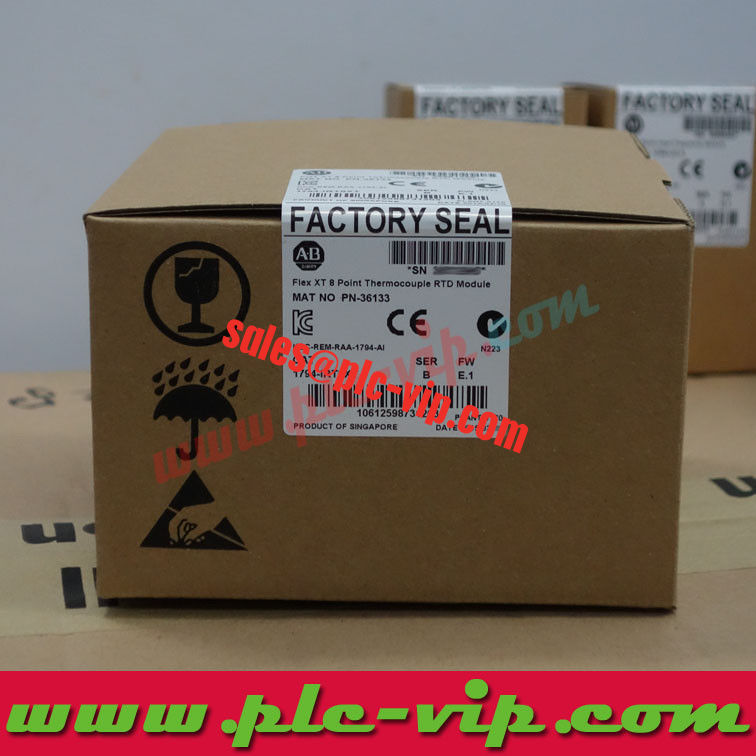
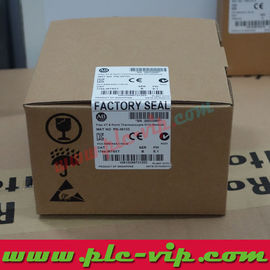
The 1794-IRT8XT is the extended-temperature version of the fast temperature card: eight channels of thermocouple, RTD or millivolt input, rated to 70 deg C ambient with Class G3 conformal coating.
Nothing about the measurement changes — still 8 to 11 ms throughput and 14-bit resolution — the -XT suffix buys the ambient range and the coating.
| 1794-IE8 | 8-channel analog input module | IN STOCK |
| 1794-IE8XT | 8-channel analog input module, extended temperature | IN STOCK |
| 1794-IE8H | 8-channel HART analog input module | IN STOCK |
| 1794-IE12 | 12-channel analog input module | IN STOCK |
| 1794-IE12K | 12-channel analog input module, conformal coated | IN STOCK |
| 1794-IF4I | 4-channel isolated analog input module | IN STOCK |
| 1794-IF4IXT | 4-channel isolated analog input, extended temperature | IN STOCK |
| 1794-IF4ICFXT | 4-channel isolated analog input, conformal coated | IN STOCK |
| 1794-IF8IH | 8-channel HART isolated analog input module | IN STOCK |
| 1794-IR8 | 8-channel RTD input module | IN STOCK |
| 1794-IRT8 | 8-channel thermocouple/RTD input module | IN STOCK |
| 1794-IRT8XT | 8-channel thermocouple/RTD input, extended temperature | IN STOCK |
| 1794-IT8 | 8-channel thermocouple/mV input module | IN STOCK |
| 1794-IE8XOE4 | 8-input, 4-output analog combination module | IN STOCK |
| 1794-IE4XOE2 | 4-input, 2-output analog combination module | IN STOCK |
| 1794-IF2XOF2I | 2-input, 2-output isolated analog combination module | IN STOCK |
| 1794-OE4 | 4-channel analog output module | IN STOCK |
| 1794-OE12 | 12-channel analog output module | IN STOCK |
Application |
FLEX I/O-XT thermocouple, RTD and mV input |
Cat Num |
1794-IRT8XT |
Brand Name |
Rockwell |
Channels |
8, configurable per channel |
Input ranges |
-40...+100 mV DC thermocouple, 0...325 mV DC RTD, 0...500 Ohm |
Resolution |
14 bits |
Throughput |
7.4 ms mV, 8.0...10.8 ms RTD, 8.0...8.8 ms thermocouple |
Excitation current |
630 uA |
Coating |
Conformal coated to ISA Class G3 |
Operating temperature |
-20...70 deg C |
Attribute values above are reproduced from the manufacturer's product data. For the authoritative technical record see Rockwell publications 1794-DU001 (module specifications) and 1794-SG002 (installation instructions). Certification details, with certificate and file numbers, are listed in the FAQ below.
-20...70 deg C operating, 70 deg C maximum surrounding air, against 55 deg C on the standard module.
ISA/ANSI-71.040 Class G3 conformal coating, for noxious gas and condensing atmospheres.
Same eight channels and the same three input classes.
Cold junction compensation still needs the 1794-CJC2 kit in the terminal base.
14-bit resolution across -40...+100 mV thermocouple, 0...325 mV RTD and 0...500 Ohm ranges.
7.4 ms in mV mode, 8.0...10.8 ms in RTD mode, 8.0...8.8 ms in thermocouple mode.
630 uA excitation current for resistive sensors.
-80 dB common mode rejection at 5V peak-to-peak, 50...60 Hz.
Wire-off, overrange and underrange per channel, read as alarm bits rather than by comparing values.
<Common mode range of plus/minus 15V on Series B allows grounded thermocouples.
Open input defaults are configurable by mode and series.
0.05% of full range accuracy in mV mode with filtering.
-XT temperature islands in hot or corrosive cabinets.
Field-mounted racks near the furnace or the kiln.
Not the RTD-only card; the IR8 publishes 16-bit resolution and slower throughput.
Not for direct 4...20 mA transmitters.
Same terminal bases as the standard IRT8, so a base already installed does not change.
Still requires a CJC2 pair for thermocouples.
Not a safety input.
Not SIL rated.
What is the operating range of the 1794-IRT8XT?
-20...70 deg C, 70 deg C maximum surrounding air.
How many channels has it?
8 configurable channels for thermocouple, RTD or millivolt input.
What is the throughput?
7.4 ms mV, 8.0...10.8 ms RTD, 8.0...8.8 ms thermocouple.
What resolution does it publish?
14 bits.
What is the excitation current?
630 uA.
Does it need a CJC kit for thermocouples?
Yes, the 1794-CJC2 cold junction compensator.
1794-IRT8XT is a thermocouple, RTD and millivolt input with 8 channels in the FLEX I/O range, rated for thermocouples, 2, 3 and 4-wire RTDs, mV sources. It mounts on the 1794-TB3T, 1794-TB3TK, 1794-TB3TS or 1794-TB3TSK terminal base unit, which is ordered separately and is the part that actually carries the field terminals.
| Attribute | Value |
| Catalog number | 1794-IRT8XT |
| Module type | thermocouple, RTD and millivolt input |
| Points | 8 channels |
| Electrical range | thermocouples, 2, 3 and 4-wire RTDs, mV sources |
| Terminal base unit | 1794-TB3T, 1794-TB3TK, 1794-TB3TS or 1794-TB3TSK |
| Input resolution | 14 bits |
| Accuracy | 0.05 percent of full range in mV mode with filtering selected, 0.10 percent hardware only |
| Common mode rejection | -80 dB at 5V peak to peak, 50 to 60 Hz |
| Throughput | 7.4 ms in mV mode, 8.0 to 10.4 ms in resistance modes, 8.0 to 8.8 ms in thermocouple mode |
| Excitation current | 630 microamps |
| Cold junction range | -20 to +100 C on Series B firmware |
| Drift | 50 ppm per C of span on Series B against 150 ppm on Series A |
| Open input behaviour | Series B defaults an open thermocouple to the minimum value and an open RTD to the maximum value |
| Temperature rating | The XT build is conformally coated and rated -20 to +70 C instead of -20 to +55 C |
The XT suffix is the extended temperature build rather than a different circuit: the same terminal base list, the same field voltage, and an operating range that reaches 70 C instead of the 55 C of the standard version. Specifying XT and then derating the panel back to 55 C gives away the only thing that was paid for.
Conformal coated variants carry a K suffix and exist because the same base can be asked to survive washdown, condensate, or corrosive atmosphere. Ordering the uncoated base and treating it in the field is not equivalent and does not carry the same published rating.
For a retrofit into an existing slice, the addressing is decided by position rather than by catalog number: FLEX I/O assigns the module its place in the rack by the order of the bases on the rail, so inserting a module in the middle shifts the addresses of everything to its right and requires the program to be re-checked.
FLEX I/O bases and modules are separate line items on a purchase order, and the price of getting that wrong is a second shipment: a module without its base cannot be installed, and a base of the wrong termination type cannot be reworked in the field because the module keys to the base family.
On the 32 point bases the common and voltage terminals are grouped in eight pairs rather than eighteen, which is why the 32 point digital modules can mix sinking and sourcing groups in one slice and why the terminal numbering on the drawing does not follow the 16 point pattern.
Any FLEX I/O position is a pair on the purchase order: one base, one module. Stocking modules without bases, or bases without the matching modules, produces a slice that cannot be commissioned, and the two part numbers are never interchangeable across the 8, 16 and 32 point families.
Practical check before ordering: confirm the permitted terminal base for the module, confirm the conductor range and current capacity of that base against the field wiring schedule, confirm whether the location needs the conformal coated K variant, and confirm the operating temperature class against the panel interior rather than the room.
The Allen-Bradley Flex I/O 1794 modules category lists the related catalog numbers, options and accessories for this range.