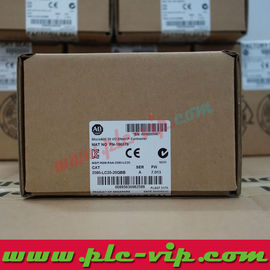
Allen Bradley Micro800 2085-OV16 / 2085OV16
-
-
Large Image :
Allen Bradley Micro800 2085-OV16 / 2085OV16
|
Product Details:
| Place of Origin: |
Made in SINGAPORE |
| Brand Name: |
PLC Module |
| Certification: |
All goods we supply are 100% original factory sealed with 1 year warranty! |
| Model Number: |
Allen Bradley Micro800 2085-OV16 / 2085OV16 |
Payment & Shipping Terms:
| Minimum Order Quantity: |
1 /PCS |
| Price: |
$143.00 (USD/PCS) |
| Packaging Details: |
100% original new |
| Delivery Time: |
IN STOCK; 4-6 weeks for ordering |
| Payment Terms: |
T/T, Paypal and Western Union. |
| Supply Ability: |
5 PCS |
|
Detailed Product Description
 2085-OV16 Rockwell Micro800 16 Point 12/24 V DC Sink Output Module
Category:
PLCs, Power Supplies & I/Os
Manufacturer:
Rockwell
Group:
Micro800 2085 expansion I/O
2085-OV16 is a 16-point DC output module in the Micro800 expansion line. It is the sinking transistor output card: the load is wired to the positive supply and the module pulls the output to common.
Field wiring lands on the removable terminal block (RTB). The RTB can be unplugged with the wiring in place, which is the reason a failed module can be swapped without re-terminating a panel.
Product Specifications 2085-OV16 (PDF)
Catalog number |
2085-OV16 |
Product type |
16-point DC output module |
Points / channels |
16 outputs |
Signal |
12/24 V DC, sink transistor |
Isolation |
Field wiring to controller |
Backplane current, 5 V DC |
Not published |
Dimensions, H x W x D |
Not published |
Temperature rating |
Not published |
Lifecycle status |
Active |
UPC |
Not published |
Country of origin |
Not published |
Terminal block |
Removable terminal block (RTB) |
Attribute values above are reproduced from the manufacturer's product data. For the authoritative technical record see Rockwell publications 2080-UM003 (module specifications) and Rockwell literature library (installation instructions). Certification details, with certificate and file numbers, are listed in the FAQ below.
What the module adds to a Micro800 controller
2085-OV16 is a 16-point DC output module in the Micro800 expansion line. It is the sinking transistor output card: the load is wired to the positive supply and the module pulls the output to common.
It mounts to the right of a Micro810, Micro820, Micro830, Micro850 or Micro870 controller and is addressed by its position in the expansion chain, so the slot order in the project has to match the physical order.
Signal and channel count are fixed by the catalog number: 16 outputs, 12/24 V DC, sink transistor.
Wiring on the removable terminal block
Field wiring lands on the removable terminal block (RTB). The RTB can be unplugged with the wiring in place, which is the reason a failed module can be swapped without re-terminating a panel.
Sink and source are not interchangeable by wiring. A panel built for a source card will not run with this module unless the field wiring is reversed.
Size the conductors and the torque to the module data sheet; the RTB screws are hand-tightened, not driven with a power tool.
Expansion bus, module order and power
Module order matters: the expansion chain is scanned in physical order, and the bus is ended with a terminator. It pairs on the same chain with the 2085-OB16 source card, and the two are distinguished only by catalog number and the marking on the terminal block.
Backplane draw is Not published. Add every module in the chain before deciding on the controller power budget.
Dimensions, ratings and lifecycle
Rockwell lists this catalog number as Active.
Dimensions are Not published and the rated ambient is Not published.
UPC is Not published, country of origin Not published.
Buying and swapping a module
Check that the module comes with its RTB. A module sold without the terminal block is not a drop-in swap, whatever the price difference.
Confirm the catalog number against the project: the 2085 line separates sink from source transistor outputs and AC input from DC input by catalog number only.
Order by the exact number: 2085-OV16 sink, 2085-OB16 source.
FAQ — 2085-OV16
What does 2085-OV16 do?
16-point DC output module: 16 outputs, 12/24 V DC, sink transistor.
Where does 2085-OV16 mount?
To the right of a Micro800 controller, in the expansion chain, connected through the 2085 bus.
How much backplane current does 2085-OV16 draw?
Not published.
What are the dimensions of 2085-OV16?
Not published, rated Not published.
Is 2085-OV16 a current Rockwell product?
Rockwell lists it as Active.
Data sources. Descriptions, channel counts and analog ranges come from the Micro800 expansion I/O manual 2080-UM003; the 120 V and 240 V input ranges, off-state limits, filter time and bus current come from 2085-IN005; physical and lifecycle data come from the Rockwell product page for the catalog number. Any attribute these publications do not print is marked Not published. Any attribute a publication does not print is marked Not published rather than taken from a distributor page. Catalog number, packaging and stock status are the stock record of this listing.
2085-OV16: 16 point DC sink output module
2085-OV16 is a 16 point DC sink output module in the 2085 expansion family for Micro850 controllers, and the specification rows below are the published values for this catalog number rather than a family average.
| Specification | Value |
|---|
| Catalog number | 2085-OV16, 16 point 12/24V DC sink transistor output expansion module |
| Number of outputs | 16, 24V DC sink |
| Dimensions | 44.5 x 90 x 87 mm, 1.75 x 3.54 x 3.42 in |
| Shipping weight | Approximately 220 g, 7.76 oz |
| Bus current draw | 200 mA at 5V DC maximum |
| Operating voltage range | 10 to 30V DC; on-state 10V DC minimum, 24V DC nominal, 30V DC maximum |
| Output current | 0.5 A at 30V DC per output, 8 A per module |
| Power dissipation | 5 W total |
| Power supply | 24V DC, Class 2 |
| Status indicators | 16 yellow channel indicators |
| Isolation voltage | 50V continuous, reinforced insulation, channel to system; type tested at 720V AC for 60 s |
| Enclosure | Open style, no enclosure rating |
| North American temperature code | T4 |
| Source | 2080-TD001 Micro800 technical data, discrete DC output expansion I/O specifications |
Half an amp per output at thirty volts and eight amps per module is a load budget, and the module dissipation of five watts is what that budget costs in heat. A full sixteen outputs at half an amp is eight amps and five watts inside one module in the panel.
The type test of seven hundred and twenty volts AC for sixty seconds is higher than the continuous rating by an order of magnitude, which is the normal relationship between a working isolation and a dielectric proof figure, and the continuous figure is the one that governs the design.
The figures on this page are published for this catalog number in the Micro800 technical data, including the isolation and temperature code rows. Where the source gives a range rather than a single value, the range is reproduced instead of a midpoint.
Isolation on these modules is fifty volts continuous, reinforced insulation, channel to system, with a type test at seven hundred and fifteen volts DC for sixty seconds. That is a working isolation for a panel with a common reference, not a barrier for a hazardous area, and the two should not be confused.
Analog temperature modules carry an accuracy that depends on the sensor type. A thermocouple input specified within half a degree to three degrees and an RTD input within two tenths to six tenths of a degree are two very different measurement systems sharing one module.
Expansion modules share the controller supply and add to its consumption, so the power budget is cumulative. A controller published at eleven watts with no expansion and thirty three watts with plug-ins and expansion is telling the designer that the difference belongs to the modules that were added.
Forty four and a half millimetres of width is the physical unit of expansion planning. Five modules fit in a fraction of the rail space that five separate controllers would take, and the depth of eighty seven millimetres is what decides whether the panel is deep enough for the terminal cover.
The bus terminator is the part that makes the serial expansion bus electrically correct. It terminates the end of the chain, it is listed in the same technical data as the modules, and a chain without it is a chain that may work on the bench and fail in the panel.
The point count on an expansion module is a bus load as well as a field count. Sixteen discrete inputs draw one hundred and seventy milliamps from the five volt bus and thirty two draw one hundred and ninety, which is the figure the controller power budget has to absorb for every module in the chain.
Derating curves are published for a reason, and they are the part of a data sheet that gets skipped. A sixteen point DC input module with a published curve will carry its full count at one ambient and a reduced count at another, and the cabinet temperature is the variable that decides which.
A green health indicator and no channel indicators is a deliberate diagnostic style on some analog modules. The module tells you it is alive and the channel value tells you the rest, which means the troubleshooting tool is the programming software rather than a lamp.
The Type 1 input designation is a real classification, not marketing. IEC Type 1 inputs are the slow, tolerant sensors, and a module published against that standard is the right choice for a limit switch and the wrong one for a registration mark.
Channel update time on a temperature module is measured per enabled channel, not per module. Twelve to five hundred milliseconds per channel means a module with all channels enabled updates slowly, and a control loop that assumes a fast scan will be wrong about when the value arrived.
An expansion module is a separate DIN rail device with its own terminal block, and that changes the wiring effort compared with a plug-in module. The 2085 family is what a Micro850 chassis accepts, up to four of them, and each one carries its own field terminals rather than borrowing the controller row.
Relay and transistor outputs on the same family look interchangeable on a drawing and are not interchangeable on a load. A relay at eight amps per module handles an inrush that a transistor output rated half an amp per point will not survive, and the load type decides which module is ordered.
Two hundred and twenty grams of shipping weight and an open style enclosure are the practical statements about these modules. They are panel mounted inside an enclosure, they are not field mounted, and the enclosure rating is the panel rating rather than the module rating.
Add the eight amp module limit and the five watt dissipation to the panel calculation, and keep the sinking convention consistent across the panel.