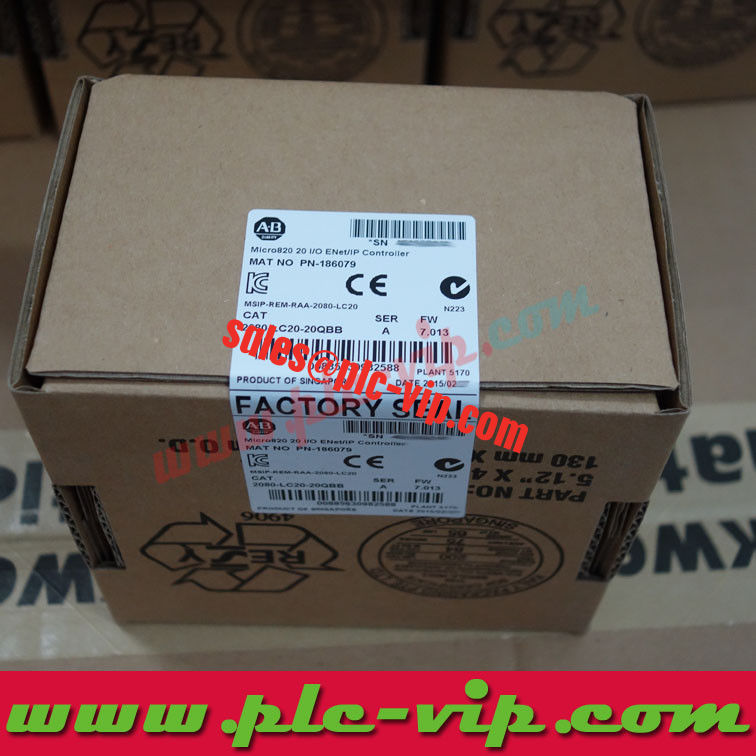
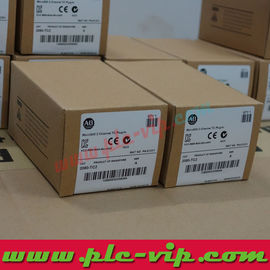
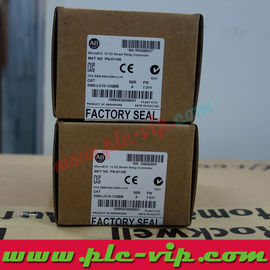
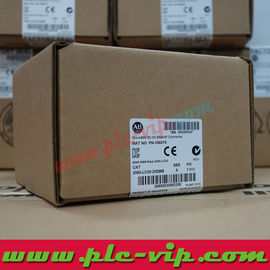
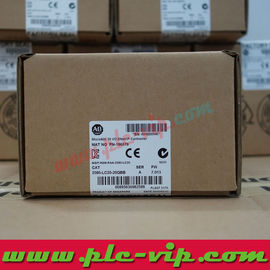
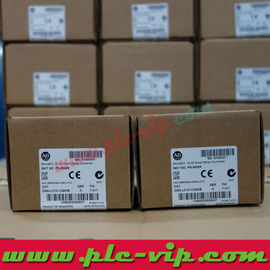
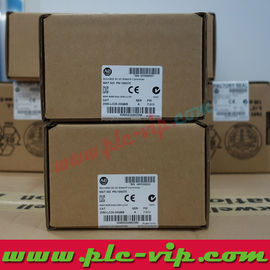
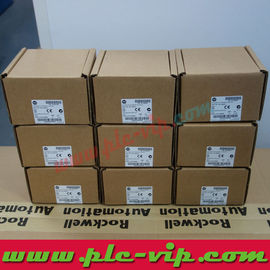
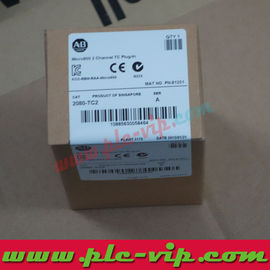
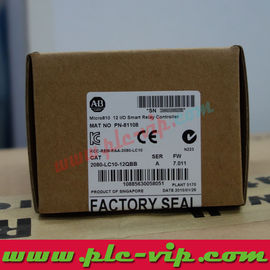
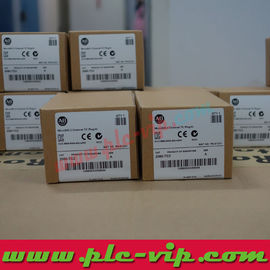
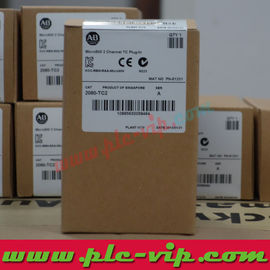
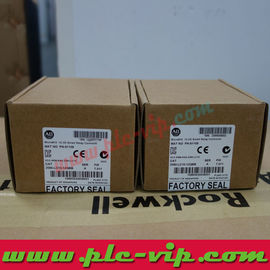
Allen Bradley Micro800 2085-IA8 / 2085IA8
-
-
Large Image :
Allen Bradley Micro800 2085-IA8 / 2085IA8
|
Product Details:
| Place of Origin: |
Made in SINGAPORE |
| Brand Name: |
PLC Module |
| Certification: |
All goods we supply are 100% original factory sealed with 1 year warranty! |
| Model Number: |
Allen Bradley Micro800 2085-IA8 / 2085IA8 |
Payment & Shipping Terms:
| Minimum Order Quantity: |
1 /PCS |
| Price: |
$90.00 (USD/PCS) |
| Packaging Details: |
100% original new |
| Delivery Time: |
IN STOCK; 4-6 weeks for ordering |
| Payment Terms: |
T/T, Paypal and Western Union. |
| Supply Ability: |
5 PCS |
|
Detailed Product Description
 2085-IA8 Rockwell Micro800 8 Point 120 V AC Input Module
Category:
PLCs, Power Supplies & I/Os
Manufacturer:
Rockwell
Group:
Micro800 2085 expansion I/O
2085-IA8 is a 8-point AC input module in the Micro800 expansion line. It is the 120 V AC input card of the 2085 line, the one used when a Micro850 panel has to read pilot devices and relay contacts straight from a 120 V control circuit.
Field wiring lands on the removable terminal block (RTB). The RTB can be unplugged with the wiring in place, which is the reason a failed module can be swapped without re-terminating a panel.
Product Specifications 2085-IA8 (PDF)
Catalog number |
2085-IA8 |
Product type |
8-point AC input module |
Points / channels |
8 inputs |
Signal |
120 V AC, operating range 74-120 V AC |
Isolation |
Field wiring to controller |
Backplane current, 5 V DC |
150 mA |
Dimensions, H x W x D |
28 x 90 x 87 mm |
Temperature rating |
Per 2085-IN005 |
Lifecycle status |
Active |
UPC |
Not published |
Country of origin |
Not published |
Terminal block |
Removable terminal block (RTB) |
Attribute values above are reproduced from the manufacturer's product data. For the authoritative technical record see Rockwell publications 2085-IN005 (module specifications) and 2080-UM003 (installation instructions). Certification details, with certificate and file numbers, are listed in the FAQ below.
What the module adds to a Micro800 controller
2085-IA8 is a 8-point AC input module in the Micro800 expansion line. It is the 120 V AC input card of the 2085 line, the one used when a Micro850 panel has to read pilot devices and relay contacts straight from a 120 V control circuit.
It mounts to the right of a Micro810, Micro820, Micro830, Micro850 or Micro870 controller and is addressed by its position in the expansion chain, so the slot order in the project has to match the physical order.
Signal and channel count are fixed by the catalog number: 8 inputs, 120 V AC, operating range 74-120 V AC.
Wiring on the removable terminal block
Field wiring lands on the removable terminal block (RTB). The RTB can be unplugged with the wiring in place, which is the reason a failed module can be swapped without re-terminating a panel.
Published input data: off-state voltage 20 V AC maximum, on-state current 5.0 mA minimum at 74 V AC and 12.5 mA maximum at 120 V AC, 22.2 kOhm maximum input impedance, 450 mA maximum inrush, 20 ms input filter, IEC Type 3.
Size the conductors and the torque to the module data sheet; the RTB screws are hand-tightened, not driven with a power tool.
Expansion bus, module order and power
Module order matters: the expansion chain is scanned in physical order, and the bus is ended with a terminator. An AC input module can sit anywhere in the chain; there is no complementary pairing rule as on the 1771 32-point cards.
Backplane draw is 150 mA. Add every module in the chain before deciding on the controller power budget.
Dimensions, ratings and lifecycle
Rockwell lists this catalog number as Active.
Dimensions are 28 x 90 x 87 mm and the rated ambient is Per 2085-IN005.
UPC is Not published, country of origin Not published.
Buying and swapping a module
Check that the module comes with its RTB. A module sold without the terminal block is not a drop-in swap, whatever the price difference.
Confirm the catalog number against the project: the 2085 line separates sink from source transistor outputs and AC input from DC input by catalog number only.
The 8-point AC card is the most commonly replaced module in a Micro800 panel, because it is the one exposed to field transients.
FAQ — 2085-IA8
What does 2085-IA8 do?
8-point AC input module: 8 inputs, 120 V AC, operating range 74-120 V AC.
Where does 2085-IA8 mount?
To the right of a Micro800 controller, in the expansion chain, connected through the 2085 bus.
How much backplane current does 2085-IA8 draw?
150 mA.
What are the dimensions of 2085-IA8?
28 x 90 x 87 mm, rated Per 2085-IN005.
Is 2085-IA8 a current Rockwell product?
Rockwell lists it as Active.
Data sources. Descriptions, channel counts and analog ranges come from the Micro800 expansion I/O manual 2080-UM003; the 120 V and 240 V input ranges, off-state limits, filter time and bus current come from 2085-IN005; physical and lifecycle data come from the Rockwell product page for the catalog number. Any attribute these publications do not print is marked Not published. Any attribute a publication does not print is marked Not published rather than taken from a distributor page. Catalog number, packaging and stock status are the stock record of this listing.
2085-IA8: 8 point 120V AC input module
2085-IA8 is a 8 point 120V AC input module in the Micro800 system, and the specification rows below are the published data for this catalog number.
| Specification | Value |
|---|
| Catalog number | 2085-IA8, 8 point 120V AC input expansion module |
| Number of inputs | 8 |
| Voltage category | 120V AC |
| Operating voltage range | 74 to 120V AC |
| Off-state limits | 20V AC maximum, 2.5 mA maximum |
| On-state current | 5.0 mA minimum at 74V AC; 12.5 mA maximum at 120V AC |
| Input impedance | 22.2 kOhm maximum |
| Inrush current | 450 mA maximum |
| Input filter time | 20 ms or less, both off to on and on to off |
| IEC type compliance | Type 3 |
| Dimensions | 28 x 90 x 87 mm, 1.10 x 3.54 x 3.42 in |
| Source | 2080-TD001 Micro800 technical data, discrete AC input expansion I/O specifications |
A twenty millisecond filter in both directions is a deliberate slow input. Contact bounce and line transients are removed, and a registration mark is not. Twenty eight millimetres of width for eight points makes this a density choice for AC panels rather than a speed choice.
Twelve and a half milliamps at 120 volts is the current the module draws, and the 450 milliamp inrush is what a capacitive load sees at the moment of closing. A shared 120 volt circuit with several of these modules has an inrush sum that the supply and the upstream protection have to carry.
The ranges, the currents and the filter time on this page are the published values for this catalog number, and the IEC type classification is quoted as published rather than interpreted.
An expansion module is a separate DIN rail device with its own terminal block, and that changes the wiring effort compared with a plug-in module. The 2085 family is what a Micro850 chassis accepts, up to four of them, and each one carries its own field terminals rather than borrowing the controller row.
Relay and transistor outputs on the same family look interchangeable on a drawing and are not interchangeable on a load. A relay at eight amps per module handles an inrush that a transistor output rated half an amp per point will not survive, and the load type decides which module is ordered.
Two hundred and twenty grams of shipping weight and an open style enclosure are the practical statements about these modules. They are panel mounted inside an enclosure, they are not field mounted, and the enclosure rating is the panel rating rather than the module rating.
Isolation on these modules is fifty volts continuous, reinforced insulation, channel to system, with a type test at seven hundred and fifteen volts DC for sixty seconds. That is a working isolation for a panel with a common reference, not a barrier for a hazardous area, and the two should not be confused.
Analog temperature modules carry an accuracy that depends on the sensor type. A thermocouple input specified within half a degree to three degrees and an RTD input within two tenths to six tenths of a degree are two very different measurement systems sharing one module.
Expansion modules share the controller supply and add to its consumption, so the power budget is cumulative. A controller published at eleven watts with no expansion and thirty three watts with plug-ins and expansion is telling the designer that the difference belongs to the modules that were added.
Forty four and a half millimetres of width is the physical unit of expansion planning. Five modules fit in a fraction of the rail space that five separate controllers would take, and the depth of eighty seven millimetres is what decides whether the panel is deep enough for the terminal cover.
The bus terminator is the part that makes the serial expansion bus electrically correct. It terminates the end of the chain, it is listed in the same technical data as the modules, and a chain without it is a chain that may work on the bench and fail in the panel.
The point count on an expansion module is a bus load as well as a field count. Sixteen discrete inputs draw one hundred and seventy milliamps from the five volt bus and thirty two draw one hundred and ninety, which is the figure the controller power budget has to absorb for every module in the chain.
Derating curves are published for a reason, and they are the part of a data sheet that gets skipped. A sixteen point DC input module with a published curve will carry its full count at one ambient and a reduced count at another, and the cabinet temperature is the variable that decides which.
A green health indicator and no channel indicators is a deliberate diagnostic style on some analog modules. The module tells you it is alive and the channel value tells you the rest, which means the troubleshooting tool is the programming software rather than a lamp.
The Type 1 input designation is a real classification, not marketing. IEC Type 1 inputs are the slow, tolerant sensors, and a module published against that standard is the right choice for a limit switch and the wrong one for a registration mark.
Channel update time on a temperature module is measured per enabled channel, not per module. Twelve to five hundred milliseconds per channel means a module with all channels enabled updates slowly, and a control loop that assumes a fast scan will be wrong about when the value arrived.
Use it where a twenty millisecond input is acceptable and the panel is 120 volt AC, and add the inrush sum when several modules share a circuit.