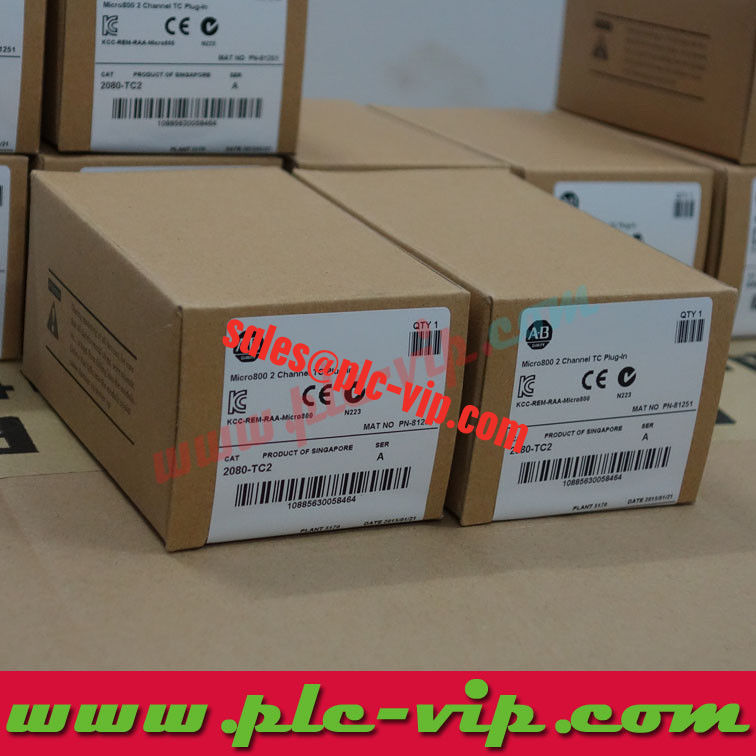
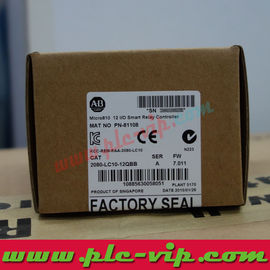
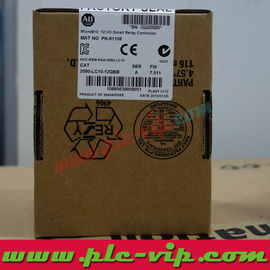
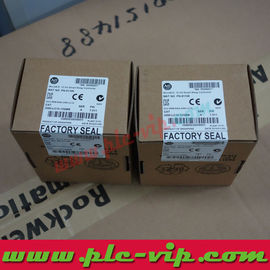
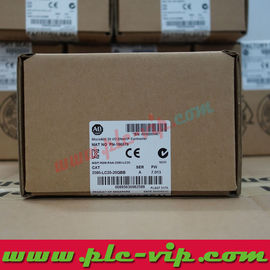
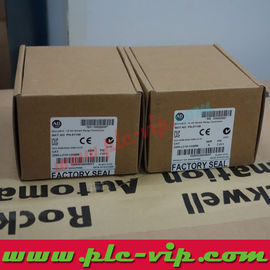
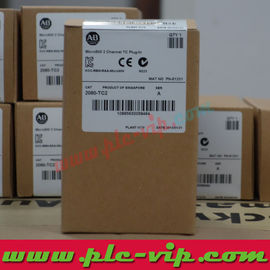
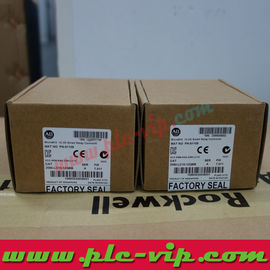
Allen Bradley Micro800 2080-SERIALISOL / 2080SERIALISOL
-
-
Large Image :
Allen Bradley Micro800 2080-SERIALISOL / 2080SERIALISOL
|
Product Details:
| Place of Origin: |
Made in SINGAPORE |
| Brand Name: |
PLC Module |
| Certification: |
All goods we supply are 100% original factory sealed with 1 year warranty! |
| Model Number: |
Allen Bradley Micro800 2080-SERIALISOL / 2080SERIALISOL |
Payment & Shipping Terms:
| Minimum Order Quantity: |
1 /PCS |
| Price: |
$66.00 (USD/PCS) |
| Packaging Details: |
100% original new |
| Delivery Time: |
IN STOCK; 4-6 weeks for ordering |
| Payment Terms: |
T/T, Paypal and Western Union. |
| Supply Ability: |
5 PCS |
|
Detailed Product Description
 2080-SERIALISOL Rockwell Micro800 Isolated RS-232/RS-485 Serial Plug-In
Category:
PLCs, Power Supplies & I/Os
Manufacturer:
Rockwell
Group:
Micro800 2080 plug-in modules
2080-SERIALISOL is a Isolated serial communication plug-in the Bulletin 2080 Micro800 plug-in family. It adds an isolated serial port that speaks CIP Serial on RS-232 and Modbus RTU or ASCII on both RS-232 and RS-485.
A plug-in module snaps into a slot on the controller itself, so the I/O count grows without adding a DIN rail footprint or an expansion bus module.
Product Specifications 2080-SERIALISOL (PDF)
Catalog number |
2080-SERIALISOL |
Product type |
Isolated serial communication plug-in |
Channels / points |
1 port |
Signal |
RS-232 and RS-485, CIP Serial, Modbus RTU, ASCII |
Isolation |
Isolated |
Resolution |
Not published |
Controller compatibility |
Micro820, Micro830 and Micro850 plug-in slots; not supported on Micro810 |
Dimensions, H x W x D |
8-pin terminal block |
Temperature rating |
Per 2080-UM004 |
Lifecycle status |
Active |
UPC |
Not published |
Country of origin |
Not published |
Attribute values above are reproduced from the manufacturer's product data. For the authoritative technical record see Rockwell publications 2080-UM004 (module specifications) and Rockwell literature library (installation instructions). Certification details, with certificate and file numbers, are listed in the FAQ below.
What this plug-in adds to a Micro800 system
2080-SERIALISOL is a Isolated serial communication plug-in the Bulletin 2080 Micro800 plug-in family. It adds an isolated serial port that speaks CIP Serial on RS-232 and Modbus RTU or ASCII on both RS-232 and RS-485.
A plug-in module snaps into a slot on the controller itself, so the I/O count grows without adding a DIN rail footprint or an expansion bus module.
Channel count and signal type are fixed by the catalog number: 1 port, RS-232 and RS-485, CIP Serial, Modbus RTU, ASCII.
Controller compatibility and configuration
Micro820, Micro830 and Micro850 plug-in slots; not supported on Micro810
The module is configured in Connected Components Workbench, not by a hardware switch, so the project file has to match the module that is physically fitted.
Micro810 controllers have no plug-in slots at all; the Micro810 accessories take the USB or display port instead.
Wiring, isolation and channel setup
The module uses an 8-pin terminal block carrying RS-485 B+, GND, RS-232 RTS, CTS, DCD, RXD, TXD and RS-485 A-.
Every plug-in this family is rated for the same panel environment, and the terminal block is the part that decides whether a swap is quick or not.
Isolation is Isolated. Where that matters, it is stated per model rather than assumed for the whole family.
Ratings, dimensions and lifecycle
Rockwell lists this catalog number as Active.
Dimensions are 8-pin terminal block, rated ambient Per 2080-UM004.
UPC is Not published, country of origin Not published.
Buying and fitting a used plug-in
A used plug-in is only worth fitting if the terminal block and the retaining clips are intact; the clips are what holds the module against vibration.
Match the catalog number exactly. The family contains pairs that differ only in sink versus source output or isolation, and the front label is the only reliable identifier once the box is gone.
It is the plug-in used to talk to a legacy drive or a barcode reader over RS-485 without an external gateway.
FAQ — 2080-SERIALISOL
What does 2080-SERIALISOL do?
Isolated serial communication plug-in: 1 port, RS-232 and RS-485, CIP Serial, Modbus RTU, ASCII.
Which controllers accept 2080-SERIALISOL?
Micro820, Micro830 and Micro850 plug-in slots; not supported on Micro810
What is the resolution of 2080-SERIALISOL?
Not published.
What are the dimensions of 2080-SERIALISOL?
8-pin terminal block, rated Per 2080-UM004.
Is 2080-SERIALISOL still available from Rockwell?
Rockwell lists it as Active.
Data sources. Module functions, channel counts and plug-in compatibility come from the Micro800 plug-in module manual 2080-UM004; analog ranges and resolution come from the wiring diagrams 2080-WD003 and 2080-WD004; accessory ratings come from 2080-IN001, 2080-IN010 and 2080-WD001; UPC, origin and lifecycle status come from the Rockwell product page for the catalog number. Anything those documents do not print is marked Not published. Any attribute a publication does not print is marked Not published rather than taken from a distributor page. Catalog number, packaging and stock status are the stock record of this listing.
2080-SERIALISOL: isolated RS-232 and RS-485 serial port plug-in module
2080-SERIALISOL adds an electrically isolated serial port to a Micro800 controller. The isolation is the feature, not the second port: it is what lets the controller talk to a variable frequency drive or a servo drive whose common sits at a different potential, and what makes a one kilometre RS-485 run practical. The rows below are the published values from 2080-UM004.
| Specification | Value |
|---|
| Catalog number | 2080-SERIALISOL, RS-232 and RS-485 isolated serial port plug-in module; 2080-SERIALISOLK is the conformally coated version |
| Port type | Electrically isolated serial port, unlike the embedded Micro800 serial port |
| Protocols | CIP Serial on RS-232 only; Modbus RTU on RS-232 and RS-485; ASCII on RS-232 and RS-485 |
| Maximum cable length | Up to 1000 m (3280 ft) on RS-485 at up to 19,200 bps |
| Recommended cable | Shielded twisted pair RS-485, 0.34 square millimetres (22 AWG); Belden 3106A given as an example |
| Termination | 120 Ohm resistance at both ends of the cable |
| Terminal block | 8 pin female terminal block shared with the 2080-OF2 and 2080-MOT-HSC modules |
| Pin A1 | RS-485 B+ |
| Pin A2 | Ground |
| Pin A3 | RS-232 request to send |
| Pin A4 | RS-232 clear to send |
| Pin B1 | RS-232 data carrier detect |
| Pin B2 | RS-232 receive data |
| Pin B3 | RS-232 transmit data |
| Pin B4 | RS-485 A- |
| Typical application | Connecting to noisy devices such as variable frequency and servo drives, and communication over long cable lengths |
| Source | 2080-UM004 Micro800 Plug-in Modules User Manual, RS-232/RS-485 isolated serial port chapter |
The published distance of one thousand metres is attached to a baud rate of nineteen thousand two hundred and to a specific cable. Changing either one invalidates the figure, and the manual says so rather than assuming the reader will.
CIP Serial is restricted to RS-232 on this module. A project that has been written for CIP over RS-485 will not connect no matter how the terminals are landed, and that mistake is made once per site.
Protocol support, cable length, baud rate and termination are the four published constraints on this port. The isolation voltage rating is published in the module installation instructions rather than in this chapter, and is therefore not restated here.
Galvanic isolation between the port and the controller is what protects the controller from a field device that fails to a high potential. The isolator is rated for a continuous voltage and for a short transient, and those two ratings are published separately.
Three protocols on one port are selected by the port configuration, not by the wiring. Modbus RTU and ASCII run on both electrical interfaces, CIP Serial runs only on RS-232, and a project that assumes CIP over RS-485 will not connect however the pins are landed.
Cable length limits are published for a good installation, and a panel with the cable routed along a contactor coil is not that installation. Derating the published distance by half and terminating properly is the conservative practice for a first commissioning.
One thousand metres at nineteen thousand two hundred bits per second is a distance figure with a baud rate attached, and the two travel together. Asking for the distance without asking for the speed is the question that produces an unusable answer, because the limit is the cable and the driver rather than the protocol.
The eight pin terminal block carries ground, request to send, clear to send, data carrier detect, receive data and transmit data for RS-232, and the two differential pair pins for RS-485. Handshake lines are available, and a three wire connection without them is the configuration most panels actually use.
A plugged in module that is not configured behaves as a second serial port with default settings, and the program may bind to the wrong one. Slot numbering matters when two ports exist, and it is decided by the physical position rather than by the software.
The cable specification of a shielded twisted pair at zero point three four square millimetres, twenty two gauge, is the reason the distance figure holds. A larger conductor lowers the loss and a foil shield raises the capacitance, and either one changes the result that was measured.
A converter between RS-232 and RS-485 is not needed when the port has both, and adding one puts a second power supply and a second failure point in the path. The isolated port is the cheaper topology once the converter and its wiring are counted.
An isolated serial port exists because the embedded port shares a reference with the controller. A drive that puts its common at a different potential will not damage the embedded port in normal operation, but it will corrupt characters, and the fault reads as a protocol problem rather than a grounding problem.
RS-232 is single ended and it is specified for a short cable at the panel, RS-485 is differential and it is specified for the long cable between cabinets. The same port supports both, and the choice is the topology rather than the preference.
Diagnostics on a serial link are limited to what the port can report: parity errors, framing errors and the count of received characters. That is enough to separate a wiring fault from a protocol fault, and not enough to find which node is misconfigured.
Termination at both ends with one hundred and twenty ohms is not optional on a long run. An unterminated pair reflects at the far end, and the reflection arrives inside the bit window at high baud rates and outside it at low ones, which is why a link works in the workshop and fails on site.
A noise source next to the cable is an argument for isolation and not for a slower baud rate. Slowing down buys margin at the receiver, isolation buys common mode range, and only the second one survives a drive cabinet.
Match the electrical interface to the topology, terminate both ends, and confirm the protocol against the interface rather than against the wiring.