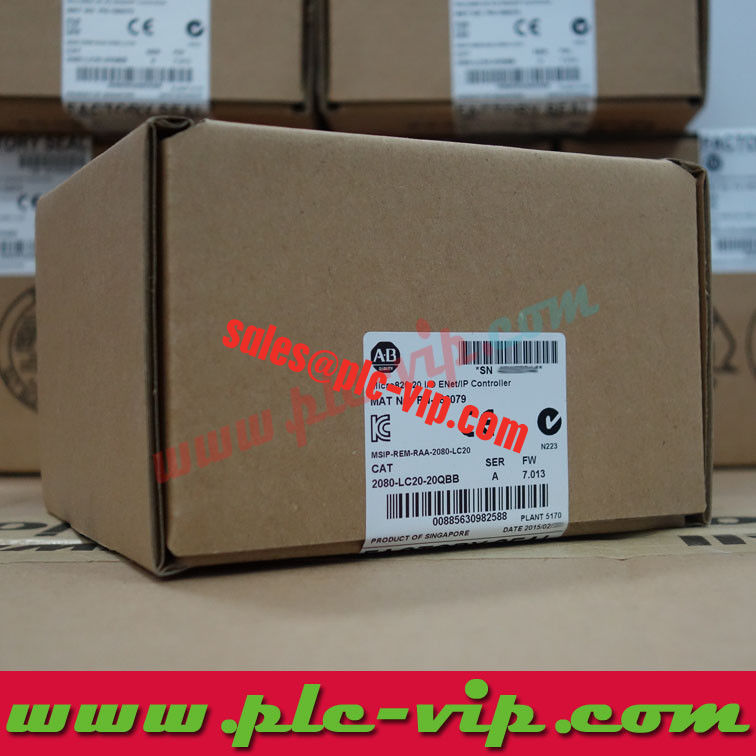
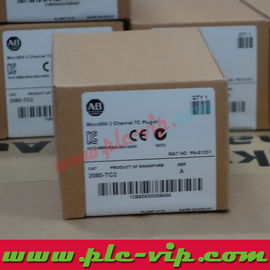
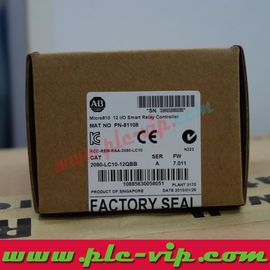
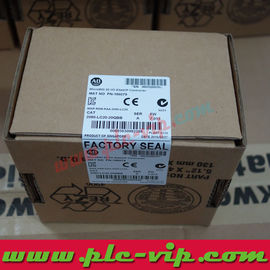
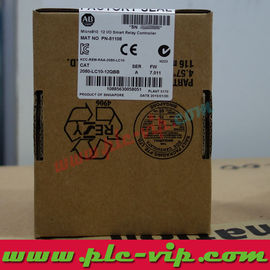
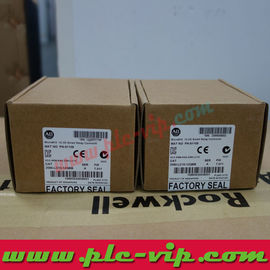
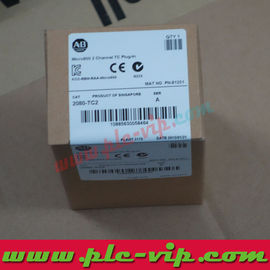
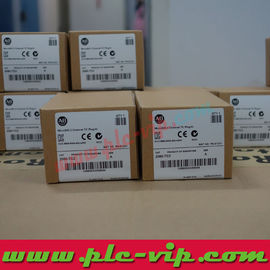
Allen Bradley Micro800 2080-MOT-HSC / 2080MOTHSC
-
-
Large Image :
Allen Bradley Micro800 2080-MOT-HSC / 2080MOTHSC
|
Product Details:
| Place of Origin: |
Made in SINGAPORE |
| Brand Name: |
PLC Module |
| Certification: |
All goods we supply are 100% original factory sealed with 1 year warranty! |
| Model Number: |
Allen Bradley Micro800 2080-MOT-HSC / 2080MOTHSC |
Payment & Shipping Terms:
| Minimum Order Quantity: |
1 /PCS |
| Price: |
$95.00 (USD/PCS) |
| Packaging Details: |
100% original new |
| Delivery Time: |
IN STOCK; 4-6 weeks for ordering |
| Payment Terms: |
T/T, Paypal and Western Union. |
| Supply Ability: |
5 PCS |
|
Detailed Product Description
 2080-MOT-HSC Rockwell Micro800 High Speed Counter Plug-In
Category:
PLCs, Power Supplies & I/Os
Manufacturer:
Rockwell
Group:
Micro800 2080 plug-in modules
2080-MOT-HSC is a High-speed counter plug-in the Bulletin 2080 Micro800 plug-in family. It adds a counter that runs to 250 kHz and accepts 5 V differential line driver signals, which the embedded counter cannot do above 100 kHz.
A plug-in module snaps into a slot on the controller itself, so the I/O count grows without adding a DIN rail footprint or an expansion bus module.
Product Specifications 2080-MOT-HSC (PDF)
Catalog number |
2080-MOT-HSC |
Product type |
High-speed counter plug-in |
Channels / points |
1 to 2 counters |
Signal |
5 V differential line driver or 12/24 V single-ended |
Isolation |
Non-isolated |
Resolution |
Not published |
Controller compatibility |
Micro820, Micro830 and Micro850 plug-in slots; not supported on Micro810 |
Dimensions, H x W x D |
8-pin terminal block |
Temperature rating |
Per 2080-UM004 |
Lifecycle status |
Active |
UPC |
Not published |
Country of origin |
Not published |
Attribute values above are reproduced from the manufacturer's product data. For the authoritative technical record see Rockwell publications 2080-UM004 (module specifications) and Rockwell literature library (installation instructions). Certification details, with certificate and file numbers, are listed in the FAQ below.
What this plug-in adds to a Micro800 system
2080-MOT-HSC is a High-speed counter plug-in the Bulletin 2080 Micro800 plug-in family. It adds a counter that runs to 250 kHz and accepts 5 V differential line driver signals, which the embedded counter cannot do above 100 kHz.
A plug-in module snaps into a slot on the controller itself, so the I/O count grows without adding a DIN rail footprint or an expansion bus module.
Channel count and signal type are fixed by the catalog number: 1 to 2 counters, 5 V differential line driver or 12/24 V single-ended.
Controller compatibility and configuration
Micro820, Micro830 and Micro850 plug-in slots; not supported on Micro810
The module is configured in Connected Components Workbench, not by a hardware switch, so the project file has to match the module that is physically fitted.
Micro810 controllers have no plug-in slots at all; the Micro810 accessories take the USB or display port instead.
Wiring, isolation and channel setup
Rockwell prints the difference to the embedded counter directly: 100 kHz embedded against 250 kHz on the plug-in, 12/24 V embedded against 12/24 V or 5 V differential on the plug-in, and one 5/24 V output on the plug-in that the embedded counter does not have.
Every plug-in this family is rated for the same panel environment, and the terminal block is the part that decides whether a swap is quick or not.
Isolation is Non-isolated. Where that matters, it is stated per model rather than assumed for the whole family.
Ratings, dimensions and lifecycle
Rockwell lists this catalog number as Active.
Dimensions are 8-pin terminal block, rated ambient Per 2080-UM004.
UPC is Not published, country of origin Not published.
Buying and fitting a used plug-in
A used plug-in is only worth fitting if the terminal block and the retaining clips are intact; the clips are what holds the module against vibration.
Match the catalog number exactly. The family contains pairs that differ only in sink versus source output or isolation, and the front label is the only reliable identifier once the box is gone.
It supports most commercial encoders, 5 V differential or 24 V single-ended, and needs individually shielded twisted-pair cable.
FAQ — 2080-MOT-HSC
What does 2080-MOT-HSC do?
High-speed counter plug-in: 1 to 2 counters, 5 V differential line driver or 12/24 V single-ended.
Which controllers accept 2080-MOT-HSC?
Micro820, Micro830 and Micro850 plug-in slots; not supported on Micro810
What is the resolution of 2080-MOT-HSC?
Not published.
What are the dimensions of 2080-MOT-HSC?
8-pin terminal block, rated Per 2080-UM004.
Is 2080-MOT-HSC still available from Rockwell?
Rockwell lists it as Active.
Data sources. Module functions, channel counts and plug-in compatibility come from the Micro800 plug-in module manual 2080-UM004; analog ranges and resolution come from the wiring diagrams 2080-WD003 and 2080-WD004; accessory ratings come from 2080-IN001, 2080-IN010 and 2080-WD001; UPC, origin and lifecycle status come from the Rockwell product page for the catalog number. Anything those documents do not print is marked Not published. Any attribute a publication does not print is marked Not published rather than taken from a distributor page. Catalog number, packaging and stock status are the stock record of this listing.
2080-MOT-HSC: high speed counter plug-in module
2080-MOT-HSC is the high speed counter plug-in for the Micro800 controllers. It raises the counting ceiling from the embedded one hundred kilohertz to two hundred and fifty kilohertz with a five volt differential line driver, and it adds a dedicated output, a rate calculation and a configurable preset or hold input. The rows below are the published values from 2080-UM004.
| Specification | Value |
|---|
| Catalog number | 2080-MOT-HSC, high speed counter plug-in module |
| Maximum count frequency | 250 kHz with a 5V differential line driver |
| Embedded counter comparison | Limited to 100 kHz on the controller embedded high speed counter |
| Input types supported | 12/24V single ended, or 5V differential line driver |
| Encoder compatibility | Most commercial encoders, 5V differential or 24V single ended |
| Number of counters | 1 to 2 |
| Rate timer resolution | 1 microsecond |
| Rate calculation methods | Per pulse, by inverting the measured pulse width; cyclic, by counting pulses over a user defined interval |
| Dedicated outputs | One 5/24V output |
| Preset and hold inputs | Configured as either preset or hold, not both |
| Preset status behaviour | Does not reset automatically, unlike the embedded counter |
| Terminal block | 8 pin female terminal block, pins 0-, A-, B-, Z-, 0+, A+, B+, Z+ |
| Cabling requirement | Individually shielded twisted pair, or the cable recommended by the encoder manufacturer |
| Hardware revision note | Revision 1.xxx accepts only one pulse for rate calculation; revision 2.xxx accepts 1 to 255 |
| Configuration route | HSC user defined function blocks from the sample code library, or native HSCE instructions from Connected Components Workbench version 11 or later |
| Source | 2080-UM004 Micro800 Plug-in Modules User Manual, high speed counter plug-in module chapter |
Two hundred and fifty kilohertz against one hundred is a factor of two and a half, and the real gain is the differential front end rather than the number. A single ended encoder on a noisy machine rarely reaches the embedded ceiling anyway, because counts are lost before the frequency limit is met.
The preset status that does not clear itself is the behaviour change that most often shows up as a mystery. On the embedded counter the bit resets, on this module it does not, and a program ported across without a reset rung holds an output on.
The rows above are the published values from the plug-in modules user manual. Dimming, derating and certification rows are published in the module installation instructions rather than in this chapter, and are not restated here.
One microsecond is the timer resolution for the per pulse rate method, and that number is what decides whether per pulse or cyclic rate calculation is more accurate at a given speed. Below a few hundred hertz the pulse period is long compared with the clock and per pulse wins; at kilohertz rates the timer quantisation dominates.
One five or twenty four volt output is included with the counter, and it is enough to drive a small brake or a pilot light but not a valve. Treating it as a general purpose output is the mistake that requires an expansion module afterwards.
The difference between an embedded counter and this module is a frequency ceiling and an input front end. One hundred kilohertz single ended becomes two hundred and fifty kilohertz with a five volt differential pair, and the differential pair is what buys the noise immunity on a machine that already switches contactors.
Preset and hold inputs are configured rather than dedicated on this module, and that is a deliberate reduction compared with the embedded counter. A machine that needs both a preset and a hold at the same time cannot have them on the same channel.
The counter is configured at runtime through a function block on older firmware and graphically offline on newer firmware, and the sample code lives in the Connected Components Workbench installation rather than in the controller. A commissioning engineer without the right software version cannot see the same configuration screen.
Differential signalling survives what single ended signalling does not. A five volt single ended encoder sharing a cable tray with a drive loses counts at every switching edge, and the same encoder wired as a differential pair ignores the common mode because the receiver looks at the difference.
Hardware revision one only accepts one pulse for rate calculation while revision two accepts one to two hundred and fifty five. The revision is printed on the label, so a spare module from stock can silently change the rate resolution of a working machine.
A counter that reads a two hundred and fifty kilohertz encoder is not automatically a motion controller. Position, velocity and the following error loop still live in the program, and the module only delivers counts and a rate.
The rate calculation method is a software decision with a hardware consequence. Per pulse reports the width of every pulse and inverts it, cyclic counts pulses over a fixed window, and the first updates faster while the second is smoother at low speed.
An eight pin terminal block carries the counter channels as four differential pairs, and the pinout is not interchangeable with the analog output module that uses the same block. Plugging the wrong module into a pre-wired harness is a real risk when the blocks look identical.
A five volt differential encoder and a twenty four volt single ended encoder are both supported, which means the same module serves a servo motor mounted encoder and a proximity switch. The wiring and the terminal block are the same eight pins, and the input type is the configuration not the hardware.
The preset status does not reset automatically, which is a behaviour change that catches programmers migrating from the embedded counter. A rung that assumed the preset bit clears itself will hold the output on, and the fault looks like a wiring problem rather than a logic problem.
Two counters on one module means one plug-in slot serves a dual encoder axis. On a four slot controller that is two axes plus analog plus relay in the same chassis, which is the entire point of the plug-in architecture.
Check the hardware revision on the label before assuming a rate resolution, and reset the preset bit explicitly in the program.