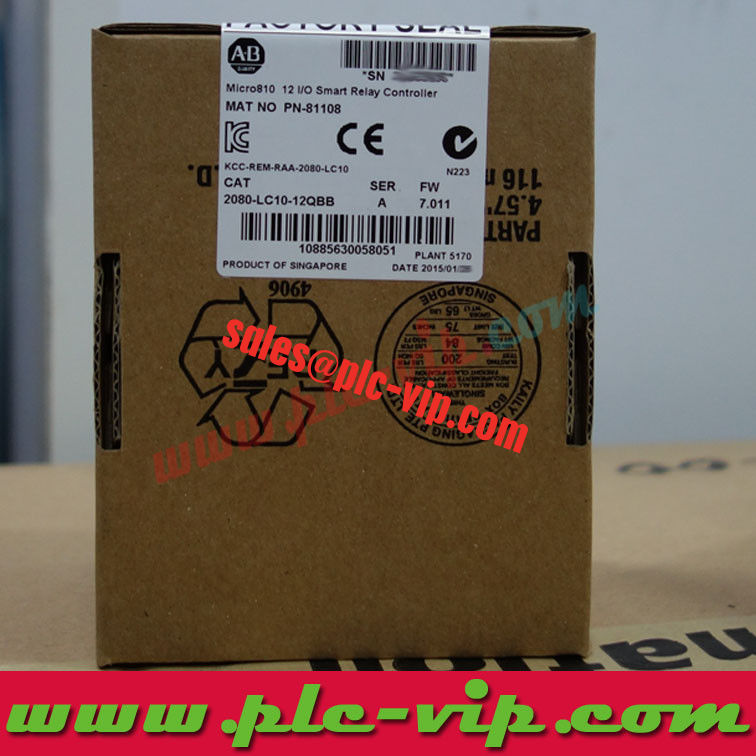
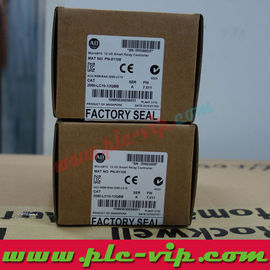
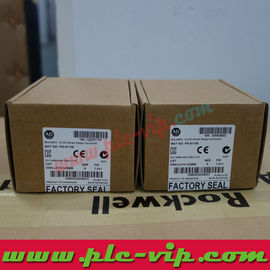
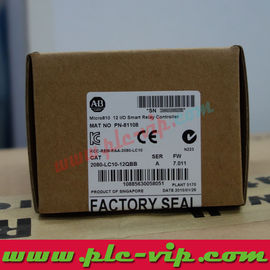
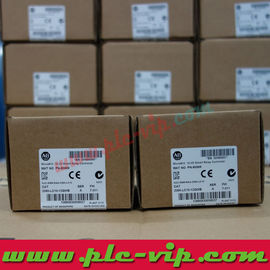
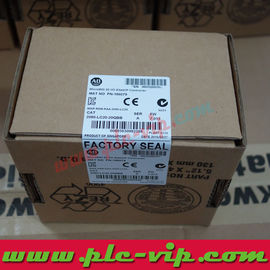
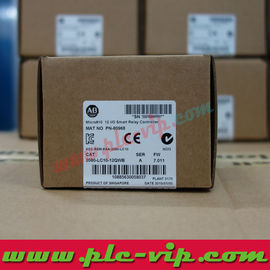
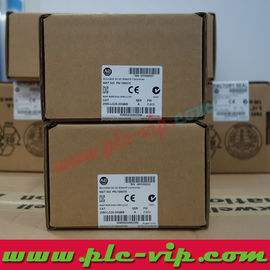
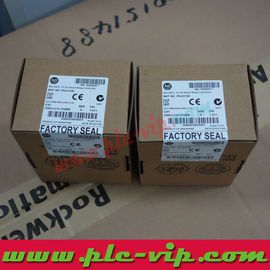
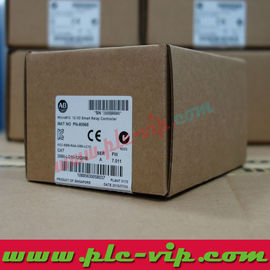
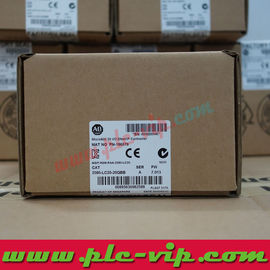
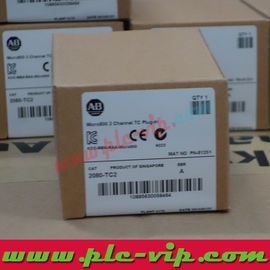
Allen Bradley Micro820 2080-LC20-20QBB / 2080LC2020QBB
-
-
Large Image :
Allen Bradley Micro820 2080-LC20-20QBB / 2080LC2020QBB
|
Product Details:
| Place of Origin: |
Made in SINGAPORE |
| Brand Name: |
PLC Module |
| Certification: |
All goods we supply are 100% original factory sealed with 1 year warranty! |
| Model Number: |
Allen Bradley Micro820 2080-LC20-20QBB / 2080LC2020QBB |
Payment & Shipping Terms:
| Minimum Order Quantity: |
1 /PCS |
| Price: |
$185.00 (USD/PCS) |
| Packaging Details: |
100% original new |
| Delivery Time: |
IN STOCK; 4-6 weeks for ordering |
| Payment Terms: |
T/T, Paypal and Western Union. |
| Supply Ability: |
5 PCS |
|
Detailed Product Description
 2080-LC20-20QBB Rockwell Micro820 20 Point Controller, DC Source Outputs
Category:
PLCs, Power Supplies & I/Os
Manufacturer:
Rockwell
Group:
Micro800 2080 plug-in modules
The 2080-LC20-20QBB replaces the relay bank with eight 24 V DC source outputs, the model for a panel that is entirely 24 V DC.
Source outputs supply the positive side to solenoids, indicators and small DC loads, with no relay wear and no contact bounce.
| 2080-LC10-12AWA |
Micro810, 8 AC in / 4 relay out |
IN STOCK |
| 2080-LC10-12QWB |
Micro810, 8 DC/AC in / 4 relay out |
IN STOCK |
| 2080-LC10-12QBB |
Micro810, 8 DC/AC in / 4 DC source out |
IN STOCK |
| 2080-LC10-12DWD |
Micro810, 8 12V DC in / 4 relay out |
IN STOCK |
| 2080-LC20-20AWB |
Micro820, 12 AC in / 8 relay out |
IN STOCK |
| 2080-LC20-20QWB |
Micro820, 12 DC in / 8 relay out |
IN STOCK |
| 2080-LC20-20QBB |
Micro820, 12 DC in / 8 DC source out |
IN STOCK |
| 2080-LC20-20AWBR |
Micro820 with removable terminal blocks |
IN STOCK |
| 2080-LC20-20QWBR |
Micro820 with removable terminal blocks |
IN STOCK |
| 2080-LC20-20QBBR |
Micro820 with removable terminal blocks |
IN STOCK |
| 2080-LC30-10QWB |
Micro830, 6 DC/AC in / 4 relay out |
IN STOCK |
| 2080-LC30-10QVB |
Micro830, 6 DC/AC in / 4 DC sink out |
IN STOCK |
| 2080-LC30-16AWB |
Micro830, 10 AC in / 6 relay out |
IN STOCK |
| 2080-LC30-16QWB |
Micro830, 10 DC/AC in / 6 relay out |
IN STOCK |
| 2080-LC30-16QVB |
Micro830, 10 DC/AC in / 6 DC sink out |
IN STOCK |
| 2080-LC30-24QWB |
Micro830, 14 DC/AC in / 10 relay out |
IN STOCK |
| 2080-LC30-24QVB |
Micro830, 14 DC/AC in / 10 DC sink out |
IN STOCK |
| 2080-LC30-24QBB |
Micro830, 14 DC/AC in / 10 DC source out |
IN STOCK |
| 2080-LC30-48AWB |
Micro830, 28 AC in / 20 relay out |
IN STOCK |
| 2080-LC30-48QWB |
Micro830, 28 DC/AC in / 20 relay out |
IN STOCK |
| 2080-LC30-48QVB |
Micro830, 28 DC/AC in / 20 DC sink out |
IN STOCK |
| 2080-LC50-24AWB |
Micro850, 14 AC in / 10 relay out |
IN STOCK |
| 2080-LC50-24QVB |
Micro850, 14 DC/AC in / 10 DC sink out |
IN STOCK |
| 2080-LC50-24QBB |
Micro850, 14 DC/AC in / 10 DC source out |
IN STOCK |
| 2080-LC50-48AWB |
Micro850, 28 AC in / 20 relay out |
IN STOCK |
| 2080-LC50-48QWB |
Micro850, 28 DC/AC in / 20 relay out |
IN STOCK |
| 2080-LC50-48QVB |
Micro850, 28 DC/AC in / 20 DC sink out |
IN STOCK |
| 2080-LC50-48QBB |
Micro850, 28 DC/AC in / 20 DC source out |
IN STOCK |
Product Specifications 2080-LC20-20QBB (PDF)
Catalog number |
2080-LC20-20QBB |
Family |
Micro820 20-point Ethernet controller |
I/O points |
20 (12 inputs, 8 source outputs) |
Inputs |
12 inputs, 24 V DC sink/source |
Outputs |
8 outputs, 24 V DC source, 1 A per point at 30 C and 0.3 A at 65 C |
Supply |
24 V DC Class 2, 20.4 to 26.4 V DC |
Communication |
USB 2.0 (USB-C on the 2080-L20E), 10/100 Base-T Ethernet RJ45, RS-232/RS-485 non-isolated combo serial, microSD slot for data logging and recipes |
Plug-in modules |
2 plug-in slots |
Dimensions, H x W x D |
90 x 104 x 75 mm |
Shipping weight |
0.38 kg |
Temperature rating |
-20 to 65 C (-4 to 149 F) |
Power consumption, max |
5.62 W without plug-ins, 8.5 W with |
Lifecycle |
Active |
Removable terminal blocks |
Fixed terminal blocks |
Attribute values above are reproduced from the manufacturer's product data. For the authoritative technical record see Rockwell publications 2080-TD001 (module specifications) and 2080-TD001 (installation instructions). Certification details, with certificate and file numbers, are listed in the FAQ below.
What this controller covers
The 2080-LC20-20QBB replaces the relay bank with eight 24 V DC source outputs, the model for a panel that is entirely 24 V DC.
Source outputs supply the positive side to solenoids, indicators and small DC loads, with no relay wear and no contact bounce.
It is the Micro820 for a machine with a long cycle count on its outputs.
Inputs, outputs and field wiring
Output rating is 1 A per point at 30 C ambient, derating to 0.3 A per point at 65 C.
Inputs are 24 V DC sink/source on all twelve points.
There are no relay contacts on this model, so an AC load needs an external interface.
Communication, plug-ins and programming
Communication and capacity. USB 2.0 (USB-C on the 2080-L20E), 10/100 Base-T Ethernet RJ45, RS-232/RS-485 non-isolated combo serial, microSD slot for data logging and recipes
2 plug-in slots plug-in modules can be fitted, each drawing about 1.44 W of the controller's internal budget.
Connected Components Workbench is the programming environment for the whole family, so a project built for one Micro800 controller converts to another with the I/O reassigned.
Dimensions, ratings and lifecycle
Mounting is DIN rail or panel, 90 x 104 x 75 mm, shipping 0.38 kg.
Rated ambient -20 to 65 C (-4 to 149 F), maximum consumption 5.62 W without plug-ins, 8.5 W with.
Lifecycle. Active
Buying a used Micro800 controller
Twenty points, two plug-in slots, Ethernet, serial and microSD.
Rockwell lists it as Active.
Check the derating before sizing a load: a 1 A solenoid at 60 C panel temperature is already beyond the curve.
FAQ — 2080-LC20-20QBB
How many I/O points does 2080-LC20-20QBB have?
Micro820 20-point Ethernet controller: 20 (12 inputs, 8 source outputs).
What is the input type on 2080-LC20-20QBB?
12 inputs, 24 V DC sink/source.
What does 2080-LC20-20QBB use for communication?
USB 2.0 (USB-C on the 2080-L20E), 10/100 Base-T Ethernet RJ45, RS-232/RS-485 non-isolated combo serial, microSD slot for data logging and recipes.
What are the dimensions of 2080-LC20-20QBB?
90 x 104 x 75 mm, 0.38 kg.
What is the lifecycle status of 2080-LC20-20QBB?
Active.
Data sources. Controller I/O counts, supply ranges, dimensions and weights come from the Micro800 technical data 2080-TD001 and the controller manual 2080-UM002. Application text is written from those tables; nothing here is estimated. Any attribute a publication does not print is marked Not published rather than taken from a distributor page. Catalog number, packaging and stock status are the stock record of this listing.
2080-LC20-20QBB: 20 point Micro820 controller with DC inputs and source outputs
2080-LC20-20QBB is a 20 point Micro820 controller with DC inputs and source outputs in the Micro800 family, and the point table below is the published configuration for this catalog number rather than a family summary.
| Specification | Value |
|---|
| Catalog number | 2080-LC20-20QBB, Micro820 controller, 20 point, 24V DC input, source output |
| Inputs | 12 inputs at 24V DC |
| Outputs | 7 outputs, 24V DC source type |
| Analog output | 1 channel of 0 to 10V DC |
| Analog inputs | 4 channels of 0 to 10V, shared with four of the DC inputs |
| Pulse train output | 1 PWM output supported on this catalog |
| Plug-in slots | 2 |
| Communication | USB 2.0, 10/100 Base-T Ethernet, RS-232/RS-485 combo serial |
| Source | 2080-SG001 Micro800 selection guide, Micro820 controllers input and output table |
The single PWM output is the positioning feature on this catalog, and it is one channel, not a pulse train axis pair. A machine that needs two axes has to look at the larger controllers where the PTO count is published per catalog.
Seven source outputs with twelve DC inputs keep the point mix of the relay model while changing the switching device. The choice is made on cycle rate and on the convention the rest of the panel already uses.
The point mix, the communication ports and the analog channel sharing on this page are taken from the Micro800 selection guide entry for this catalog number. Where a feature depends on a firmware revision, the row states the revision rather than implying it is universal.
The microSD slot is a maintenance feature more than a data feature. Project backup and restore from a card is what allows a service technician to replace a controller without a laptop and the original project file, and data logging and recipes are the secondary uses.
Conformal coating suffixes exist across the family for the same reason they exist elsewhere: condensing humidity, corrosive atmospheres and washdown areas. The suffix changes the materials, not the point mix, and the electrical ratings stay with the base catalog number.
Analog channels shared with digital inputs are a compromise worth understanding. Four 24 volt DC inputs can be configured as 0 to 10 volt analog inputs on the DC input models, which means the channel count is shared rather than added, and a machine that needs both cannot have both.
Plug-in modules and expansion modules are different form factors with different buses. A plug-in module sits in a slot inside the controller housing and shares its power, while an expansion module is a separate DIN rail device with its own terminal blocks, and the wiring effort differs accordingly.
The 2080 numbering carries the point mix in the suffix. AC input models are A, DC input models are Q, and the last letters describe the outputs: W for relay, V for sink, B for source. Reading the suffix is faster than opening the selection guide, and it is the same logic the family uses for expansion modules.
Communication ports on a small controller decide the architecture as much as the I/O does. An embedded Ethernet port with four Class 1 nodes is enough for a drive and a panel, and a serial port with Modbus RTU is enough for a weigh scale, but a machine that needs both protocols on multiple devices has outgrown the compact model.
A twelve point controller with relay outputs is a smart relay replacement, and the design intent is visible in the function blocks: delay on and off, time of day, time of week and time of year are built in rather than programmed, which is what a lighting or pump alternation panel needs.
Rated outputs are the reason these controllers exist in machine building. Two eight amp and two four amp relay outputs on the smallest model remove the external interposing relays for a small pump or a lamp, and the eight amp figure is per output with a total module limit that has to be read before the loads are added up.
The remote LCD module is a configuration aid, not an operator interface. It sets an IP address and shows a text display for a compact controller that has no screen, and its IP65 rating is the reason it can be mounted on the outside of an enclosure rather than behind the door.
A Micro800 controller is specified by the point mix rather than by the point count. Two catalogs with twenty points can carry eight AC inputs and seven relays, or twelve DC inputs and seven relays with an analog output, and the drawing that assumed the wrong mix has to be redone at the terminal level.
Expansion capacity is a hard number, not a suggestion. Micro850 controllers accept up to four expansion modules, and the 2085 family is the one that fits them, while the 2080 plug-in modules occupy the two plug-in slots on the compact models. Mixing the two kinds of expansion is a common ordering error.
Firmware revision gates features on these controllers. EtherNet/IP Class 1 connections to drives and remote LCD support arrive at specific revisions, and a controller from stock may predate them, so the revision belongs in the commissioning checklist rather than in the brochure.
Power supply choice follows from the input type, not from the output type. A controller with 120 to 240 volt AC inputs takes its field power from the same source that feeds the inputs, while a 24 volt DC input model needs a separate supply and puts that supply on the bill of materials.
Choose it where source switching suits the panel and one PWM channel covers the motion requirement.