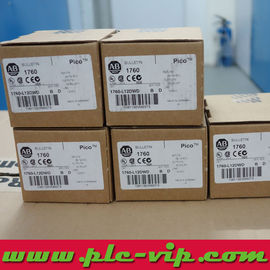
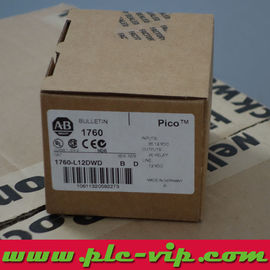
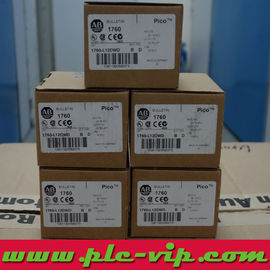
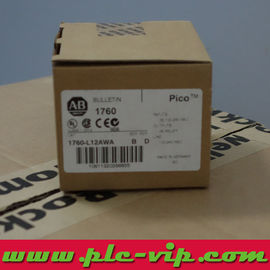
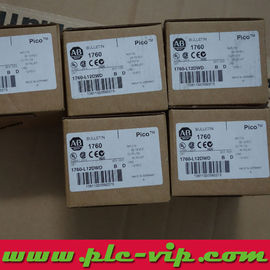
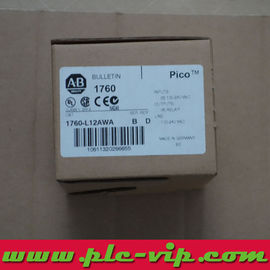
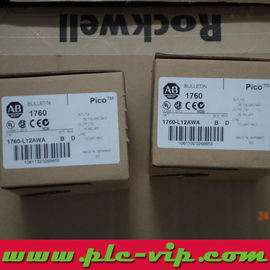
1760-SIM Rockwell Pico I/O Simulator
Category:
PLCs, Power Supplies & I/Os
Manufacturer:
Rockwell
Group:
Pico and PicoGFX 1760 controllers
1760-SIM is Simulator in the Bulletin 1760 range.
It is the bench simulator that replaces field switches with toggles while a circuit diagram is tested.
| 1760-L12BBB |
12 I/O, 24 V DC, 8 DC in / 4 MOSFET out |
IN STOCK |
| 1760-L12BWB |
12 I/O, 24 V DC, 8 DC in / 4 relay out |
IN STOCK |
| 1760-L12BWB-NC |
same as L12BWB without real-time clock |
IN STOCK |
| 1760-L12BWB-ND |
same as L12BWB without display |
IN STOCK |
| 1760-L12DWD |
12 I/O, 12 V DC, 8 DC in / 4 relay out |
IN STOCK |
| 1760-L18AWA-EX |
18 I/O, 120/240 V AC, expansion capable |
IN STOCK |
| 1760-L18BWB-EX |
18 I/O, 24 V DC, expansion capable |
IN STOCK |
| 1760-L20BBB-EX |
20 I/O, 24 V DC, 8 MOSFET out, expansion |
IN STOCK |
| 1760-L20BBB-EXND |
same as L20BBB-EX without display |
IN STOCK |
| 1760-IA12XOW6I |
expansion, 12 AC in / 6 relay out |
IN STOCK |
| 1760-IB12XOW6I |
expansion, 12 DC in / 6 relay out |
IN STOCK |
| 1760-IB12XOB8 |
expansion, 12 DC in / 8 transistor out |
IN STOCK |
| 1760-IB12XOW4IF |
GFX I/O, 12 DC in / 4 relay out, analog in |
IN STOCK |
| 1760-IB12XOW4IOF |
GFX I/O, 12 DC in / 4 relay out, analog in and out |
IN STOCK |
| 1760-OW2 |
expansion, 2 relay out |
IN STOCK |
| 1760-CBL-INT01 |
0.3 m interface cable |
IN STOCK |
| 1760-CBL-PC02 |
PicoGFX programming cable |
IN STOCK |
| 1760-CBL-PM02 |
Pico programming cable |
IN STOCK |
| 1760-DUB |
PicoGFX display unit with keypad |
IN STOCK |
| 1760-LDFC |
PicoGFX GFX-70 processor, 24 V DC |
IN STOCK |
| 1760-MM1 |
memory module |
IN STOCK |
| 1760-MM2B |
memory module, larger |
IN STOCK |
| 1760-NDC |
protective cover |
IN STOCK |
| 1760-PICOSOFT |
PicoSoft programming software |
IN STOCK |
| 1760-PICOSOFTPRO |
PicoSoft Pro programming software |
IN STOCK |
| 1760-SIM |
I/O simulator |
IN STOCK |
| 1760-TERM1 |
Pico-Link termination resistors |
IN STOCK |
| 1760-USB-PICO |
Pico USB programming cable |
IN STOCK |
Product Specifications 1760-SIM (PDF)
Catalog number |
1760-SIM |
Product type |
Simulator |
Specification |
Switch simulator for the Pico inputs |
Used with |
Bulletin 1760 Pico and PicoGFX |
Lifecycle |
Discontinued, 2017 |
Documentation |
1760-UM001 / 1760-UM002 |
Attribute values above are reproduced from the manufacturer's product data. For the authoritative technical record see Rockwell publications 1760-UM001 (module specifications) and 1760-UM001 (installation instructions). Certification details, with certificate and file numbers, are listed in the FAQ below.
What this catalog number is
1760-SIM is Simulator in the Bulletin 1760 range.
It is the bench simulator that replaces field switches with toggles while a circuit diagram is tested.
It is an accessory rather than a controller, so it is ordered against an installed Pico or PicoGFX system.
I/O, wiring and compatibility
Specification: Switch simulator for the Pico inputs.
Compatibility is by bulletin: 1760 accessories work with the Pico range and the PicoGFX range, but not with the later Micro800 family.
The part is mechanical or passive in most cases, so there is no programming step.
Programming, spares and lifecycle
With a simulator on the input terminals, a program can be commissioned before the machine is wired; it needs no software setting, which is why it is still useful on a discontinued controller.
Rockwell's product page for this catalog number carries a discontinuation notice dated 2017.
Rockwell discontinued the Bulletin 1760 Pico and PicoGFX range on 31 March 2017; the product pages now carry a discontinuation notice and no replacement catalogue is offered for the accessories.
Documented data
Every value in the table above comes from Rockwell publication 1760-UM001 or 1760-UM002, or from the Rockwell product page for this catalog number.
Where a value is not printed in those documents it is marked as not published rather than estimated.
Buying a used unit
These parts have been out of production since 2017, so the supply is used or surplus stock rather than new distribution.
For a controller, confirm that the memory module and the programming cable are included: without the cable the unit cannot be reprogrammed, and a memory module carries the only copy of the circuit diagram on many machines.
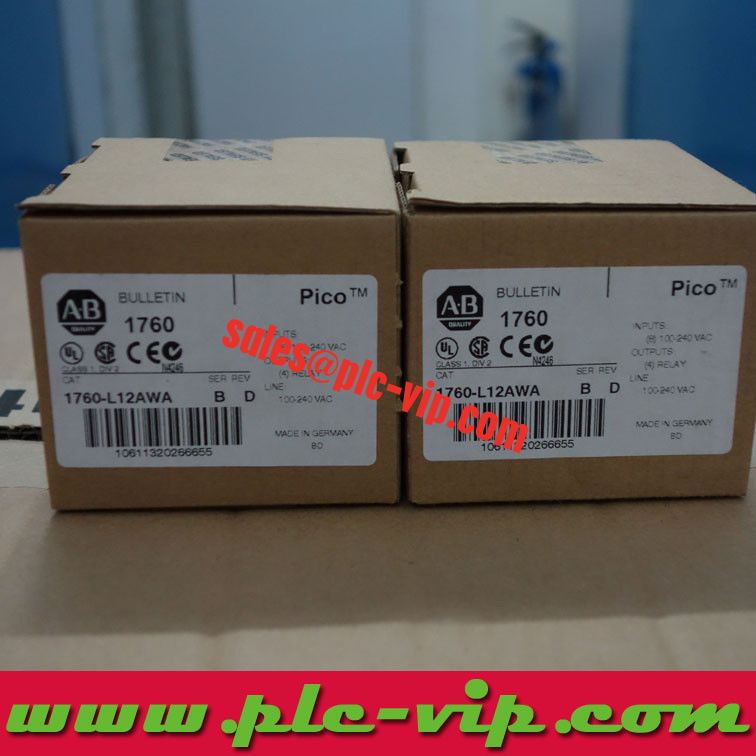
Ask for the label photograph: the ND and NC suffixes change the display and the clock, and the catalog number on the label is the only reliable identifier.
FAQ — 1760-SIM
What is 1760-SIM?
Simulator.
What is the specification?
Switch simulator for the Pico inputs.
Which products use 1760-SIM?
Bulletin 1760 Pico and PicoGFX systems.
What does it simulate?
The digital inputs.
Does it need power?
It is a passive switch unit wired to the input terminals.
Data sources. Pico and PicoGFX data is taken from Rockwell 1760-UM001 and 1760-UM002; accessories from the Rockwell product pages. Discontinuation date 31 March 2017 per Rockwell notice. Any attribute a publication does not print is marked Not published rather than taken from a distributor page. Catalog number, packaging and stock status are the stock record of this listing.