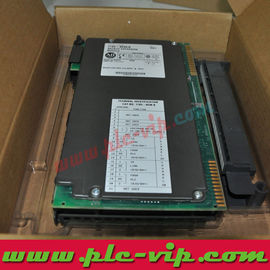
Allen Bradley PLC 1785-CHBM / 1785CHBM
-
-
Large Image :
Allen Bradley PLC 1785-CHBM / 1785CHBM
|
Product Details:
| Place of Origin: |
Made in USA |
| Brand Name: |
PLC Module |
| Certification: |
All goods we supply with 1 year warranty! |
| Model Number: |
Allen Bradley PLC 1785-CHBM / 1785CHBM |
Payment & Shipping Terms:
| Minimum Order Quantity: |
1 /PCS |
| Price: |
$1898.00 (USD/PCS) |
| Packaging Details: |
100% New packaging |
| Delivery Time: |
IN STOCK; 4-6 weeks for ordering |
| Payment Terms: |
Paypal, T/T and Western Union. |
| Supply Ability: |
2 PCS |
|
Detailed Product Description
 1785-CHBM Rockwell ControlNet Backup Cartridge for PLC-5
Category:
PLCs, Power Supplies & I/Os
Manufacturer:
Rockwell
Group:
Bulletin 1785 · PLC-5 controllers, memory and accessories
1785-CHBM is the backup cartridge Rockwell lists for the ControlNet PLC-5 processors.
The cartridge fits the processor memory position and is used to carry a program image for backup or transfer.
| 1785-ACC5LA |
PLC-5 accessory kit |
IN STOCK |
| 1785-ACC5LB |
PLC-5 accessory kit |
IN STOCK |
| 1785-CHBM |
ControlNet backup cartridge |
IN STOCK |
| 1785-ENET |
PLC-5 Ethernet interface module |
IN STOCK |
| 1785-L26B |
PLC-5/26 protected processor, 16 K words |
IN STOCK |
| 1785-L40C15 |
PLC-5 ControlNet 1.5 processor, 48 K words |
IN STOCK |
| 1785-L40C |
PLC-5 ControlNet 1.25 processor, 48 K words |
IN STOCK |
| 1785-L46C15 |
PLC-5/46C ControlNet 1.5 protected processor |
IN STOCK |
| 1785-L40E |
PLC-5/40E Ethernet processor, 48 K words |
IN STOCK |
| 1785-L60B |
PLC-5/60 processor, 64 K words |
IN STOCK |
| 1785-L60L |
PLC-5/60L processor with extended local I/O |
IN STOCK |
| 1785-L80C |
PLC-5 ControlNet 1.25 processor, 100 K words |
IN STOCK |
| 1785-L80B |
PLC-5/80 processor, 100 K words |
IN STOCK |
| 1785-L80C15 |
PLC-5 ControlNet 1.5 processor, 100 K words |
IN STOCK |
| 1785-L80E |
PLC-5/80E Ethernet processor, 100 K words |
IN STOCK |
| 1785-L86B |
PLC-5/86 protected processor, 100 K words |
IN STOCK |
| 1785-M100 |
100 K word memory module |
IN STOCK |
| 1785-ME16 |
16 K word EEPROM memory cartridge |
IN STOCK |
| 1785-ME32 |
32 K word EEPROM memory cartridge |
IN STOCK |
| 1785-ME64 |
64 K word EEPROM memory cartridge |
IN STOCK |
| 1785-RC |
Relay cartridge, edit and force monitoring |
IN STOCK |
Product Specifications 1785-CHBM (PDF)
Catalog number |
1785-CHBM |
Product type |
ControlNet backup cartridge |
Used with |
PLC-5 ControlNet processors |
Lifecycle status |
Discontinued |
Discontinued date |
31 December 2012 |
Replacement category |
Engineering Replacement |
UPC |
Not published |
Country of origin |
Not published |
Attribute values above are reproduced from the manufacturer's product data. For the authoritative technical record see Rockwell publications 1785-UM041 (module specifications) and Rockwell literature library (installation instructions). Certification details, with certificate and file numbers, are listed in the FAQ below.
ControlNet or DH+ channels and memory
1785-CHBM is the backup cartridge Rockwell lists for the ControlNet PLC-5 processors.
It is a memory cartridge in the same family as the ME and M modules, and the controller reports it as card type 5 in status word 68.
Installing it in a PLC-5 chassis
The cartridge fits the processor memory position and is used to carry a program image for backup or transfer.
Rockwell's ControlNet PLC-5 documentation, 1785-UM041, is the manual that covers the processor this cartridge belongs to.
Lifecycle and replacement
Rockwell lists 1785-CHBM as Discontinued as of 31 December 2012, replacement category Engineering Replacement.
Like the other PLC-5 cartridges, it has no current drop-in equivalent.
Where these are still in use
Cartridges are bought to move a program between ControlNet PLC-5 processors without a programming terminal, and to keep a backup image beside the panel.
Plants that still run ControlNet PLC-5 lines keep one in the spares cabinet for exactly that reason.
Buying a used unit
Check the cartridge label and the reported card type, and confirm the contacts are clean before insertion.
Assume the cartridge carries a program image until it has been erased.
FAQ — 1785-CHBM
What is 1785-CHBM?
The ControlNet backup cartridge for PLC-5 ControlNet processors.
When was it discontinued?
31 December 2012.
How is it identified by the controller?
As card type 5 in status word 68.
Which manual covers it?
1785-UM041, the ControlNet PLC-5 user manual.
What should I check before buying?
Label, contacts and that the previous image is erased.
Data sources. Memory, I/O and channel figures come from the PLC-5 system specification table in 1785-UM012; lifecycle dates and UPC codes come from the Rockwell product page for the catalog number. Anything neither source prints is marked Not published. Any attribute a publication does not print is marked Not published rather than taken from a distributor page. Catalog number, packaging and stock status are the stock record of this listing.
1785-CHBM: ControlNet PLC-5 hot backup module
1785-CHBM is the backup cartridge that turns two ControlNet PLC-5 processors into a hot backup pair. The rows below are the published pairing, the published quantity and the published known anomaly, including the processors it affects and the workaround, because a latent crossload fault is the only failure a pair of this kind has.
| Specification | Value |
|---|
| Catalog number | 1785-CHBM, ControlNet PLC-5 hot backup module |
| Form | Backup cartridge fitted to the processor rather than a module in a rack slot |
| Required quantity | One per processor; a hot backup pair needs two |
| Supported pairing | Two ControlNet PLC-5 processors, PLC-5/40C or PLC-5/80C, one configured primary and one configured secondary |
| Function | Crossloads the data table from the primary processor to the secondary so the secondary can take control |
| Known anomaly, affected processors | 1785-L40C15 and 1785-L80C15, Series F, revisions B, B.1, C, C.1, C.2, C.3 and D |
| Known anomaly, behaviour | When the data table crossload is performed over Data Highway Plus, the secondary processor data table memory can be altered incorrectly; the primary is unaffected |
| Known anomaly, consequence | At a switchover the secondary can assume control using incorrect data table values |
| Published workaround | Perform the data table crossload over ControlNet instead of Data Highway Plus |
| Correction | Stated in the release notes as corrected in the next release of ControlNet PLC-5 firmware |
| Source | 1785-RN527A-EN-P release notes for the hot backup module; ControlNet PLC-5 programmable controllers user manual, hot backup section |
The anomaly is specific to a list of series and revisions, and that list is published rather than implied. A pair built from processors outside it is outside the statement as well as outside the workaround, so the first step is reading the label rather than the catalog number.
The failure is invisible until a switchover. That is what makes a documented anomaly more dangerous than a documented defect: the machine passes acceptance, runs for months, and fails exactly once, at the moment the redundancy is called upon.
Rows on this page are reproduced from the release notes for this module and from the hot backup section of the ControlNet PLC-5 user manual. Electrical ratings, dimensions and environmental figures are published in the hot backup system manual rather than in these two documents and are not restated here.
Crossloading the data table over Data Highway Plus is the configuration that the release notes warn against. The published failure is that the secondary processor can have its data table altered incorrectly during the crossload, and the consequence appears only at a switchover, when the secondary takes control with values nobody has checked.
Redundancy is not the same as safety. A hot backup pair keeps a process running through a processor failure, and it does nothing about a field wiring fault, an output that welds, or a program that is wrong on both processors. The pair is an availability feature.
Availability engineering counts the switchover, not the install. A pair that has never been forced over is an assumption about redundancy, and the part numbers in this family only make the assumption possible.
Switching the crossload to ControlNet is the published workaround, and it costs a network configuration change rather than a part. A site that has always crossloaded over Data Highway Plus has to change the method before the next switchover test, not after it.
A backup cartridge that has been in service for years is a part with a battery and a memory of its own on some platforms, and its state follows the processor it was commissioned with. Moving a cartridge between processors without reinitialising it is how a stale data table reaches a live machine.
The cartridge is the mechanism that keeps the secondary processor tracking the primary. It carries the data table synchronisation, and the network it uses for that synchronisation is a configuration decision rather than a hardware one. The known anomaly in this family is entirely about that decision.
The processors named in the release notes are the fifteen variants of the forty and eighty point ControlNet frames, in a specific list of series and revisions. A pair built from processors outside that list is not covered by the anomaly statement and is not covered by the workaround either; the publication is specific for a reason.
Firmware release notes are the only place a latent crossload fault is documented. A site that keeps its processors at the revision they shipped with, and never reads the release notes, is running a pair whose only known failure mode is a switchover with bad data.
The anomaly affects the secondary and not the primary. That is the property that makes it dangerous rather than inconvenient: the machine runs correctly until the moment it fails over, so the fault is latent for months and appears exactly when redundancy is supposed to pay off.
Two processors in a pair have to be matched in firmware as well as in catalog number. A pair with different firmware revisions can crossload successfully and still diverge, and the divergence shows up as a difference in behaviour after a switchover.
A hot backup pair is two identical processors and two backup cartridges, not one cartridge shared between them. The module is fitted to each processor, and a pair with one cartridge is a pair that cannot crossload, which is the state a machine arrives in when a spare was ordered as a single unit.
A hot backup pair is tested by forcing a switchover deliberately. The test is only meaningful if the crossload path has been exercised first, because a pair that crossloads incorrectly passes every test except the one that matters.
The module is a cartridge rather than a card in the rack, which means it does not consume a slot and it does not appear in the I/O configuration in the usual way. That is also why it is missed in a bill of materials review: it is a line item next to the processor rather than a line item under I/O.
Read the processor series and revision before assuming the workaround applies, and force a switchover test after any change to the crossload path.