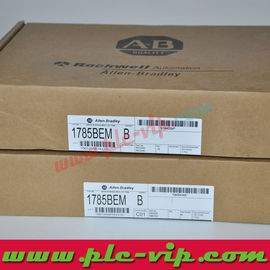
Detailed Product Description
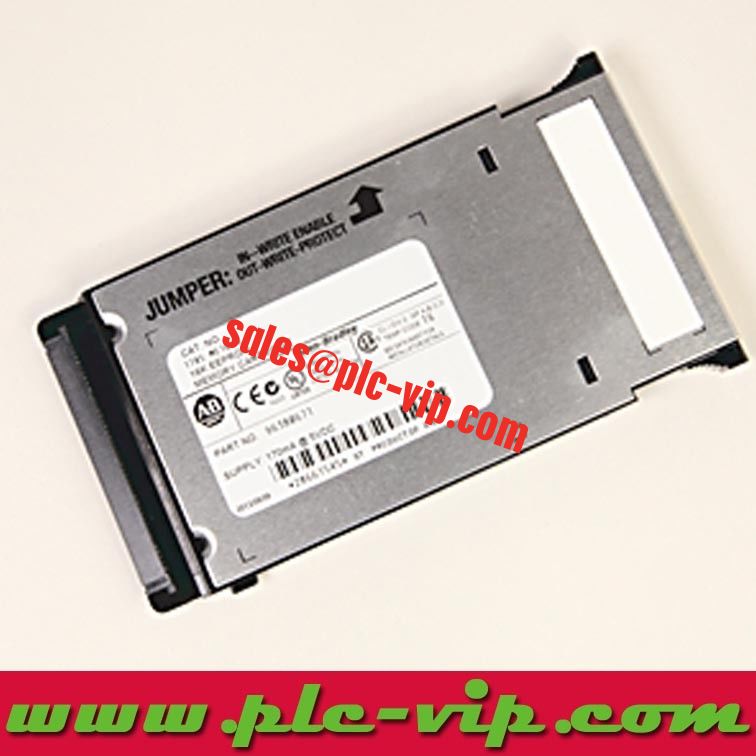
 1785-ME32 Rockwell PLC-5 32 K Word Memory Cartridge
Category:
PLCs, Power Supplies & I/Os
Manufacturer:
Rockwell
Group:
Bulletin 1785 · PLC-5 controllers, memory and accessories
1785-ME32 is the 32 K word member of the PLC-5 memory cartridge family, sitting between the 16 K and 64 K cartridges.
The cartridge occupies the processor's memory cartridge position and is read at power-up if the processor is set to load from the module.
| 1785-ACC5LA |
PLC-5 accessory kit |
IN STOCK |
| 1785-ACC5LB |
PLC-5 accessory kit |
IN STOCK |
| 1785-CHBM |
ControlNet backup cartridge |
IN STOCK |
| 1785-ENET |
PLC-5 Ethernet interface module |
IN STOCK |
| 1785-L26B |
PLC-5/26 protected processor, 16 K words |
IN STOCK |
| 1785-L40C15 |
PLC-5 ControlNet 1.5 processor, 48 K words |
IN STOCK |
| 1785-L40C |
PLC-5 ControlNet 1.25 processor, 48 K words |
IN STOCK |
| 1785-L46C15 |
PLC-5/46C ControlNet 1.5 protected processor |
IN STOCK |
| 1785-L40E |
PLC-5/40E Ethernet processor, 48 K words |
IN STOCK |
| 1785-L60B |
PLC-5/60 processor, 64 K words |
IN STOCK |
| 1785-L60L |
PLC-5/60L processor with extended local I/O |
IN STOCK |
| 1785-L80C |
PLC-5 ControlNet 1.25 processor, 100 K words |
IN STOCK |
| 1785-L80B |
PLC-5/80 processor, 100 K words |
IN STOCK |
| 1785-L80C15 |
PLC-5 ControlNet 1.5 processor, 100 K words |
IN STOCK |
| 1785-L80E |
PLC-5/80E Ethernet processor, 100 K words |
IN STOCK |
| 1785-L86B |
PLC-5/86 protected processor, 100 K words |
IN STOCK |
| 1785-M100 |
100 K word memory module |
IN STOCK |
| 1785-ME16 |
16 K word EEPROM memory cartridge |
IN STOCK |
| 1785-ME32 |
32 K word EEPROM memory cartridge |
IN STOCK |
| 1785-ME64 |
64 K word EEPROM memory cartridge |
IN STOCK |
| 1785-RC |
Relay cartridge, edit and force monitoring |
IN STOCK |
Product Specifications 1785-ME32 (PDF)
Catalog number |
1785-ME32 |
Product type |
PLC-5 memory cartridge |
Storage capacity |
32 K |
Lifecycle status |
Discontinued |
Discontinued date |
Not published |
Replacement category |
Engineering Replacement |
UPC |
Not published |
Country of origin |
Not published |
Attribute values above are reproduced from the manufacturer's product data. For the authoritative technical record see the Rockwell literature library and the module-specific publication named in the technical data section above.
ControlNet or DH+ channels and memory
1785-ME32 is the 32 K word member of the PLC-5 memory cartridge family, sitting between the 16 K and 64 K cartridges.
Rockwell reports the fitted card type in status word 68, so a 32 K cartridge answers differently from a 16 K or 64 K one.
Installing it in a PLC-5 chassis
The cartridge occupies the processor's memory cartridge position and is read at power-up if the processor is set to load from the module.
Matching the cartridge to the processor's supported capacity matters: a cartridge larger than the controller supports will not extend memory.
Lifecycle and replacement
The catalog number is listed as Discontinued; Rockwell's published date for this capacity is not printed, so this page does not quote one.
Replacement category is Engineering Replacement, meaning Rockwell expects a controller migration rather than a like-for-like cartridge.
Where these are still in use
32 K cartridges are bought to back up mid-size PLC-5 programs, typically on lines where the program outgrew a 16 K cartridge but never reached the 64 K class.
Field service teams keep one on the shelf because re-burning an image on site needs a terminal that may not be available.
Buying a used unit
Confirm the capacity printed on the cartridge and that the edge contacts are undamaged.
Assume any cartridge still holds a program image until it has been erased.
FAQ — 1785-ME32
What is 1785-ME32?
A 32 K word memory cartridge for PLC-5 controllers.
What is its discontinued date?
Rockwell does not print one for this capacity; the catalog number is Discontinued.
How do I tell capacities apart?
The controller reports the fitted card type in status word 68; the label also carries the capacity.
Is a larger cartridge always better?
No. The controller only uses capacity it supports.
What should I check on a used cartridge?
Capacity marking, contact condition and that the image has been erased.
Data sources. Memory, I/O and channel figures come from the PLC-5 system specification table in 1785-UM012; lifecycle dates and UPC codes come from the Rockwell product page for the catalog number. Anything neither source prints is marked Not published. Any attribute a publication does not print is marked Not published rather than taken from a distributor page. Catalog number, packaging and stock status are the stock record of this listing.
1785-ME32: PLC-5 EEPROM memory module, 32 K words
1785-ME32 is the PLC-5 EEPROM memory module, 32 K words in the PLC-5 support and interface group. Memory cards back up the program, the relay cartridge provides a hardwired contact, and the sidecar puts a DH+ controller onto Ethernet.
| Attribute | Value |
| Catalog number | 1785-ME32 |
| Product type | PLC-5 EEPROM memory module, 32 K words |
| Family | PLC-5, bulletin 1785 |
| Type | EEPROM memory card for the controller memory module slot |
| Capacity | 32 K words |
| Status code | S:68 reports 2 when this card is installed |
| Fits controllers with | 32,768 words of user memory, that is the PLC-5/30 class and above |
| Load rule | User memory on the target must be at least the memory used on the source controller |
| I/O racks of target | 8 racks for PLC-5/30, 16 for PLC-5/40, 24 for PLC-5/60 and PLC-5/80 |
| Data table limits | PLC-5/40 is limited to 32 K words per data table file |
| Restore effect | Date and time follow the card only when controller memory is bad |
| Cross family | ControlNet and non ControlNet cards are not interchangeable |
| Source | 1785-UM012D-EN-P, Enhanced and Ethernet PLC-5 controllers |
Thirty two thousand words matches the PLC-5/30 exactly and leaves the PLC-5/40 with headroom, which is why this card is the usual spare for a mixed PLC-5 site. The caveat is the data table: a PLC-5/40 accepts 32 K words of user memory but no more than 32 K words in a single data table file, so a program that grew a large data file may not fit even though the card does.
Three facts from 1785-UM012D set the boundary for this part: the card slot reports its contents in S:68, the loading rules are set by user memory and I/O racks rather than by the card alone, and ControlNet and non ControlNet cards never cross.
The published controller limits that decide whether this part is the right one are 8,192 words on the PLC-5/11, 16,384 on the PLC-5/20, 32,768 on the PLC-5/30, 65,536 on the PLC-5/40 and 102,400 on the PLC-5/80, with a rack ceiling of 4, 4, 8, 16 and 24 respectively.
Rack numbering is octal and the range depends on the model: 00 to 03 on the PLC-5/11, PLC-5/20 and PLC-5/20E, 00 to 07 on the PLC-5/30, 00 to 17 on the PLC-5/40, PLC-5/40L and PLC-5/40E, and 00 to 27 on the PLC-5/60, PLC-5/60L, PLC-5/80 and PLC-5/80E. A 32-point module consumes rack numbers as the adapter allocates the remaining groups.
The user memory figures behind that rule are 8,192 words on the PLC-5/11, 16,384 on the PLC-5/20, 32,768 on the PLC-5/30, 65,536 on the PLC-5/40 and 102,400 on the PLC-5/80. Those are the numbers to compare against the program size before a card is carried from one machine to another as a quick fix.
The controller reports what is in the slot through S:68. Code 0 means no card, 1 is 1785-ME16, 2 is 1785-ME32, 3 is 1785-ME64, 4 is the 100 K card, 5 is 1785-CHBM and 6 is 1785-RC. Codes 7 to 15 are reserved, so an unexpected value is a fault indication rather than an unknown card.
Multihop messaging is the feature that lets a PLC-5 reach a ControlLogix processor through a 1756-ENET module and out through a 1756-DHRIO. It requires a series E revision D controller or later and a series B or later sidecar, plus RSLogix 5 release 3.2 or later, and the routing table in the DHRIO is configured from the Gateway software.
The restore path has one behaviour worth writing into the maintenance procedure. If the controller memory is bad, restoring from the card also sets the controller date and time to the date and time that were saved with the card. If the controller memory is still valid, the current date and time are kept. A historian that timestamps events will show the difference.
The battery behind all of this is the 1770-XYC, which contains 0.65 grams of lithium. On the PLC-5/11, PLC-5/20 and PLC-5/20E the published life is 256 days at 60 degrees C with the power off 100 percent of the time and 1.4 years at 50 percent, or 2 years and 4 years at 25 degrees C. The larger processors are shorter: 84 and 150 days at 60 degrees C, 1 year and 1.2 years at 25 degrees C.
Ethernet on this generation is 10 Mbps and the physical layer is whatever 802.3 media the site already has: thick wire 10Base5, thin wire 10Base2, twisted pair 10Base-T, fiber or broadband. The controller port is a 15-pin AUI connector, so the media choice is made by the transceiver rather than by the controller.
The programming port on these controllers is channel 0, a 25-pin D-shell serial port that supports RS-232C and RS-423 and is RS-422A compatible. Its pin assignment is printed on the side label of the controller, and the RS-422A use assumes no termination resistors with the distance and rate reduced to RS-423 limits.
ControlNet is a hard boundary. A card burned on a ControlNet PLC-5 cannot be loaded to a non ControlNet controller, and a card burned on a non ControlNet controller cannot be loaded to a ControlNet PLC-5. The two families look identical at the card slot, so this rule is the one that ruins a weekend if it is missed.
Two fault codes cover the card itself. Code 82 means an illegal cartridge type for the selected operation and also appears when the controller has no memory module at all, and code 85 means the memory module is bad. A successful upload sets S:1/10, which is the bit to check after a save rather than the programmer screen.
A DH+ channel and a remote I/O channel are the same physical port on these controllers, and the three pin ports are configured for remote I/O scanner, remote I/O adapter or DH+ communication. Changing that configuration after commissioning changes the addresses of everything downstream, so the mode belongs in the as built drawing.
Compatibility is defined twice, once by user memory and once by I/O memory. The card will load if the target controller has at least the user memory that was in use when the card was burned, and if its I/O memory is at least that of the controller the card came from. The rack counts are 4 for PLC-5/11 and PLC-5/20, 8 for PLC-5/30, 16 for PLC-5/40 and 24 for PLC-5/60 and PLC-5/80.
After the battery indicator first lights, the remaining life is measured in days rather than months: 11.5 days at 60 degrees C and 47 days at 25 degrees C on the small processors, 5 days and 30 days on the PLC-5/30 and above. A maintenance schedule built on months will therefore miss the window on a large controller.
The transceiver catalogue is small and specific: 1785-TR10BT for twisted pair, 1785-TR10BF for optical, 1785-TR10B2 for thin wire and 1785-TR10B5 for thick wire, with the 5810 series thin and thick wire parts as the older equivalents. Transceiver cables come in 2.0 m and 15.0 m lengths, and the kits pair a transceiver with one of those cables.
An EEPROM card is a program backup device, not extra working memory. The program is saved to the card from the programming software while the controller runs, and the card is then loaded back into controller memory after a battery failure or a memory fault. Nothing executes from the card, so the controller user memory still decides what program size is possible.
Before ordering any memory or interface part for a PLC-5, confirm the processor catalog number, the series and firmware revision, and check the label on the card itself against the catalog number on the drawing before the part is fitted.