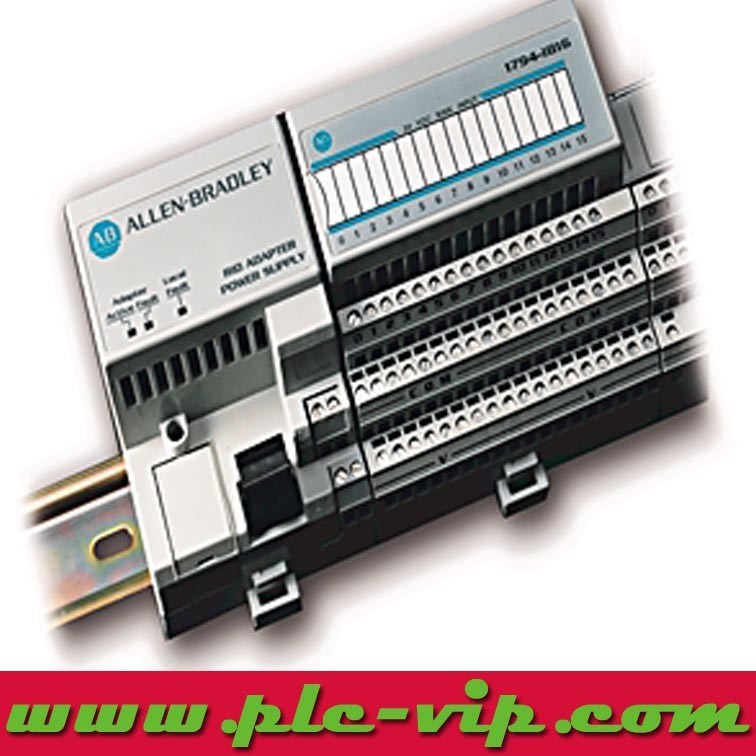
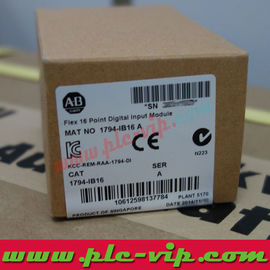
FLEX I/O 1794-IA8I / 1794IA8I 8-Point 120V AC Input Module
Category:
PLCs, Power Supplies & I/Os
Manufacturer:
Rockwell
Group:
PLC I/O
The 1794-IA8I is the same eight-channel 120V AC input as the 1794-IA8, published with a 1240V AC field-to-system test instead of 1250V AC and carrying the I suffix in the catalogue number.
Because the electrical position is identical, it drops into the same terminal bases and the same configuration; the difference is the published isolation figure, not the behaviour in the panel.
Product Specifications 1794-IA8I (PDF)
Application |
FLEX I/O digital input, 1794 terminal base |
Cat Num |
1794-IA8I |
Brand Name |
Rockwell |
Inputs |
8, AC |
Input voltage |
120V AC nominal |
On-state voltage |
65V AC minimum |
Off-state voltage |
43V AC maximum |
Input current |
12 mA at 120V AC, 60 Hz |
Input impedance |
10.6 kOhm |
Input filter |
8.4...40 ms off to on, 26.4...58 ms on to off |
Isolation |
1240V AC for 60 s, field to system |
Power dissipation |
4.5 W at 132V AC (15.3 BTU/hr) |
Terminal base |
1794-TBN, -TBNK, -TB2, -TB3, -TB3S, -TB3K, -TB3SK, -TBKD |
Operating temperature |
-20...55 deg C |
Attribute values above are reproduced from the manufacturer's product data. For the authoritative technical record see Rockwell publications 1794-DU001 (module specifications) and 1794-SG002 (installation instructions). Certification details, with certificate and file numbers, are listed in the FAQ below.
What the I suffix changes
1240V AC for 60 s is the published field-to-system isolation, against 1250V AC for the 1794-IA8 — a ten-volt difference in the type-test figure, not a change in function.
The input stage is unchanged: 8 channels, 12 mA at 120V AC, 10.6 kOhm impedance, 65V AC on and 43V AC off thresholds.
Ordering either suffix gives a card that reads the same signals in the same way; the choice usually follows what the drawing or the spares list already names.
Do not read the I as channel isolation. Neither version isolates channel from channel; both isolate the field side from the system side only.
Thresholds and leakage
65V AC to turn on, 43V AC to stay off. The 22V band between them is deliberate: it stops a marginal circuit from chattering at the threshold.
12 mA at 120V AC is the current the switch has to carry; a pilot-light-style switch rated at 1.5 A closes it without drama, a 0.1 A solid-state device may not.
Solid-state leakage passes through the 10.6 kOhm input impedance and produces a voltage the card may read as on; a bleeder resistor across the input is the field fix.
Long cable runs add capacitance and pick-up; the selectable filter is the control on that, and the 40 ms setting is what a noisy 120V circuit usually ends at.
Filtering and response
8.4...40 ms off to on and 26.4...58 ms on to off are the selectable limits, set once per module from the adapter configuration.
Filtering is in the module, so the response does not change with the network the island sits on.
A mechanical limit switch bouncing for 10 ms is cleaned up at the shortest setting; a genuine 30 ms pulse needs the shorter end of the range to be seen at all.
The penalty is symmetric: the same filter that rejects a contactor arc also delays a real transition, so the value belongs in the sequence timing calculation, not in a default.
All eight channels share one setting, which is why mixed mechanical and solid-state panels are usually split across two cards.
Base and installation
The same eight bases fit both AC input variants: 1794-TBN, -TBNK, -TB2, -TB3, -TB3S, -TB3K, -TB3SK and -TBKD.
1794-TBN and -TBNK carry fused terminals, which is the usual choice for a 120V AC input circuit in a panel that does not fuse elsewhere.
Module replacement leaves the wiring because the base holds the field terminals; the FlexBus connection is made at the back of the module.
Keying is mechanical and must match before insertion; a module forced into the wrong key position bends the FlexBus pins.
-20...55 deg C, 5 g vibration at 10...500 Hz, 30 g shock are the general FLEX I/O ratings that apply to this card in a normal cabinet.
Where it is used
Legacy 120V AC panels where the existing devices are limit switches, float switches and starter auxiliary contacts.
Machines with no 24V rail. A card that reads the field voltage directly avoids adding a supply and a relay interface to an otherwise working panel.
Not for 240V circuits. A 120V nominal card is not a 240V card; the 1794-IM8 exists for that.
Not for safety functions. The input is a control signal; it carries no safety certification as a safety input.
FAQ — 1794-IA8I
How does the 1794-IA8I differ from the 1794-IA8?
The published field-to-system isolation is 1240V AC for 60 s instead of 1250V AC; the input stage, thresholds and bases are the same.
How many inputs and at what voltage?
Eight inputs at 120V AC nominal, 12 mA, 10.6 kOhm impedance.
What are the switching thresholds?
65V AC minimum on and 43V AC maximum off.
Is there channel-to-channel isolation?
No. The card isolates field from system only, in both the IA8 and the IA8I version.
Which bases are compatible?
1794-TBN, -TBNK, -TB2, -TB3, -TB3S, -TB3K, -TB3SK and -TBKD.
What is the operating temperature range?
-20...55 deg C, with the general FLEX I/O vibration and shock ratings.
Data sources. Technical values on this page come from Rockwell publication 1794-SG002 (FLEX I/O Selection Guide, Table 7 and Table 10) and 1794-IN093. Any attribute the publication does not print is marked Not published rather than taken from a distributor page. Catalog number, packaging and stock status are the stock record of this listing.