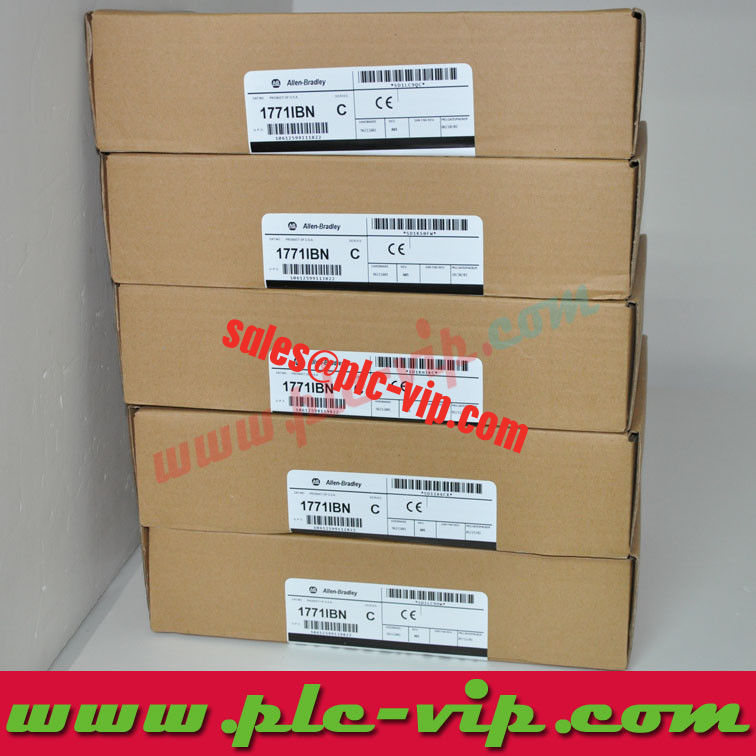
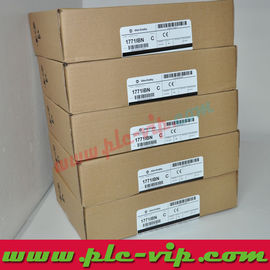
Allen Bradley PLC 1771-IGD / 1771IGD
-
-
Large Image :
Allen Bradley PLC 1771-IGD / 1771IGD
|
Product Details:
| Place of Origin: |
Made in USA |
| Brand Name: |
PLC Module |
| Certification: |
All goods we supply with 1 year warranty! |
| Model Number: |
Allen Bradley PLC 1771-IGD / 1771IGD |
Payment & Shipping Terms:
| Minimum Order Quantity: |
1 /PCS |
| Price: |
$435.00 (USD/PCS) |
| Packaging Details: |
100% New packaging |
| Delivery Time: |
IN STOCK; 2-4 weeks for ordering |
| Payment Terms: |
Paypal, T/T and Western Union. |
| Supply Ability: |
2 PCS |
|
Detailed Product Description
 1771-IGD Rockwell 16 Point TTL Input Module
Category:
PLCs, Power Supplies & I/Os
Manufacturer:
Rockwell
Group:
Bulletin 1771 · PLC-5 input modules
1771-IGD is a 16-point TTL input module for the 1771 I/O chassis used by PLC-5 and PLC-2 processors. Sixteen TTL inputs on one card, used where a rack has to read a block of solid state outputs or a counter board without an interposing relay.
Field connections land on the 1771-WA wiring arm, the 10-terminal arm that swings up to the module so the arm can stay wired while the module is swapped.
Product Specifications 1771-IGD (PDF)
Catalog number |
1771-IGD |
Product type |
16-point TTL input module |
Number of inputs |
16 |
Input signal |
TTL level DC |
Module series |
A |
1771 chassis compatibility |
Series A and B chassis |
Lifecycle status |
Discontinued |
Discontinued date |
31 December 2020 |
Replacement category |
Engineering Replacement |
UPC |
Not published |
Country of origin |
Not published |
Field wiring arm |
1771-WA, 10 terminal |
Attribute values above are reproduced from the manufacturer's product data. For the authoritative technical record see Rockwell publication 1771-TD180 (module specifications) and the Rockwell literature library (installation instructions).
What the module does in a 1771 rack
1771-IGD is a 16-point TTL input module for the 1771 I/O chassis used by PLC-5 and PLC-2 processors. Sixteen TTL inputs on one card, used where a rack has to read a block of solid state outputs or a counter board without an interposing relay.
The slot it occupies is one 1771 slot, and the input image it claims is fixed by the module series: 16. That number decides how much of the processor input table the rack consumes, not how many wires the panel brings in.
Signal level is TTL level DC. Nothing in the module is software configurable, so the field device has to match the printed range before the module is ordered.
Wiring, keying and the 1771-WA arm
Field connections land on the 1771-WA wiring arm, the 10-terminal arm that swings up to the module so the arm can stay wired while the module is swapped.
Keying bands in the chassis connector must line up with the slots on the module board. 1771 chassis are keyed per module type precisely so a 120 V AC module cannot be pushed into a slot wired for a 24 V DC module.
Backplane current comes from the chassis supply, so the load of every module in the rack has to be added up before a rack is repopulated with these cards.
Published compatibility: image bits 16, module series A, unrestricted in both chassis series.
Chassis compatibility and addressing
Chassis compatibility is published per module series: Series A and B chassis. Series A modules fit the superseded 1771-A1, -A2 and -A4 chassis as well as the current A1B to A4B and AM1/AM2 chassis.
Some 32-point and isolated cards can only be placed under 1-slot or 2-slot addressing rules, so the addressing mode of the chassis has to be confirmed before a mixed rack is built.
Lifecycle and replacement
Rockwell lists 1771-IGD as Discontinued, replacement category Engineering Replacement.
The published discontinued date is 31 December 2020.
The family replacement path is a 1756 or 1794 migration, which means the field wiring, the wiring arms and the addressing scheme all change. Buying the same catalog number is usually cheaper than re-terminating a panel.
Buying a used module
Ask for a photo of the label side and the wiring arm. A module removed without its arm has to be re-keyed and re-wired, which is where most of the cost of a used card actually sits.
Check the module series letter against the chassis series: an A-series card in an A1B chassis works, but the reverse combination is what produces "module not recognised" faults.
These are static-sensitive cards. A unit shipped loose without conductive foam is a risk, whatever the price.
FAQ — 1771-IGD
How many inputs does 1771-IGD have?
16, on the published 1771 data sheet.
What input signal does 1771-IGD accept?
TTL level DC.
Which 1771 chassis will accept 1771-IGD?
Series A and B chassis.
Is 1771-IGD still available from Rockwell?
No. It is listed as Discontinued with replacement category Engineering Replacement.
What is the discontinued date of 1771-IGD?
31 December 2020.
Data sources. Point counts, input signal ranges and chassis codes come from the 1771 technical data sheets (1771-TD180 for DC, 1771-TD041 and 1771-IN082 for the 24 V AC module, 1771-IN046 and 1771-IN051 for analog); lifecycle dates, UPC and country of origin come from the Rockwell product page for the catalog number. Where Rockwell has withdrawn the catalog page, the field is marked Not published rather than guessed. Any attribute a publication does not print is marked Not published rather than taken from a distributor page. Catalog number, packaging and stock status are the stock record of this listing.
1771-IGD: 8 point TTL compatible input module
1771-IGD is a 1771 PLC-5 8 point TTL compatible input module, and the figures below come from the Rockwell installation data for the module rather than from a distributor listing.
| Specification | Value |
|---|
| Catalog number | 1771-IGD, TTL compatible DC input module |
| Inputs per module | 8 |
| Input voltage window | HIGH equals TRUE, ON at 2.4 to 5.25V DC and OFF at minus 0.2 to plus 0.8V DC; LOW equals TRUE polarity available by configuration |
| Nominal input current | 5 mA at 5V DC, 25 mA at 30V DC |
| Customer supply | 5V DC to 30V DC |
| Customer supply current per module | 100 mA per module at 5V DC, 350 mA per module at 30V DC, with all inputs on |
| Input impedance | 1.2 kOhm nominal |
| Input signal delay | Fast setting under 1 ms; normal setting 12 ms typical, minus 7 ms plus 14 ms |
| Power dissipation | 6.8 W maximum, 0.8 W minimum |
| Thermal dissipation | 23.2 BTU per hour maximum, 2.7 BTU per hour minimum |
| Isolation voltage | 1500V AC rms |
| Operating temperature | 0 to 60 degrees C; storage minus 40 to 85 degrees C |
| Wire size | 14 gauge stranded maximum, 1.2 mm insulation maximum |
| Keying | Between 6 and 8, and between 24 and 26 |
| Certification | CSA certified, CSA Class I Division 2 groups A B C D, UL listed, CE marked |
| Source | 1771-TD180-EN-P, and 1771-IN022 installation instructions for the TTL input module |
Eight TTL compatible inputs with a customer supply of five to thirty volts is a level translator as much as an input module. The module converts a field level signal into the 2.4 to 5.25 volt window that TTL logic expects, and the field supply is provided separately with a specified current per module.
The fast setting under one millisecond and the normal setting of twelve milliseconds typical are the two uses this module is bought for: a fast edge for a registration mark, and a slow setting for a mechanical contact that would otherwise chatter.
Every figure on this page is taken from the Rockwell publication named in the source row, and where a value belongs to a companion table or to the family rather than to this exact catalog number, the row says so. No figure here is estimated, averaged or carried over from a similar part.
Keying is a mechanical interlock, and the published keying positions are the only accepted ones for that catalog number. A wiring arm keyed for a different module type will either refuse to seat or, worse, seat on a module whose field wiring assumes a different voltage.
The wiring arm is the serviceable part. Field wires land on the arm, the arm carries the keying, and replacing a module means moving the arm rather than rewiring the panel. That is the practical reason the arm part number appears in the specification table.
A PLC-5 input module is specified by four numbers that matter on site: the voltage window in which the input is guaranteed on, the voltage below which it is guaranteed off, the current the field device must sink or source, and the delay the module adds before the processor sees the change.
Isolation voltage on these modules is a type test figure, not a continuous working voltage. Fifteen hundred volts AC rms for a minute is a dielectric proof, and a panel that sees a continuous common mode voltage has to be designed for that voltage rather than for the test figure.
Two wire and three wire field devices present very different loads. A module quoted at a minimum on-state current of a few milliamps will not reliably pick up a dry contact that carries almost nothing, and a module quoted at a high nominal current will not be driven by a low power sensor without a relay.
Every 1771 module in this family publishes its backplane current, its power dissipation and a maximum adjacent slot dissipation. Those three figures are how a chassis is planned: the backplane supply has a budget, the chassis has a thermal limit, and a hot module next to another hot module is a derating decision made on paper.
A module that is not compatible with a particular adapter is a statement about backplane protocol, not about power. The 1771 local I/O adapter family supports a subset of the catalog, and a module outside that subset will not run behind that adapter regardless of the wiring.
These modules are mature products with an installed base measured in decades, which changes what the page is for. It is not a selection tool for new designs; it is a reference for identifying, replacing and re-rating a module that is already in a panel, often with the original drawing missing.
Filtering and delay are the same trade expressed twice. A module with a selectable delay lets the programmer choose between a fast response that inherits contact bounce and a slow response that ignores it, and the field device decides which of the two is correct.
Chassis temperature inside the enclosure is the sum of the modules, not the average. A rack full of input modules runs cool, a rack with high dissipation output modules runs hot, and the published maximum adjacent slot dissipation is the rule that keeps a hot module from cooking its neighbour.
The gap between the on-state and off-state windows is the noise margin of the whole channel. A module that is on above 79 volts and off below 43 volts tolerates a large amount of induced noise between those two thresholds, and a module with a narrow gap will chatter on a long unshielded run.
Series letters carry real differences. A Series C module is not a cosmetic update of Series A, and the publication that covers one series does not necessarily describe the other; a replacement decision on an installed base has to read the series letter on the label first.
The published delay figures include a tolerance for a reason. Fifteen milliseconds plus or minus seven is a range that spans more than the nominal value, and a sequence that assumes the nominal value will occasionally see a scan where the input has not yet arrived.
Provide the separate five to thirty volt customer supply with its per-module current, and set the fast or normal delay to match the field device rather than the drawing tradition.