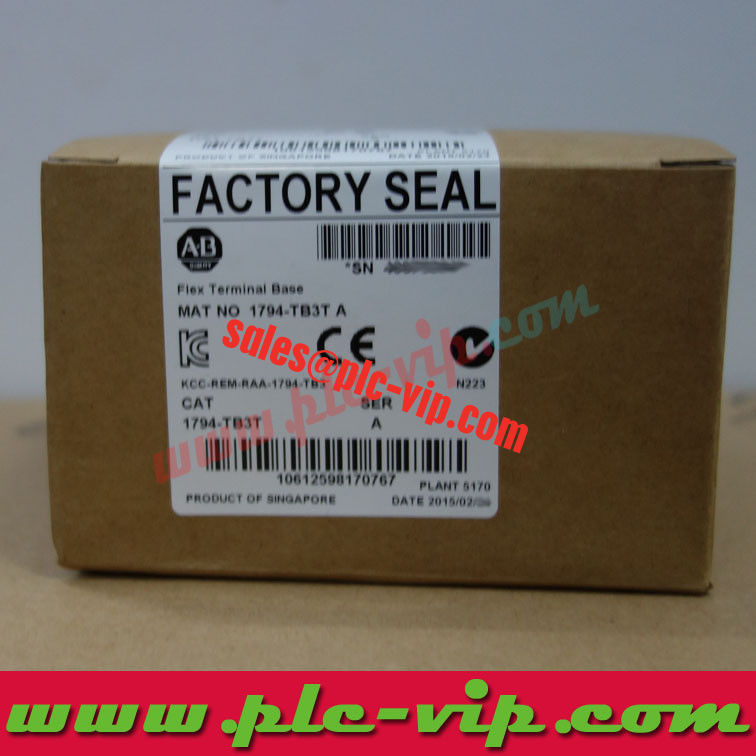
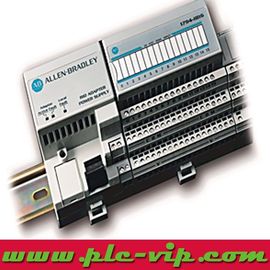
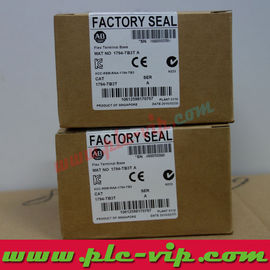
Allen Bradley PLC 1794-LBL / 1794-LBL
-
-
Large Image :
Allen Bradley PLC 1794-LBL / 1794-LBL
|
Product Details:
| Place of Origin: |
Made in SINGAPORE |
| Brand Name: |
PLC Module |
| Certification: |
All goods we supply are 100% original factory sealed with 1 year warranty! |
| Model Number: |
Allen Bradley PLC 1794-LBL / 1794-LBL |
Payment & Shipping Terms:
| Minimum Order Quantity: |
1 /PCS |
| Price: |
$25.00 (USD/PCS) |
| Packaging Details: |
100% original new |
| Delivery Time: |
IN STOCK; 4-6 weeks for ordering |
| Payment Terms: |
Paypal, T/T and Western Union. |
| Supply Ability: |
10 PCS |
|
Detailed Product Description
 FLEX I/O 1794-LBL / 1794LBL Label Kit, Die-Cut Sheet
Category:
PLCs, Power Supplies & I/Os
Manufacturer:
Rockwell
Group:
PLC I/O
The 1794-LBL is the labeling kit: a die-cut sheet plus five labels, for marking modules and terminal groups as they are built.
A FLEX I/O island with coated bases and no markings is hard to service; the labels are the cheap part that keeps a panel legible.
Product Specifications 1794-LBL (PDF)
Application |
FLEX I/O terminal and module labeling |
Cat Num |
1794-LBL |
Brand Name |
Rockwell |
Contents |
Die-cut label sheet and five labels |
Use |
Identifying modules and terminal groups in the panel |
Attribute values above are reproduced from the manufacturer's product data. For the authoritative technical record see Rockwell publications 1794-DU001 (module specifications) and 1794-SG002 (installation instructions). Certification details, with certificate and file numbers, are listed in the FAQ below.
Contents
A die-cut label sheet and five labels, sized for the module and base faces.
Die-cut rather than pre-printed, so the sheet can be filled in with the designations the drawing specifies.
Applied after wiring, so the label follows the actual terminal assignment.
Part of the accessory section of the selection guide.
Why label
FLEX I/O bases look alike, and a coated base hides the printed markings behind the coating.
Terminal groups repeat across a base, so a group number on the face saves a drawing lookup.
Service calls shorten when the module under a fault is identified without tracing a cable.
Labels are consumables, so a spare sheet belongs in the commissioning kit.
Application
Panel build and commissioning, where designations are assigned as wiring progresses.
Retrofit islands, where the original marking has aged off.
Not a nameplate; it does not carry ratings or certification.
Not a substitute for the drawing, which remains the record.
Ordering
One kit per panel is the practical unit; panels with several islands need more.
The five labels in the kit cover a small island plus spares.
1794-N2 is the separate accessory for reserved slots.
Publication 1794-SG002 lists the kit in the accessory section.
Where it fits
Any FLEX I/O island that will be serviced by someone other than the builder.
Coated installations, where printed markings are less legible.
Not for outdoor exposure, unless the label stock suits the environment.
Not for safety labeling; that follows the enclosure requirements.
FAQ — 1794-LBL
What is in the 1794-LBL kit?
A die-cut label sheet and five labels.
What is it used for?
Marking modules and terminal groups in a FLEX I/O island.
Are the labels pre-printed?
No; the sheet is die-cut so designations can be added.
How many labels come with it?
Five, plus the sheet.
Is it a nameplate?
No; it carries no ratings or certification.
Where is it listed?
In the accessory section of 1794-SG002.
Data sources. Technical values on this page come from Rockwell publication 1794-SG002 (FLEX I/O Selection Guide, accessory section). Any attribute the publication does not print is marked Not published rather than taken from a distributor page. Catalog number, packaging and stock status are the stock record of this listing.
1794-LBL: label kit
1794-LBL is a 1794 FLEX I/O label kit, described here from the Rockwell FLEX I/O selection guide and the related publication so that the identity, the published rating and the compatibility statement are on the page for this catalog number.
| Specification | Value |
|---|
| Catalog number | 1794-LBL, FLEX I/O label kit |
| Function | Label kit for marking FLEX I/O terminal bases, modules and slots |
| Contents | Kit contents and label count are not published in the selection guide; confirm against the packing list |
| Compatible systems | 1794 FLEX I/O, FLEX Ex I/O, FLEX I/O-XT |
| Source | 1794-SG002D-EN-P selection guide, optional accessories for FLEX I/O and FLEX I/O-XT modules |
The label kit is small and its effect is large. A base marked with its slot and module type shortens every future fault finding visit, and an unmarked base turns a five minute replacement into a wire tracing exercise.
Kit contents are not published in the selection guide, so the quantity of labels per kit has to come from the packing list or from the distributor. That is a stated limitation rather than an assumption, and it matters when the kit is specified per panel.
This page states only what the Rockwell FLEX I/O documentation publishes for 1794-LBL: the catalog identity, the published rating or dimension, the compatibility statement and the source publication. Where the manufacturer does not publish a figure, the page says so instead of estimating one.
The flexbus connector is the fragile part of the assembly. It is pushed to the left to connect and retracted to disconnect, and a base installed with the connector partly extended will produce intermittent I/O that survives a power cycle and reappears under vibration.
A right angle split between horizontal and vertical orientation is the real reason the extender exists. Mounting the adapter horizontally in a shallow enclosure and the modules vertically in a deeper section is a mechanical decision that the cable makes possible without a second adapter.
Temperature ratings on a passive accessory are inherited from the materials. A cable rated to sixty degrees limits the panel interior temperature just as firmly as a module rated to fifty five, and a hot enclosure will fail the cable before it fails the electronics.
Every accessory on this page is sourced from the same FLEX selection guide that specifies the adapters and the terminal bases, which means the compatibility statement is the manufacturer statement rather than a distributor inference.
Panel mounting without DIN rail is a common requirement in machine tools exported to regions where the rail is not standard, and the mounting kit with its screws is cheaper than a rail plus the labour to fit it.
A filler is not a spare slot. Some integrators install a filler to reserve capacity for a later expansion, and that works only if the adapter was sized for the eventual module count at commissioning time, not at expansion time.
The extender cable rule is one per system, not one per row. A second extender in series breaks the flexbus timing assumptions the adapter was designed around, so the two row layout is a one cable layout, and a three row layout is not supported at all.
Labels matter more than they look. A terminal base that is not marked with its slot and its module type turns every future maintenance visit into a wire tracing exercise, which is exactly what the label kit exists to prevent.
Accessory part numbers are frequently the difference between a system that ships and a system that waits. A missing extender cable is a one week delay on a panel that is otherwise complete, and the order of magnitude of that delay belongs in the planning conversation.
A dummy filler module exists because an empty terminal base is an open slot in the flexbus chain. The filler carries no electronics, and its whole job is mechanical and documentation: the rail is complete, the slot is accounted for, and the drawing shows an intentional gap rather than a missing part.
Country of origin and part number structure belong on the page because procurement asks. A conformally coated variant and a standard variant share the same mechanical drawing and differ in the suffix, which is the kind of detail that only shows up at goods receipt.
Accessories are where a FLEX system stops being a catalog page and becomes a panel. The rail, the extender cable, the mounting screws and the filler module all change the drawing, and none of them appear in the module data sheet that the integrator reads first.
Screws in a mounting kit are a count, not a suggestion. Two for the adapter and two for each module means the kit covers a full eight module group, and a ninth module requires either a second kit or a sourced screw, which is a purchasing detail worth stating.
Confirm the label count against the packing list, and apply the labels at the same time the base is installed rather than at commissioning.