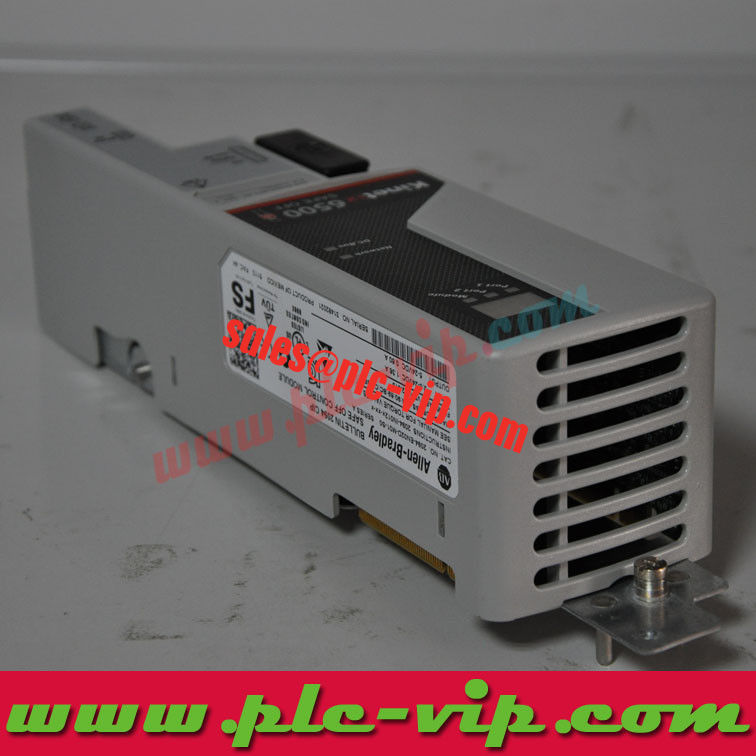
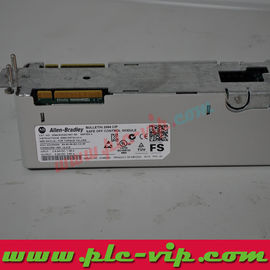
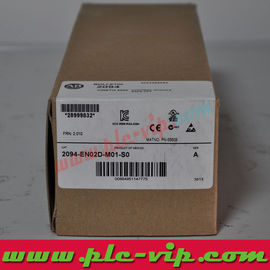
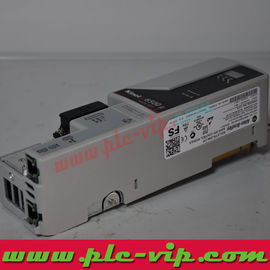
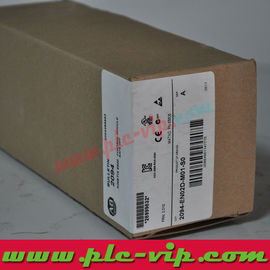
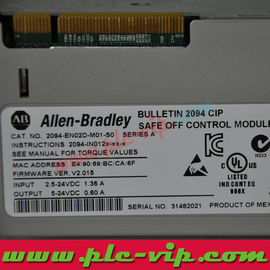
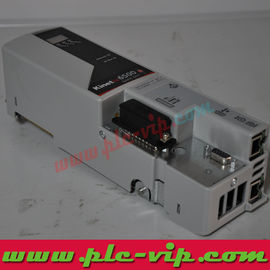
2094-BM01-S
This page documents catalog number 2094-BM01-S, a Kinetix 6000 axis module (AM) on the 460 V class with 3.9 kW of nominal continuous power output. An AM module is a follower on the rail: it takes its DC bus from the IAM module on its left and adds one servo axis without adding another power supply.
Catalog number and published rating
| Field | Value |
| Catalog number | 2094-BM01-S |
| Family | Kinetix 6000 multi-axis servo drive, Bulletin 2094 |
| Module type | AM - axis module, follower on the shared DC bus |
| Voltage class | 460 V |
| Trailing characters | S |
| Safe torque off | present, the -S versions in the catalog table carry it |
| Nominal continuous power output | 3.9 kW |
| Peak inverter current | 150% of continuous as shipped, programmable to 250% on 460 V series B and later |
What the module does on a rail
A Kinetix 6000 system is built on a power rail rather than wired module to module. The IAM module is the leader: it converts three-phase AC to a DC bus, regulates that bus, and carries the first inverter axis. AM modules bolt onto the same rail, take the bus through the rail, and each adds one axis. The mounting order rule is published rather than optional: IAM, then AM and IPIM modules ordered by power utilisation from highest to lowest, then the shunt and the slot fillers.
For 2094-BM01-S, power utilisation means the average power the axis consumes in its cycle, not its nameplate rating. A rail ordered by nameplate horsepower and mounted in catalog order can put a small axis to the left of a large one, and the published instruction says the opposite order is what the bus expects.
Peak current and the series question
On 2094-BM01-S the published peak behaviour is one of two, and which of them applies is fixed by the series of the module: the 460 V modules are published with two peak behaviors. Series A modules are factory configured at 150 percent of continuous inverter current, and series B and later modules can be programmed for up to 250 percent on the same continuous rating, with the M05 rating capped at 200 percent. The enhancement is not available until it is enabled in the drive configuration, so a module that is physically a series B unit still behaves as a 150 percent unit out of the box.
For 2094-BM01-S that distinction is what makes two catalog numbers with the same continuous power behave differently on an acceleration-limited cycle. A machine sized on continuous torque and then asked for a short, hard move is sized on the peak column, and the peak column depends on both the module and the series of the module in the panel.
Wiring, brake and analog interface
The published termination for this module is 6 mm2 (10 AWG) maximum on the motor power cable at a 10 mm strip length and 0.5 to 0.6 N-m. The AC input terminals on a 230 V IAM take 2.5 mm2 (14 AWG) at a 10 mm strip and 0.5 to 0.6 N-m, which is a smaller terminal than the motor connection on the same module and a frequent source of a wrong lug on a panel.
The motor brake interface is a relay output on MBRK+ and MBRK-, limited to 30 V DC, and the published brake current limit for this module is 3.0 A. A brake coil above that limit needs an interposing relay, and a brake wired directly to a module that cannot carry the coil current is a brake that releases late or not at all.
Every IAM and AM module, 2094-BM01-S included, carries two analog outputs that can be assigned to drive variables. On the -S versions the output range is 0 to +10 V, on the versions without the safe torque-off feature it is 0 to +5 V, the resolution is +/- 11 bits, the output can source 2 mA, and the bandwidth is DC to 7.2 kHz at 3 dB. A chart recorder or a drive-to-drive torque reference wired to the wrong variant saturates at half scale, which reads as a tuning problem rather than as a wiring one.
An AM module has no AC input terminals, no control-power input and no shunt of its own. It draws the DC bus through the power rail, takes its control power from the IAM module, and returns regenerative energy to the same bus, where the IAM or a 2094-BSP2 shunt module on the rail absorbs it. That is why an AM module cannot be commissioned on a bench by itself, and why a rail carrying more axes than its shunt was sized for trips on bus overvoltage during a deceleration rather than during a move.
What the string does and does not settle
On 2094-BM01-S the string settles the voltage class, the converter or axis rating, and the trailing characters, which in the catalog table separate the version with the safe torque-off feature from the version without it. It does not settle the motor, the feedback, the line filter or the LIM module: those are selected against the axis and the supply, and the rail configuration decides whether a shunt module is internal or a separate 2094-BSP2 on the same rail.
Two numbers are quoted for the same module in the manuals, continuous power and peak current, and they answer different questions: the continuous figure sizes the axis, the peak figure decides whether the axis can accelerate the load in the time the cycle allows.
No lifecycle statement and no price is implied for 2094-BM01-S. The converter and inverter ratings, continuous power, peak current behavior, power cycling, termination, brake current and analog output figures are quoted from the Kinetix 6000 user manual, publication 2094-UM001, for this module family.
The 460 V axis-module ladder on printed continuous power
The table is the 460 V list of Bulletin 2094 axis modules with the continuous power each one prints, and it is the only place in this family where the M and S characters can be compared on equal terms.
| Catalog number | Printed continuous power | Trailing character | Safe torque off |
| 2094-BMP5-S | 1.8 kW | S | present |
| 2094-BM01-M | 3.9 kW | M | not claimed |
| 2094-BM01-S | 3.9 kW | S | present |
| 2094-BM02-M | 6.6 kW | M | not claimed |
| 2094-BM02-S | 6.6 kW | S | present |
| 2094-BM03-M | 13.5 kW | M | not claimed |
| 2094-BM03-S | 13.5 kW | S | present |
| 2094-BM05-M | 22.0 kW | M | not claimed |
| 2094-BM05-S | 22.0 kW | S | present |
Where this module sits: This module prints 3.9 kW continuous, step 2 of 5 in the 460 V ladder printed on these pages, 2.17 times the 1.8 kW step below it and the 6.6 kW step above is 1.69 times this rating. The same power appears twice in the 460 V list, once with the M character and once with the S character, and the printed rating does not change between them - what changes is the safe-torque-off claim, which the -S entries carry and the -M entries do not.
On this page the trailing character is S, so the module does carry the safe-torque-off claim printed for the -S entries.
At the shipped 150 percent setting the printed continuous rating turns into a 5.85 kW peak, and at the 250 percent setting the same 460 V series B module can be configured to 9.75 kW.
One thing in the field table above needs reading with the catalog number in hand: every module in this family is labelled "Module type AM - axis module", including the 460 V BM parts. In Bulletin 2094 the prefix is what decides the voltage class - AM for 230 V, BM for 460 V - and the printed voltage-class field on each page carries the authoritative answer.
Sizing on continuous power and then commissioning on peak is the mistake this table prevents: the continuous column is what the rail has to carry, and the peak column is what the machine actually asks for on a hard move.
What the printed data does not carry: none of these pages prints continuous or peak output current in amps, none prints the DC-bus current this axis takes from the rail, and none prints module width or mass. The rail power budget therefore cannot be closed from this table, only the per-axis power chosen.
Source: Rockwell publication 2094-IN001 (Kinetix 6000 installation instructions) and the module specification tables printed on these pages; the peak figures are the printed continuous rating multiplied by the printed 150 and 250 percent settings.