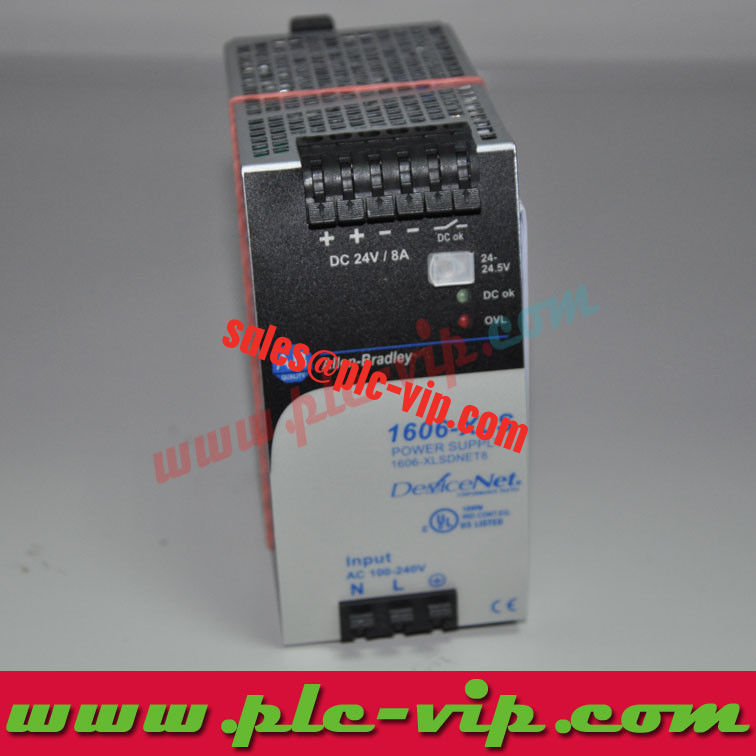
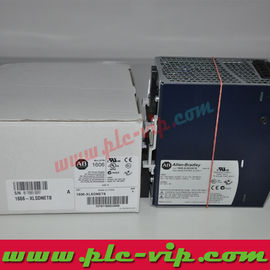
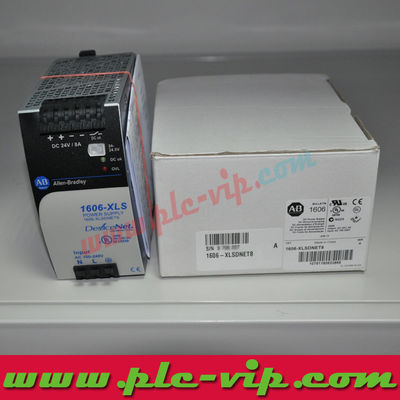
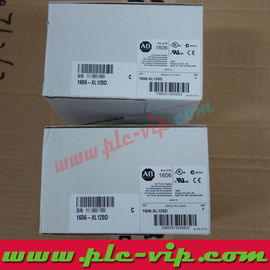
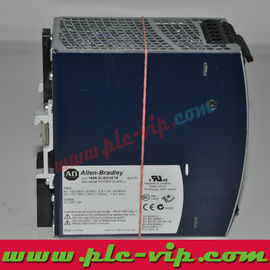
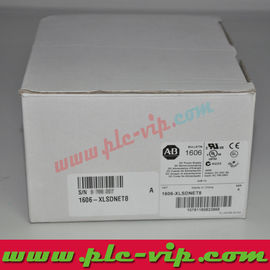
1606-XLEDNET3
This page documents the 1606-XLEDNET3, a member of the Bulletin 1606 switched-mode power supply range: 24 V output at 3 A, 72 W, with AC 100...240 V input. The selection and specification figures below are quoted from Rockwell publication 1606-TD002, which prints them per catalog number or per model row.
Selection row for this catalog number
| Attribute | Published value |
| Catalog number | 1606-XLEDNET3 |
| Product family | Bulletin 1606 switched-mode power supply |
| Output voltage, nominal | 24 V |
| Output current, nominal | 3 A |
| Output power | 72 W |
| Input, AC | AC 100...240 V |
| Input, DC | DC 110...300 V |
| Feature or limitation flag | DeviceNet approved compact supply |
Where this model sits in the XL line
| Series attribute | Published value |
| Series | 1606-XL Power Supply (legacy line) |
| Power range | 60...960 W |
| Overload / boost | not published for this line in the current technical data |
| Reserve current | not published for this line in the current technical data |
| Efficiency, typical | not published for this line in the current technical data |
| Operating temperature | not published for this line in the current technical data |
| Terminals | screw terminals |
| Mains versions | single-phase 100...240 V AC and three-phase 380...480 V AC versions |
The line exists for the reason printed against it: the first generation of Bulletin 1606 that the XLE and XLS lines replaced part by part. Against this string that means the 3 A output is one point inside a 60...960 W range, and the reserve and boost figures belong to the whole line, so a load sized on the continuous rating plus the published reserve is a load the line is designed to carry rather than one it tolerates.
Load, heat and input protection
The rail load is the first number and it is 3 A; the second is the inrush the loads draw at switch-on, which the published reserve covers only for the time the line states; the third is the input current at the lowest point of the AC 100...240 V window, which is what the branch device has to carry without tripping on a cold start. A supply sized on nominal mains current alone fails the third check in winter.
A supply is a branch-circuit load with its own protection and its own inrush. On 1606-XLEDNET3, choosing the breaker on the nominal input current is the mistake that shows up as a nuisance trip on a cold morning, when the input voltage is low and the bulk capacitors are empty.
Other strings in the same series
Neighbouring numbers to 1606-XLEDNET3 in the XL series are 1606-XLB120E, 1606-XLB240E, 1606-XLB36EH. They differ in rated watts, output voltage or input frame rather than in construction, so the selection between them is made on load and on the mains available at the panel.
Efficiency is a thermal number before it is an energy number. A 90 to 95 percent efficiency figure on a 480 W supply leaves 25 to 48 W of heat inside the enclosure, which is the difference between a sealed cabinet that holds temperature and one that needs forced ventilation. The efficiency band is published per series rather than per model, so the number to check is the one for the frame size that was ordered.
Derating above 60 degrees is a published curve, not a rule of thumb. The performance and essential lines run to 70 degrees C with derating above 60 degrees C, while the compact line carries its own window from -10 to 70 degrees C with -40 degrees C starting variants. A panel that runs at 55 degrees C has no derating to apply; one that runs at 65 has, and the published curve is what turns that into a usable output current.
A power supply is a branch-circuit load with its own protection. The supply needs a branch protective device sized from its input current at the lowest input voltage in the window, not at nominal mains. That is the number that decides the breaker, and a supply that trips a 10 A breaker on a 120 V branch is usually a device chosen on nominal current rather than on the low line.
This string publishes a DC input window as well as an AC one. DC 110...300 V is the DC figure for this row, which is what a battery-backed or rail-fed panel is sized against. A DC feed does not carry the same inrush as an AC feed into a rectifier, and the branch device is selected from the DC current rather than from the AC current.
The feature flag on this row reads: DeviceNet approved compact supply. That flag is the field that separates this number from its neighbours of the same wattage and voltage, and it is the one to read first in a substitution, because a supply that differs only in its flag differs in mounting, terminals or output limitation rather than in power.
This string is a network or diagnostic accessory for the 24 V rail. It carries no output rating of its own and is selected by the rail it monitors or the segment it feeds. Accessories of this kind sit beside the supply in the same enclosure, so their current draw is part of the panel budget rather than part of the supply rating.
Checks before substituting another 1606 number
A substitution audit for this number runs in a fixed order: output voltage, then continuous current against the load schedule, then the input frame actually present at the site, then the terminal style, and last the lifecycle category. Any one of the five can invalidate a part that looks correct in a catalogue row, and the cheapest place to catch it is the bill of materials rather than the parts counter during a shutdown.
Read this row against the panel it will feed rather than against the catalogue page: the output is what the rail needs, the reserve is what the inrush may borrow, the efficiency is what the cabinet must dissipate, and the input window is what the site must supply. A number that satisfies the first three and fails the fourth is a unit that is correct on paper and unusable on a low-line branch.
Questions this catalog number answers
What is 1606-XLEDNET3? 1606-XLEDNET3 is a switched-mode power supply in the Bulletin 1606 range: 24 V output at 3 A, 72 W, with AC 100...240 V input.
Is 1606-XLEDNET3 current? No lifecycle status is printed against this string in the source publication used for this page, so no availability claim is made here; the electrical figures are the ones the publication prints for the catalog number.
What decides the input protection for 1606-XLEDNET3? The input current at the lowest voltage of the AC 100...240 V window, not the nominal mains figure, because that is where the branch current peaks and where a breaker chosen on nominal current trips on a cold start.
Role of this string in the range
This number is an accessory or a legacy-line member rather than a stand-alone supply row: DeviceNet approved compact supply. Its own catalog string therefore carries the family and the function rather than an output rating, and it is selected by the supply it is paired with - the current rating of that supply, the rail it serves and the mounting it needs - instead of by a watts figure. That is why the selection row above marks the electrical fields the publication does not print for this catalog number.
No price and no lead time is implied on this page. For 1606-XLEDNET3 the selection, series and lifecycle figures are quoted from Rockwell publication 1606-TD002 and the published catalog number explanation; a field the publication does not print for this string is marked as such rather than estimated from a neighbouring model.