20BF142A0ANNANC0
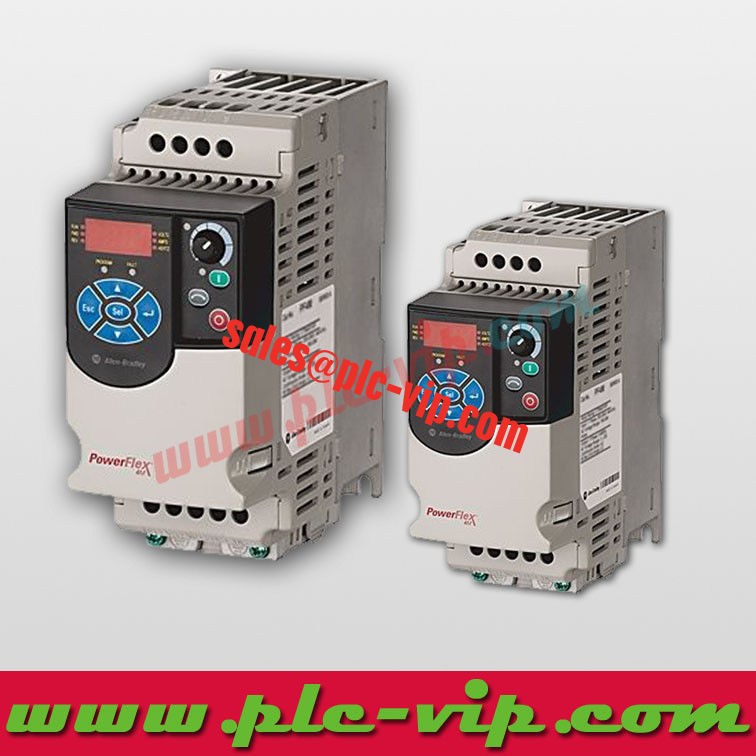
This page documents catalog number 20BF142A0ANNANC0, a PowerFlex 700 drive in the 690 V AC input class at 142 A on frame 6. The decode and the published rating come from the drive family's catalog number explanation and its 690 V normal-duty table; the line reactor pairing is stated as unpublished rather than filled in.
Decode and published values
| Specification | Value |
|---|
| Catalog number | 20BF142A0ANNANC0 |
| Family | 20B - PowerFlex 700 |
| Input class | F - 690 V AC, three-phase, frames 5-6 only |
| Rating code | 142 - 142 A |
| Normal-duty rating, 690 V table | 142 A, 132 kW |
| Frame | 6 |
| Enclosure field | A - IP20, NEMA/UL Type 1 |
| Brake field | N - no brake IGBT; optional on frames 4-6 |
| Voltage window, 690 V class | Motor rated 690 V, full power 690-759 V, operating 475-759 V |
| Line reactor pairing at 690 V | Not published in the drive table, which covers 240, 480 and 600 V only |
What the string settles and what the system has to settle
This is the 142 A code of the 690 V AC class, one step above the 119 A entry and one step below the end of the family's orderable 690 V range. The string reads 20B for PowerFlex 700, F for the 690 V AC three-phase input, 142 for the output current in amps, and A for the enclosure, which the family defines as IP20 and NEMA/UL Type 1.
The published normal-duty row for code 142 in the 690 V, 50 Hz table is 142 A at 132 kW on frame 6. The rows below it are 119 A at 110 kW and 98 A at 90 kW, both on frame 6 for the upper part of the range, so the 690 V class concentrates its larger ratings on one frame rather than spreading them.
The 690 V class is not a scaled version of the 600 V class and the two cannot be interchanged by arithmetic. The family publishes 690 V with a motor rating of 690 V, full power from 690 to 759 V and operating range from 475 to 759 V, whereas the 600 V class is published at 575 V with full power from 575 to 660 V and operation from 432 to 660 V. A drive selected on one of those windows is not a drive selected on the other.
The line reactor pairing is the field where an engineer is most likely to invent a number, and this page does not. The drive's published reactor table covers 240 V, 480 V and 600 V inputs, and the 690 V rows are not in it. A 690 V installation therefore needs the current revision of the documentation for the reactor selection rather than a scaled 600 V value, and that is a statement of what the table contains rather than a limitation of this page.
The voltage tolerance figures are worth stating because they decide whether a 690 V class drive suits a given distribution. The full-power window extends ten percent above nominal to 759 V, and the operating window extends down to 475 V, so a supply that sags or a motor that is wound for a lower voltage changes what the drive is asked to do rather than only what it is connected to.
The enclosure field A is IP20 and NEMA/UL Type 1, with F and G covering open and flange mounting and stand-alone wall mounting. On frame 6 at 132 kW the cabinet carries both the protection and the airflow, and the difference between a cabinet designed for the room and one designed for the drive is the difference between rated life and early failure.
The brake field reads N in this string, and the family rule makes that definite: N means no brake IGBT, and the brake is optional on frames 4 to 6. On a 690 V installation where regeneration is possible, that is a decision that has to be matched by a braking arrangement elsewhere or by the process itself.
The frames in this class stop at 6. The 690 V class does not extend to the larger frame sizes that the DC and 480 V classes reach, so a 132 kW section is close to the practical ceiling for this voltage, and a project that expects to grow beyond it is planning a different class rather than a bigger drive in the same one.
The platform also lists one other string in this class whose rating equals 119 A with a different trailing option, and the family publishes that code as 119 A at 110 kW on frame 6. Where two strings differ only in the option region, the difference is in what is fitted rather than in what the drive can drive, and the same discipline applies here.
What this page does not do is assert a power in horsepower for this code. The 690 V table is published in amps and kW, and a horsepower figure derived from the kW value is arithmetic rather than a published pairing, which matters when a buyer is comparing against a North American specification written in horsepower.
No lifecycle statement and no price is implied. The class definitions, the voltage windows, the normal-duty row, the frame, the brake rule and the absence of 690 V reactor rows are quoted from the drive family's published documentation.
The other drives, reactors and drive spares in this range are collected in the Drives & Motors category. Codes documented alongside this one are 20BR156A0AYNANC0, 20BR365U0ANNNND0, 20BR535U0ANNNND1, and this drive is listed at 20BF142A0ANNANC0.
The twelve 20B voltage codes, and the frames each one is built on
The fourth character of a 20B catalog number is the voltage code, and there are twelve of them: five AC classes and seven DC-bus classes. They are not interchangeable, they do not share frame ranges, and the DC codes additionally split on whether a pre-charge circuit is built in. This table is the complete code list from the 20B-TD001 catalog explanation, with the frame range each class is built on.
| Code | Voltage rating | Frames built on | Where the class is used |
| B | 240 V AC, 3-phase, 50/60 Hz | 0-6 | 208...240 V supply, the North American low-voltage class |
| C | 400 V AC, 3-phase, 50/60 Hz | 0-6 | 380...415 V supply, the European standard class |
| D | 480 V AC, 3-phase, 50/60 Hz | 0-6 | 440...480 V supply, the widest rating ladder of the series |
| E | 600 V AC, 3-phase, 50/60 Hz | 0-6 | 575...600 V supply, Canada and heavy industry |
| F | 690 V AC, 3-phase, 50/60 Hz | 5-6 | 690 V supply, and only on the larger frames |
| H | 540 V DC input, pre-charge | 5-6 | fed from a 540 V DC bus, pre-charge circuit built in |
| J | 650 V DC input | 5-6 | 650 V DC common DC bus, no pre-charge letter |
| N | 325 V DC input (Y), pre-charge | 5-6 | 325 V DC bus, common-bus configuration |
| P | 540 V DC input (Y), pre-charge | 5-8 | 540 V DC common bus, the widest DC frame range |
| R | 650 V DC input (Y), pre-charge | 5-8 | 650 V DC common bus, frames 5 through 8 |
| T | 810 V DC input (Y), pre-charge | 5-6 | 810 V DC bus for 600 V class front ends |
| W | 932 V DC input (Y), pre-charge | 5-6 | 932 V DC bus for 690 V class front ends |
Where this page sits: 20BF142A0ANNANC0 decodes to voltage code F, which 20B-TD001 defines as 690 V AC, 3-phase, 50/60 Hz, built on frames 5-6. The rating field reads 142 A.
What is missing here is the ladder itself: the rating tables that turn these codes into amp, power and frame steps are printed per voltage class in 20B-TD001, and only the 240, 400 and 480 V classes were transcribed for this site. For 600 V, 690 V and the DC-bus classes the neighbouring current steps are therefore not listed, and none is inferred from another class.
Catalog prefix first: 20B is the PowerFlex 700 prefix and 20A is the PowerFlex 70 prefix. A page filed under a "PowerFlex 70 drives" group while carrying a 20B number is a filing error at the prefix level - the two are different product lines with different frame ranges, not variants of one another. The catalog number on the page decides, not the group label.
Source: 20B-TD001 PowerFlex 700 catalog number explanation (voltage, rating and frame codes) and the 20B-TD001 rating tables. Values are quoted as printed; no figure on this page is calculated or extrapolated.