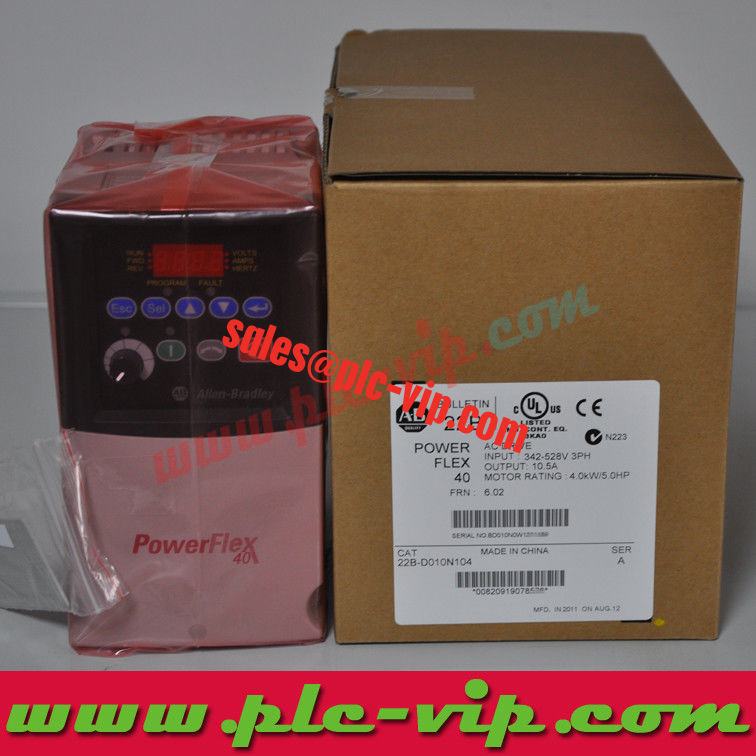
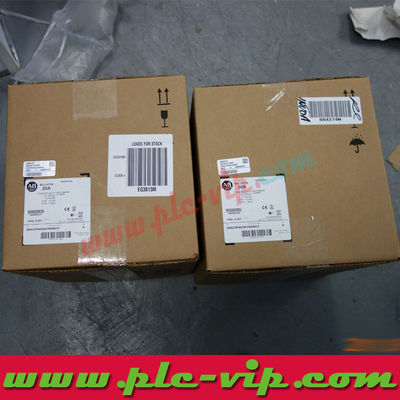
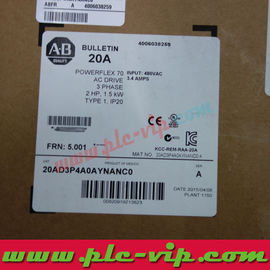
20BF060A0AYNANC0
This page documents catalog number 20BF060A0AYNANC0, a PowerFlex 700 drive in the 690 V AC class at 60 A on frame 5. The decode and ratings come from the drive family's published catalog number explanation and 690 V normal-duty table; the trailing option block is not interpreted beyond the enclosure field.
Decode and published ratings
| Specification | Value |
|---|
| Catalog number | 20BF060A0AYNANC0 |
| Family (first three characters) | 20B - PowerFlex 700 |
| Voltage class (fourth character) | F - 690 V AC, three-phase, frames 5-6 only |
| Rating code (fifth to seventh) | 060 - 60 A |
| Enclosure field (fourth block) | A - IP20, NEMA/UL Type 1 |
| Normal-duty rating, 690 V 50 Hz table | 60 A, 55 kW |
| Frame as published | 5 |
| Horsepower equivalent | approximately 75 Hp (arithmetic from kW, not a published Hp pairing for this class) |
| Full power range, 690 V class | 690...759 V |
| Operating range, 690 V class | 475...759 V |
| Nominal motor voltage | 690 V |
| Line reactor pairing for 690 V | Not printed in the reactor tables retrieved (those cover 240 V, 480 V and 600 V) |
| Brake IGBT availability | Standard on frames 0-3, optional on frames 4-6 |
What the class decides and what the nameplate still has to say
The fourth character is the part of this string that decides almost everything about the installation. In the 20B family that character is the voltage class, and F is 690 V AC three-phase, the highest AC class the platform offers and the one that exists only on frames 5 and 6. Reading the rest: 20B is PowerFlex 700, 060 is the output current in amps, and the fourth block A is the enclosure, which the family defines as IP20 and NEMA/UL Type 1.
The published normal-duty rating for this code in the 690 V, 50 Hz table is 60 A at 55 kW on frame 5. The kilowatt figure is the manual's own; the horsepower equivalent of about 75 is arithmetic from that figure and is not a published Hp pairing for this voltage class, which is a distinction worth keeping when a quotation is being compared.
690 V is a European industrial voltage rather than a North American one, and the frame restriction follows from it: the family offers this class only on frames 5 and 6, the larger end of the range. A 60 A drive at 690 V is therefore already a physically large unit, and the enclosure question is a cabinet design question rather than a shelf question.
The voltage envelope published for the 690 V class differs from the 600 V class on the same platform. Where the 600 V class on frames 0 to 4 gives a nominal motor voltage of 575 V and a full power range of 575 to 660 V, the 690 V class on frames 5 and 6 is published with a nominal motor voltage of 690 V, a full power range of 690 to 759 V and an operating range of 475 to 759 V. The wide operating band below nominal is the part that catches retrofit projects, because a drive that will run at 475 V is not a drive that will deliver its nameplate current there.
The line reactor question has a specific answer for this voltage class, and it is a negative one that should be stated rather than avoided. The reactor tables in the drive's published data cover the 240 V, 480 V and 600 V classes; a 690 V reactor pairing for this code is not printed in the tables retrieved for this page. A panel that needs a reactor on a 690 V drive therefore has to have the pairing confirmed against the current revision of the drive documentation rather than taken from this page.
The enclosure field reads A, which is IP20 and NEMA/UL Type 1. On a frame 5 drive that means the cabinet carries the protection and the thermal duty. The dissipation of a 60 A 690 V drive is not a detail that can be deferred to the end of a panel design, and the clearance figures in the drive's installation data assume the airflow the enclosure was dimensioned to provide.
What the trailing option block carries is brake IGBT, communication slot, control type, feedback and documentation, each with its own table. None of those is asserted from this string on this page, because an option guessed wrong is a network card or a braking resistor that arrives unusable.
The identification procedure for a drive already in service follows the same logic as elsewhere in the range: read the nameplate, confirm the voltage class letter, and confirm the rating code against the motor's full-load current at the actual supply voltage. The nameplate is the only place where the option fields are stated for the unit in hand.
One application note belongs here because of the voltage class rather than the rating. At 690 V the cable insulation, the motor winding insulation class and the creepage distances in the panel are all specified to a higher level than at 480 V, and a drive swap that keeps the same cable and the same motor but changes the class is a change to the whole installation rather than to one component.
Adjacent codes in this class are 082 at 82 A and, below this one, the 600 V codes that share the frame range but not the voltage. A substitution across voltage classes is not a substitution at all, which is why the fourth character deserves to be read before the rating code.
Frame 5 on a 690 V drive is where the platform's physical design changes rather than merely grows. The terminal arrangement, the clearance around the heatsink and the way the power connections are landed all follow the frame instead of the rating, which is why two drives of the same family and similar current can occupy different footprints when they sit on different frames.
The kilowatt figure in the published row is the one to quote in a European project, and the horsepower conversion is the one to quote to a North American reader with a caveat. Mixing the two without saying which is published and which is arithmetic is how a 55 kW drive ends up specified as a 55 Hp drive, and the resulting unit is the wrong size for the motor.
A 60 A 690 V drive is usually the largest single load in the section it serves, so the question of what the panel does when the supply dips is a process question before it is an electrical one. The published operating range down to 475 V is the number that answers it, and the answer is that the drive keeps running while the available torque falls away.
The other drives, reactors and drive spares in this range are collected in the Drives & Motors category. Neighbouring entries and ratings are listed at 20BF082A0ANNANC0, 20BF098A0ANNANC0, 20BF098A0AYNANC0, and this drive is listed at 20BF060A0AYNANC0.