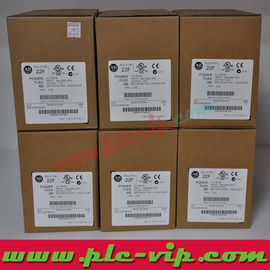
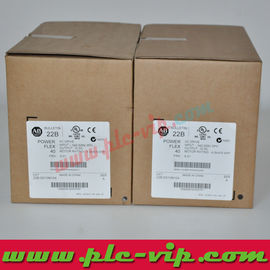
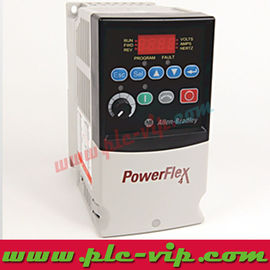
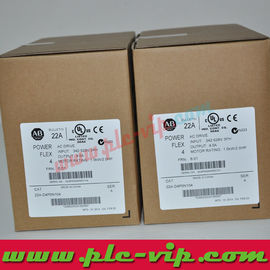
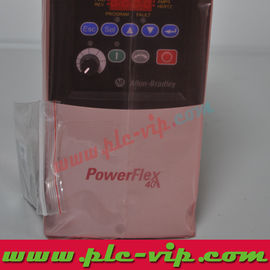
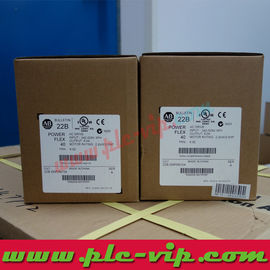
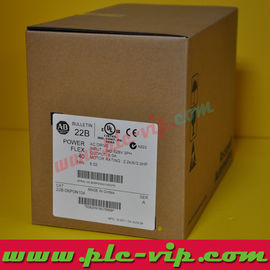
22C-D260A103
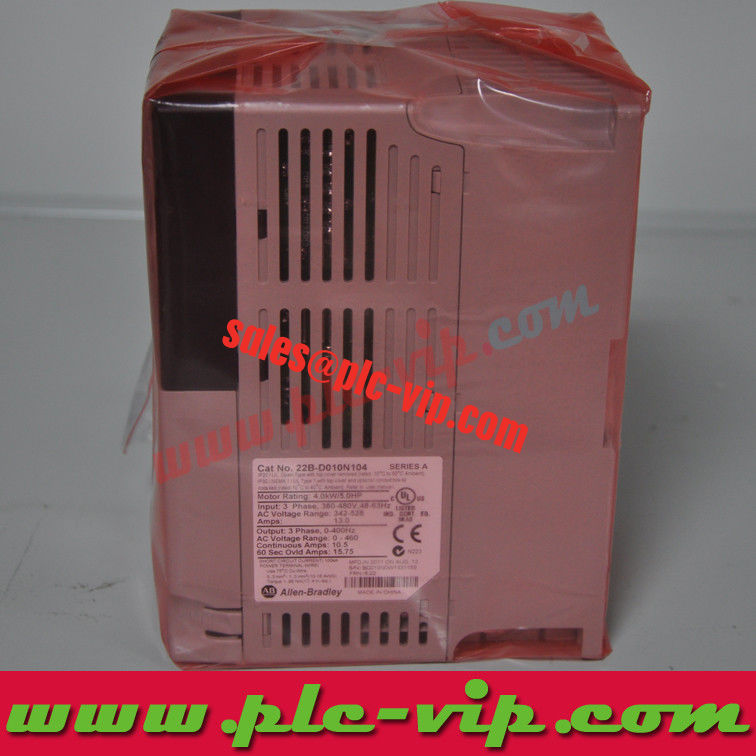
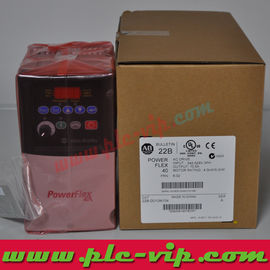
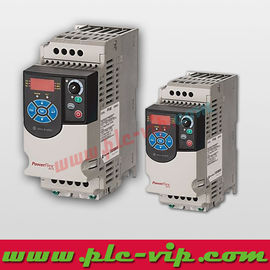
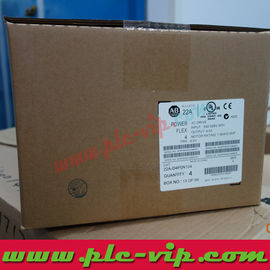
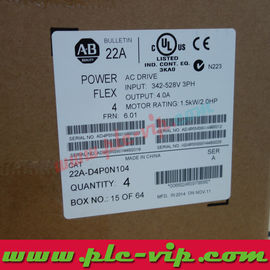
This page documents the 22C-D260A103, a PowerFlex 400 fan and pump drive. The number decodes position by position: 22C is the series, D fixes the 380...480 V AC three phase input, 260 is the rating code that sets 260.0 A and 132.0 kW (200 HP) in frame G, A is the enclosure (panel mount, IP30, NEMA/UL Type 1), and 103, the standard build ending used at both voltages and every frame closes the number.
Catalog number, position by position
| Position | Value |
| 1-3 | 22C, PowerFlex 400 adjustable frequency drive for fan and pump applications |
| 4 | D, 380...480 V AC three phase |
| 5-7 | 260, 260.0 A output current and 132.0 kW (200 HP), frame G |
| 8 | A, panel mount, IP30, NEMA/UL Type 1 |
| 9-12 | 103, the standard build ending used at both voltages and every frame |
Rating data for this number
| Attribute | Value |
| Output current | 260.0 A |
| Motor rating | 132.0 kW (200 HP), variable torque fan and pump duty |
| Frame | G |
| Power terminal range, frame G | 152.5 mm2 (300 MCM) maximum, 85.0 mm2 (3/0 AWG) minimum |
| Input voltage | 380...480 V AC , 340...528 V AC window printed in the rating table |
| Ambient, panel mount | 45 C (113 F) surrounding air, IP20 open and IP30 Type 1 |
Ratings either side of this one
The published table places this rating between 208: 208.0 A, 110.0 kW (150 HP), frame F; 310: 310.0 A, 160.0 kW (250 HP), frame G. When a fan or pump is re-rated, these are the two numbers the drive is compared with, and the frame letter in each case tells you whether the terminal block changes along with the current.
Direct links to the neighbouring ratings in this voltage class: 22C-D208, 22C-D310.
Interface options and the enclosure rating. Two interface options are published with the drives: a NEMA/UL Type 1 bezel for panel mounting and a NEMA/UL Type 4X/12 remote panel mount unit. The remote part lets an engineer stand at the fan during commissioning, and the bezel is what keeps a Type 1 rating intact after the interface is moved to the door.
Flange mounting is an option with a rating ceiling. Flange mounting is restricted to frames through 15 kW (20 HP) at 380...480 V AC and through 7.5 kW (10 HP) at 200...240 V AC, and the heatsink then passes through the back of the enclosure with an IP66, NEMA/UL Type 4X/12 backside rated for indoor or outdoor use. Above those ratings the option disappears from the selection table entirely, which is why a re-rated fan can lose the flange route without anyone noticing at quotation stage.
The isolation transformer pairing is published. Each rating is paired in the publication with a 1321-3TW or 1321-3TH isolation transformer from 5 kVA to 390 kVA, with 208 V, 230 V, 460 V and 575 V primaries. On a corner grounded delta or an ungrounded system, that pairing is the published route to a drive input voltage the range was tested at, and it is cheaper than arguing about the supply afterwards.
Ambient is a cabinet number, not a drive number. The panel mount drives are published for a 45 C (113 F) surrounding air temperature, and that figure is measured inside the enclosure rather than in the plant. A fan or pump room at 35 C with an unventilated cabinet at 52 C is a drive running 7 C over its published ambient, and the remedy is airflow or the flange option, not a larger drive.
Frame e is two terminal blocks under one letter. Frame E covers 480 V 37...45 kW (50...60 HP) drives that take up to 8 AWG and 240 V 30...37 kW / 480 V 55...75 kW drives that take up to 4/0 AWG. Two drives with the same frame letter can therefore need different lugs and different cable, and the rating code rather than the frame is what tells them apart.
Frame G in practice. Frame G shares the 300 MCM terminal range with frame F but carries the 132 kW (200 HP) and 160 kW (250 HP) ratings at 480 V. The terminal block is the same size, so the difference between the two frames is the power section and the heat, not the lugs an electrician brings.
The three decisions this number does not make. A catalog number fixes the drive, the frame and the enclosure rating. It does not fix the motor cable, the branch protection or the cabinet cooling. The publication sends those to separate documents: 22C-UM001 for terminal wire ranges and wiring practice, the protection tables for the 140M or 100-C device that pairs with the rating, and the ambient statement for the enclosure.
Environmental and installation context
| Parameter | Value |
| Dimensions with base | 120 H x 72 W x 42 D mm (4.72 x 2.83 x 1.65 in.) for I/O modules; 112 H x 72 W x 65 D mm (4.41 x 2.83 x 2.56 in.) for the DeviceNet adapters |
| Enclosure rating | Meets IP65/66/67 when marked; the sealed housing needs no cabinet, though a plant with washdown or corrosive atmosphere can still require one |
| Operating temperature | -20 to 60 degrees C (-4 to 140 degrees F), IEC 60068-2-1 cold, 60068-2-2 dry heat and 60068-2-14 thermal shock |
| Storage temperature | -40 to 85 degrees C (-40 to 185 degrees F) |
| Relative humidity | 5 to 95 percent non-condensing, IEC 60068-2-30 damp heat |
| Shock and vibration | Operating 30 g, non-operating 50 g; 5 g at 10-500 Hz operating |
| Isolation | 50 V rms continuous withstand, tested at 1,250 V ac rms for 60 s |
| ESD and RF immunity | 6 kV contact and 8 kV air discharge, 10 V/m radiated RF from 30 MHz to 2,000 MHz, 10 Vrms conducted RF from 150 kHz to 80 MHz |
| Transient immunity | Plus or minus 3 kV at 5 kHz EFT on signal ports, plus or minus 1 kV line-to-line and plus or minus 2 kV line-to-earth surge |
| Emissions | CISPR 11 Group 1 Class A |
| Mounting | Mounted on a grounded metal plate with #8 (M4) screws; base torque 7.5 in-lb in aluminium and 16 in-lb in steel; the ground lug is also a mounting hole |
| Weight | 0.29 kg (0.64 lb) with base |
| Field power bus | 24 V dc nominal, 10 to 28.8 V dc range |
| PointBus current | 75 mA at 5 V dc for digital and analog modules, 110 mA for 1738-SSIM23 |
The family is designed so that the module is the replaceable unit and the base stays on the machine. That is why the base is ordered with the module, why the keyswitch on the base has to match the module class, and why the ground lug is also a mounting hole: the conductive path runs through the base and the plate rather than through the module. Swapping a module onto a dirty base is the failure that looks like a module fault and measures as a missing earth.
The keyswitch position is part of the install step, not a label: the base is rotated until the number printed for the module class lines up with the notch, and a module pressed onto a base set for another class is the failure that produces a module which powers up and never appears on the network. This page covers 22C-D260A103 and its ordering options.
Figures on this page are the published 22C technical data for this catalog number. Where a value is not printed in that publication it is not printed here either, and no price, lead time or lifecycle statement is implied. This page covers 22C-D260A103 and its ordering options.