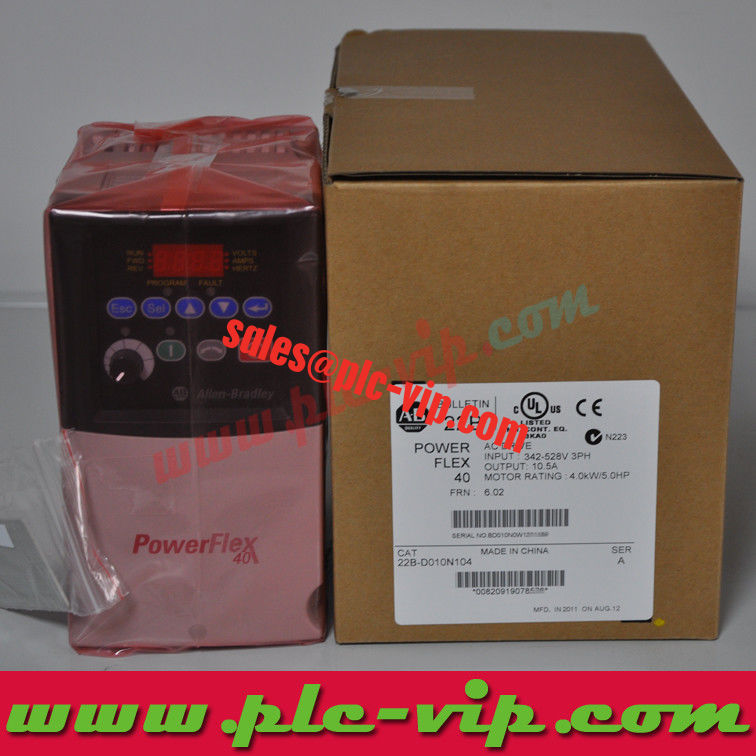
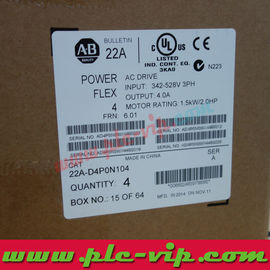
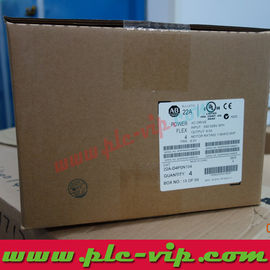
22F-A4P2N113
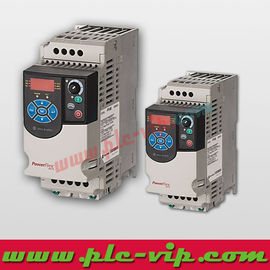
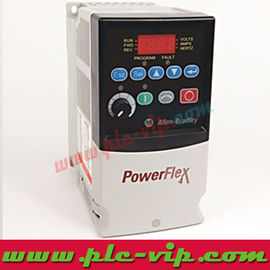
This page documents the 22F-A4P2N113, a PowerFlex 4M (bulletin 22F) drive in the 240 V single-phase class, IP20 panel mount, with integral EMC filter. The rating code 4P2 encodes the output current in amperes, which is 4.2 A for this string; the kW and HP equivalents, the frame letter and the protection row for this code are printed in the drive ratings table of 22F-UM001 and are not reproduced here rather than inferred from a neighbouring rating.
Catalog number decode
| Field | Value |
| Catalog number | 22F-A4P2N113 |
| Family | 22F - PowerFlex 4M, IP20 panel mount only |
| Voltage code (character 5) | A - 240 V single-phase |
| Rating code (characters 6-8) | 4P2 - 4.2 A continuous output, encoded in the code |
| Enclosure (character 9) | N - IP20 |
| HIM position (character 10) | 1 |
| Emission class (character 11) | 1 - with integral EMC filter |
| Type (character 12) | 3 - carried, resolved in the option appendix |
| kW / HP / frame | published per rating in 22F-UM001, not carried over here |
The 4M carries no branch short-circuit protection inside the drive. Any installation needs input fuses or an input circuit breaker sized from the rating row, and Bulletin 140M/140MT self-protected controllers are accepted upstream without fuses where the panel uses that route. Fuse class is part of the requirement: BS88 parts 1 and 2 or EN60269-1 type gG for IEC installations, Class CC, T or J for UL.
The class-level input window published for this voltage class is 180...265 V, so the installation has to sit inside that band rather than at nominal, and a supply that sags below the lower limit is a trip rather than a derating exercise. On a single-phase 240 V code the output is three-phase: the motor is a three-phase motor, and the input and output phase counts are two separate questions on this family.
Emission character and the motor cable it allows
Character 11 reads 1, so this drive ships with integral EMC filter. The character does not change the rating or the terminals; it changes the EMC environment the drive may be installed in and the motor cable length the manual permits.
| Filter route | Second environment | First environment, unrestricted distribution |
| Integral filter, 240 V drive | 5 m | 1 m |
| Integral filter, 480 V drive | 10 m | see the same table in 22F-UM001 |
| External S-type filter | 5 m | 1 m |
| External L-type filter | 100 m | 25 m |
Frames and the wire that fits
Frame A accepts 3.3 mm2 (12 AWG) maximum and 0.8 mm2 (18 AWG) minimum at 1.4...1.6 N.m; frame B accepts 8.4 mm2 (8 AWG) at 1.6...1.9 N.m; frame C accepts 13.3 mm2 (6 AWG) at 2.7...3.2 N.m. The minimum is what decides whether a small motor cable can be landed directly or has to go through a junction, and this rating is small enough that the answer is usually a junction.
Software limits that replace a larger catalog number
Output current is limited in software rather than by the frame: the current-limit parameter defaults to 1.5 times the drive rated amps and can be raised to 1.8 times, and the output-current monitor reads up to twice the rated amps. A drive one frame larger than the motor is therefore made safe for that motor by a parameter setting, and a slower ramp is a parameter rather than a second catalog number.
Same rating, other strings
The same rating and voltage class appear under other strings: 22F-A4P2N103. They differ in the interface or emission characters rather than in the power section, so the choice is made on the panel and the cable route, not on the current.
A 140m controller upstream without fuses. Bulletin 140M and 140MT self-protected controllers are accepted upstream of the drive without fuses. That route is what saves panel width when a motor-protective controller is already in the design, and it is the difference between a panel that repeats protection twice and one that does not.
Current limit as a substitute for a different drive. Output current is limited in software: the current-limit parameter defaults to 1.5 times the drive rated amps and can be raised to 1.8 times, while the output-current monitor reads to twice the rated amps. A drive one frame larger than the motor is therefore made safe for that motor by a parameter, not by a second catalog number.
What the parameter number means over modbus. Over Modbus the register address equals the parameter number, so decimal 1 addresses d001 output frequency and decimal 109 addresses P109 acceleration time 1. A controls engineer commissioning from a PLC needs the parameter list rather than the catalog string, and the string is the part that has to be right before that work starts.
The panel mounting thickness. Panel mounting is the only mechanical form this family publishes, with a 1.9 mm (0.0747 in) minimum panel thickness and M4 (#8-32) screws at 1.56...1.96 N.m. That is thinner than the larger drive families expect, and it is the figure that decides whether the drive can sit on a machine frame instead of in a cabinet.
Reorder risk on the emission character. Two drives with the same rating and different character 11 are different products when the cable run is long. A spare ordered by rating alone can arrive unfiltered into an installation that was commissioned with a filter, and the mismatch shows up as an emission problem rather than as a wrong part number.
Panel thermal and mounting. Estimated watts loss is published per rating at rated load, rated speed and rated PWM and is a drive-only figure used in the panel thermal calculation. Panel mounting is the only form this family publishes, with a 1.9 mm minimum panel thickness and M4 screws at 1.56...1.96 N.m.
Frame letter A is the smallest mechanical group in this family, and the terminal block accepts 12 AWG at best, which is what limits the motor cable the installer can bring to it.
No price, lead time or lifecycle statement is implied. The decode, the protection requirement and the cable allowances are quoted from the PowerFlex 4M user manual, publication 22F-UM001; figures this publication prints only per rating row are named as such rather than filled in.
The six 22F PowerFlex 4M records: rating, then protection
This record is placed on the six-record 22F PowerFlex 4M ladder carried on this site. The first table is the rating each record prints or declines to print; the second is the protection and enclosure that follows from it. Both quote only what the individual pages state, and a record whose page refers a field to 22F-UM001 is marked as not printed rather than filled in from a neighbouring rating.
| Catalog number | Voltage class | Output current | Rated power | Frame | Input window | Input kVA / current |
| 22F-A2P5N103 | A - 240 V single-phase | 2.5 A | 0.4 kW (0.5 HP) | A | 180-265 V | 1.6 kVA / 6.5 A |
| 22F-A4P2N103 | A - 240 V single-phase | 4.2 A | not printed - referred to 22F-UM001 | not printed | 180-265 V (class level) | not printed |
| 22F-A4P2N113 | A - 240 V single-phase | 4.2 A | not printed - referred to 22F-UM001 | not printed | 180-265 V (class level) | not printed |
| 22F-B017N103 | B - 240 V three-phase | 17.5 A | 3.7 kW (5.0 HP) | B | 180-265 V | 8.8 kVA / 21.1 A |
| 22F-D018N104 | D - 480 V three-phase | 18.0 A | 7.5 kW (10.0 HP) | C | 340-528 V | 16.3 kVA / 19.5 A |
| 22F-D024N104 | D - 480 V three-phase | 24.0 A | 11.0 kW (15.0 HP) | C | 340-528 V | 21.7 kVA / 26.1 A |
Protection and enclosure that follow. The line fuse is a function of the input current, and the enclosure volume is a function of the frame.
| Catalog number | Line fuse at 40 C | 140M / 140MT upstream | Contactor | Min enclosure volume |
| 22F-A2P5N103 | 10 A | 140M-C2E-C10 / 140MT-C3E-C10 | 100-C09 / 100-E09 | 1,655 in3 |
| 22F-A4P2N103 | not printed - referred to 22F-UM001 | not printed | not printed | not printed |
| 22F-A4P2N113 | not printed - referred to 22F-UM001 | not printed | not printed | not printed |
| 22F-B017N103 | 35 A | 140M-D8E-C25 / 140MT-D9E-C25 | 100-C23 / 100-E26 | 1,655 in3 |
| 22F-D018N104 | 30 A | 140M-F8E-C25 | 100-C23 / 100-E26 | 3,441 in3 |
| 22F-D024N104 | 40 A | 140M-F8E-C32 | 100-C30 / 100-E30 | 3,441 in3 |
Where this record sits: the same 4.2 A rating and the same class as 22F-A4P2N103, with character 11 reading 1 rather than 0. Nothing else about the two records differs.
The fuse is sized off the input current and not off the output rating. Reading the four records that print both, 6.5 A of input takes a 10 A fuse, 21.1 A takes 35 A, 19.5 A takes 30 A and 26.1 A takes 40 A - each roughly 1.5 times the input current. A buyer who sizes protection from the output amps of a single-phase drive lands at 2.5 A and a fuse far too small for a feed that actually draws 6.5 A.
What these pages do not carry: no enclosure dimensions, only the minimum volume in cubic inches, so the panel layout has to come from the manual; no drive weight; no efficiency, loss or thermal figure; no overload percentage for the thermal model; and on the two 4.2 A records no kW, HP, frame, kVA, input current, fuse, contactor or enclosure volume at all, because those pages deliberately refer the rating row to 22F-UM001 rather than reproduce it.
Character 11 reads 1, so this record ships with the integral EMC filter, and the manual table gives that route 5 m of motor cable in a second environment and 1 m in a first environment with unrestricted distribution. Character 11 on the twin 22F-A4P2N103 reads 0, which puts it on the external-filter rows - S-type at the same 5 m and 1 m, L-type at 100 m and 25 m.
Source: the decode tables and body text printed on the six 22F records on this site, which cite 22F-UM001 for the rating rows, the fuse and enclosure volumes; the output currents, kW and HP figures, input windows, kVA and input currents, terminal ranges, torques, fuse ratings, 140M/140MT and contactor part numbers, enclosure volumes and DC fuse numbers are quoted from the records that print them, and fields a record refers to the manual are shown as not printed.