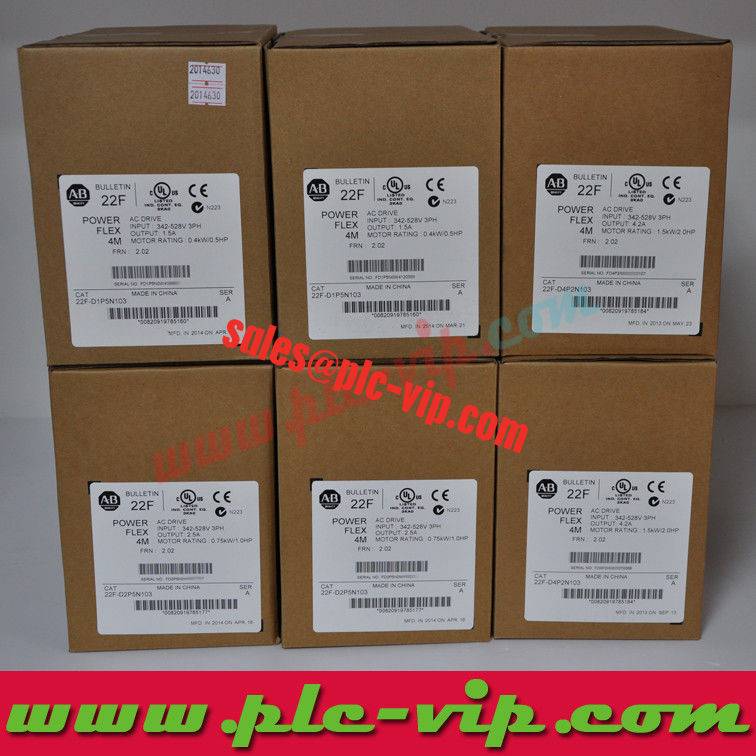
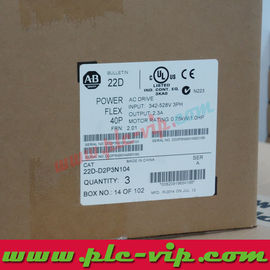
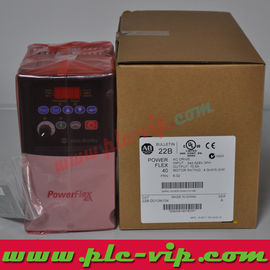
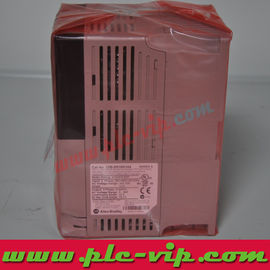
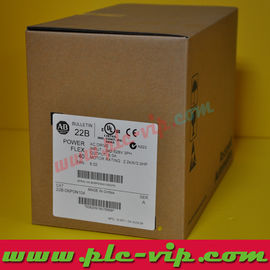
22D-D2P3H204
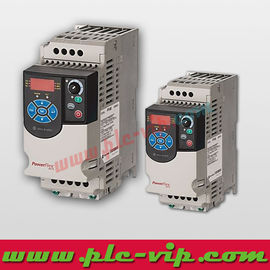
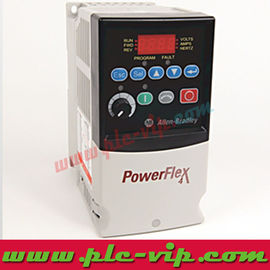
This page documents catalog number 22D-D2P3H204, a PowerFlex 40P drive on the 480 V three-phase class. The rating code in this string is not one whose published row is reproduced here, so the page records what the string settles and what the manual has to be read for.
| Field | Value |
| Catalog number | 22D-D2P3H204 |
| Family | 22D - PowerFlex 40P |
| Voltage code (character 5) | D |
| Rating code (characters 6-8) | 2P3 |
| Enclosure (character 9) | H |
| HIM position (character 10) | 2 |
| Emission class (character 11) | 0 |
What is settled without the rating row: the voltage class, the enclosure form, the HIM position and the emission class. What is not settled: the kW, the output current, the fuse and the motor protector, all of which are read from the rating row for this code rather than inferred from the code pattern.
The three enclosure forms share one rating row in this family, so the mechanical character is a drawing decision. A flange mount puts the heatsink through the wall, a plate drive ships without a housing, and a panel mount relies on the cabinet for its environment. None of the three changes the current the drive delivers.
What the voltage class already fixes
The voltage character fixes the input window and the output ceiling before any rating is read: a 240 V class drive accepts 200-240 V AC plus or minus 10 percent on three phases and produces 0-230 V output, a 480 V class accepts 380-480 V AC and produces 0-460 V, and a 600 V class accepts 460-600 V AC and produces 0-575 V. Those windows are published per class and do not vary with the rating code, so an undersized supply shows up as a drive that trips on undervoltage rather than as a wrong catalog number.
The output ceiling is the number to compare against the motor nameplate, not the supply voltage. A 480 V class drive on a 400 V motor runs inside the ceiling; a 480 V class drive on a 575 V motor does not, and that mismatch cannot be corrected by programming.
Branch protection and the UL and IEC split
Protection is published per rating rather than by frame, and the two applicable routes are not interchangeable. IEC installations accept inverse-time circuit breakers as well as the listed 140M/140MT self-protected combination controllers; UL installations accept inverse-time breakers and the specified 140M/140MT controllers, but not an instantaneous-trip motor circuit protector on its own. Where the exact fuse rating is unavailable the manual says to take the next higher rating, which is the opposite of the instinct that governs most panels.
Fuse classes are constrained as well: BS88 parts 1 and 2 or EN60269-1 type gG for IEC, and Class CC, T or J for UL. A panel that fits a fuse of the right amperage but the wrong class is not a listed installation, and that error is invisible on a schematic that only carries the ampere value.
Supply conditions that change the installation
The manual lists supply conditions that change the installation rather than the drive: a line impedance below 1 percent reactance, a supply transformer above 120 kVA, power-factor correction capacitors on the line, frequent interruptions, and noise spikes above 6,000 V. The correctives are a line reactor, an isolation transformer or a bus inductor. A phase-to-ground voltage above 125 percent of the line-to-line voltage requires removing the MOV jumper to ground or fitting an isolation transformer with a grounded secondary, which is a site measurement rather than a catalog decision.
Control wiring follows the same published rule across the family: 0.750 mm2 (18 AWG) three-conductor shielded cable such as Belden 8770 where shielding is used, on a 300 V, 60 degrees C insulation rating, with unshielded wire acceptable only where local code permits it.
Where the missing figures actually come from
The rating row for each code sits in the drive ratings table of the manual, in the same table that carries the input current, the kVA figure, the fuse, the 140M controller, the MCS contactor and the minimum enclosure volume. Reading one figure without the rest is what produces a panel that meets the motor current and fails the enclosure check, because the volume and the contactor change at the frame boundary rather than at every rating.
Two figures in that table are deliberately omitted on this page: the kW and the output current for this rating code. They are omitted because the manual table is the only acceptable source and a value inferred from a neighbouring code would be a guess dressed as a specification, which is worse than a page that says plainly what it does not hold.
No lifecycle statement and no price is implied for 22D-D2P3H204. The rating, input range, fuse, motor protector, contactor, enclosure volume and control-wire figures are quoted from the PowerFlex 40P user manual, publication 22D-UM001.
Where this rating sits in the 480 V ladder
PowerFlex 40P is selected rating by rating rather than by frame: each code in the 480 V three-phase class carries its own current, its own branch fuse and its own listed motor protector, and the step to the next code changes all three at once. The rows below are the published values for the class this catalog number belongs to, with the kW and HP figures the manual prints alongside them.
| Rating code | kW | HP | Output A | Frame | Branch fuse | 140M controller |
|---|
| 22D-D1P4 | 0.4 | 0.5 | 1.4 | B | 3 A | 140M-C2E-B25 or 140MT-C3E-B25 |
| 22D-D4P0 | 1.5 | 2.0 | 4.0 | B | 10 A | 140M-C2E-B63 or 140MT-C3E-B63 |
| 22D-D6P0 | 2.2 | 3.0 | 6.0 | B | 15 A | 140M-C2E-C10 or 140MT-C3E-C10 |
| 22D-D010 | 4.0 | 5.0 | 10.5 | B | 20 A | 140M-C2E-C16 or 140MT-C3E-C16 |
| 22D-D012 | 5.5 | 7.5 | 12.0 | C | 25 A | 140M-D8E-C20 or 140MT-D9E-C20 |
| 22D-D017 | 7.5 | 10.0 | 17.0 | C | 30 A | 140M-D8E-C20 or 140MT-D9E-C20 |
| 22D-D024 | 11.0 | 15.0 | 24.0 | C | 50 A | 140M-F8E-C32 |
The rating table reproduced here begins at 22D-D1P4 (1.4 A) and carries no row for the code in this catalog number, so its kW and output current are not quoted on this page. What the class does settle is the input window of 380-480 V AC and the output ceiling of 0-460 V, and a drive ordered into a panel without its rating row is a drive whose fuse and motor protector have to be read from the manual before the panel is built.
The frame boundary is the one place where the mechanical answer changes with the rating: 22D-D010 is the last row in frame B at a published minimum enclosure volume of 1,655 cubic inches and 22D-D012 is the first in frame C at 2,069. The cabinet grows at that step even when the motor current barely moves, so the enclosure is sized from the larger row rather than from the motor nameplate.
The fuse column is a ladder of its own and it does not follow the current in even steps: 3 A on 22D-D1P4, 10 A on 22D-D4P0, 15 A on 22D-D6P0, 20 A on 22D-D010, 25 A on 22D-D012, 30 A on 22D-D017, 50 A on 22D-D024. Where the exact rating is unavailable the manual instructs the next higher fuse, and the fuse class is constrained as well - BS88 parts 1 and 2 or EN60269-1 type gG for IEC, Class CC, T or J for UL - so a fuse bought on amperage alone is not a listed installation.
What the 22D-D2P3H204 table does not carry is the input current and the kVA figure for every row: the manual prints them for some ratings and omits them for others, and the omissions are listed as omissions here rather than filled with a neighbouring value. The frame, the fuse and the 140M controller, which is what a panel schedule actually needs, are complete for every row shown.