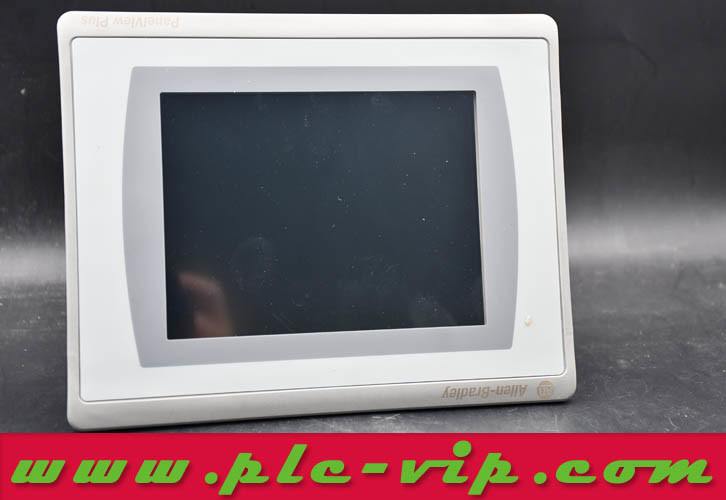
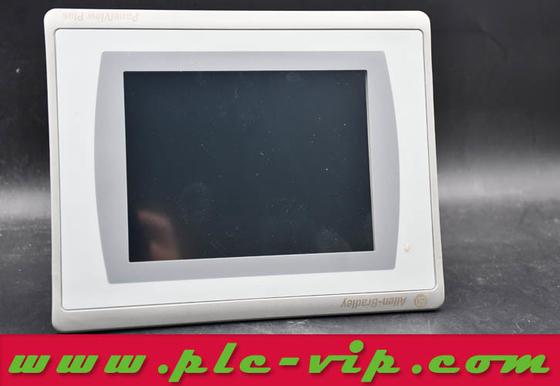
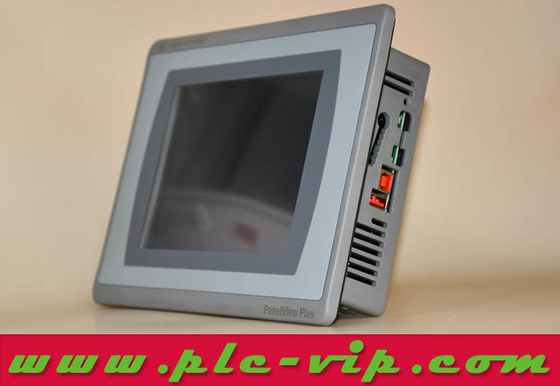
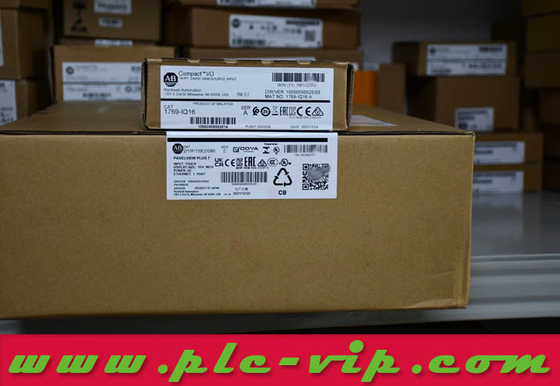
2711P-T10C22D8S
This page documents catalog number 2711P-T10C22D8S, the dual Ethernet port model of the PanelView Plus 7 Standard 10 terminal in its branded form. The attributes below are the ones the manufacturer publishes for this catalog number; no display contrast, brightness or processor figure is stated here because those are not published for this terminal.
Published specification
| Specification | Value |
|---|
| Display | 10.4-in TFT color display with touch screen, SVGA |
| Input power | 24V DC nominal, 18...30V DC, nonisolated power input |
| Ethernet ports | Two RJ45 ports, 10/100Base-T, Auto MDI/MDI-X, supporting Device Level Ring topology |
| Time synchronization | IEEE 1588 support for synchronization of network-connected devices |
| Operating system | Windows CE 6, Standard Model |
| Software | FactoryTalk View Machine Edition |
| Lifecycle status | Active, per the manufacturer product page |
| Safety limitation | Not to be used for emergency stops or other controls critical to the safety of personnel or equipment |
What the catalog number says
The catalog number decomposes into published attributes: 2711P is the PanelView Plus 7 family, T denotes a touch screen, 10 is the 10.4 inch display, C denotes a TFT color display, 21 or 22 selects one or two Ethernet ports, D denotes 24V DC input, 8S denotes the Windows CE 6 Standard Model, and a trailing B denotes the Brandless variant. The manufacturer's product data lists exactly those attributes, and this page relies on them rather than on a series brochure.
The display is published as a 10.4 inch TFT color display with a touch screen at SVGA resolution, and the touch input is the only operator interface on the standard model. A terminal without a keypad is a terminal whose entire operator interaction is defined by the screen layout, which puts the design decisions in the application rather than in the hardware.
Power is published as 24V DC nominal with an 18 to 30V DC input range, and the input is explicitly nonisolated. The range is wide enough to cover a nominal 24V supply with tolerance, and the nonisolated description is the part that decides wiring: the terminal's DC return is common with its internal reference, so the supply's return becomes part of the terminal's reference.
The safety notice in the installation manual is as much a specification as the voltage: the terminal must not be used for emergency stops or other controls critical to the safety of personnel or equipment, and separate hard wired devices that do not depend on solid state electronics are required instead. That sentence sets the boundary of what a PanelView is for.
IEEE 1588 support is published as a feature of the Ethernet port, and it is a statement about time synchronization rather than about motion control. A controller and a terminal that share a synchronized time base produce timestamps that can be compared, which changes what an alarm log is worth during a fault investigation.
Windows CE 6 and the Standard Model designation are published attributes of the 8S suffix, and they describe a platform with a defined feature set rather than an open operating system. The consequence is that the terminal's capability is fixed by its catalog number, and an application designed against a different suffix is an application that has to be checked rather than assumed.
This specific number carries the dual port Device Level Ring Ethernet configuration and the branded attribute, and those two positions are what distinguish it from the other 10.4 inch terminals in the same size.
Engineering notes
Series letters are published per catalog number, and the branded and Brandless forms of the same position carry their own. A replacement has to match the catalog number and the series, and a series change is a fact about the product rather than about the machine.
A branded terminal in a machine builder's panel is an end user's preference as often as an engineering one, and the published pair exists so the preference can be expressed at the order line. That is the whole of the difference, and a page that claimed more would be inventing it.
Device Level Ring support is published for this position, and a ring node is a node with two ports, a ring supervisor and a documented topology. The terminal supplies the ports; the other three are panel design decisions that the data sheet does not make on the buyer's behalf.
The published Auto MDI/MDI-X behaviour on both ports removes the crossover question from ring wiring, which matters because ring cabling is where a mis-cabled pair is least visible. A ring that comes up with one port dark is a ring that will not survive its first break.
IEEE 1588 support is published for the family, and in a ring it is the feature that makes event ordering meaningful across nodes. Two alarms that look simultaneous on separate clocks become ordered on synchronized ones, and that ordering is what a fault investigation actually needs.
Nonisolated 24V DC input at 18 to 30V DC is published for this terminal, and the branded status does not change the electrical arrangement. The supply's return is part of the terminal's reference, and a panel with several references is a panel that needs the published input description read before it is wired.
Windows CE 6 Standard Model is published for the 8S suffix, and it fixes the runtime tier. A spare terminal of the same catalog number restores a machine; a spare of a different suffix may run the same application and may not, and the published attribute is how that gets decided before the failure.
The published statement that the terminal must not be used for emergency stops is repeated across the family for a reason: the operator interface is the part of a panel most likely to be asked to do more than it should. A stop drawn in a faceplate is a request, not a safety function.
A 10.4 inch SVGA touch screen is the published display, and it is the size at which a faceplate can hold a process overview without a second screen. That is a design constraint in practice: it is the limit at which the terminal is still one screen rather than a navigation problem.
FactoryTalk View Machine Edition is published as the software platform, and the terminal is the runtime node. The development workstation, the download path and the runtime tier are three separate facts, and a purchase decision that conflates them produces a terminal that cannot load the application.
Lifecycle status is published as active, and active in this family has historically meant a series letter can change while the catalog number stays. That is a reason to record the series actually installed rather than only the catalog number, because the series is what a future comparison will need.
A ring terminal in a machine with one controller and a handful of devices is a ring built for availability at a scale where a switch would also do. The published support does not argue for the ring; it makes the ring possible, and the panel's risk assessment is what argues for it.
Panel cutout dimensions are published per size, and the branded and Brandless forms share them. A spare stocked as either form fits the same hole, which is the one respect in which the pair is interchangeable on the shop floor as well as on paper.
Two network ports make a terminal a network component rather than a peripheral, and that changes who owns its configuration. A panel builder who owns the switch settings and an end user who owns the network are two owners, and a ring is where that ownership has to be settled.
This catalog number is the branded form of the dual port position, and the published product data describes the Brandless attribute as the difference between the two. Everything else about the terminal, from the 10.4 inch touch screen to the 24V DC input range, is shared.
The other PanelView terminals, accessories and replacement parts in this range are collected in the PanelView HMI 2711 category. This terminal can be checked against the shop listing at 2711P-T10C22D8S, and the related 10.4 inch catalog numbers are listed at 2711P-T10C21D8S-B, 2711P-T10C22D8S-B.